

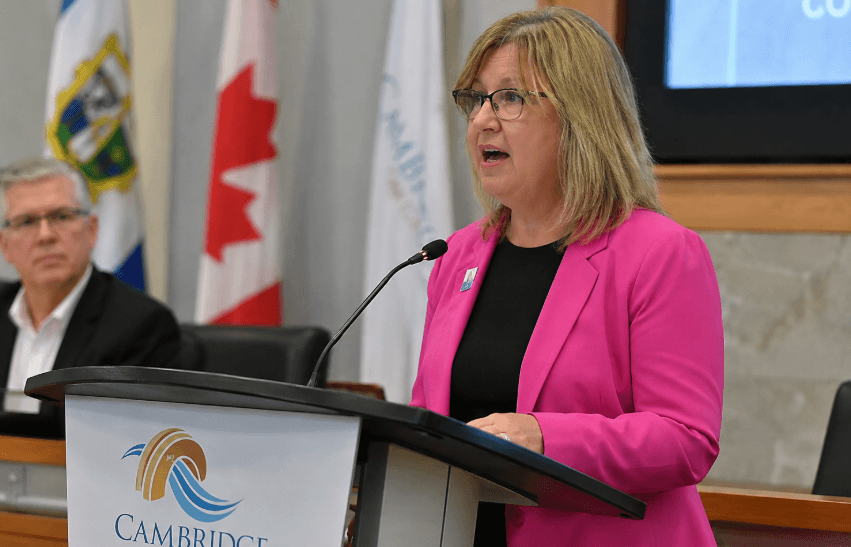
CAMBRIDGE, Ontario — August 16, 2026 — Cambridge Mayor Jan Liggett is backing a renewed province-wide campaign calling for major changes to Ontario’s approach to mental health, addictions and homelessness, as municipalities prepare to press the issue with provincial officials at this week’s Association of Municipalities of Ontario conference.
Ontario’s Big City Mayors (OBCM) has formally supported the “Solve the Crisis – Reaction to Recovery” campaign, which calls on the Ontario government to declare a state of emergency, significantly increase investment in recovery-based treatment and supportive housing, and create a stand-alone Ministry of Mental Health and Addictions.
The initiative builds on concerns raised by municipalities across the province about growing pressure on housing, health and community services.
Ontario Mayors Push for Recovery-Based Mental Health and Addiction Services
Liggett, who seconded the OBCM motion, has been among the municipal leaders advocating for a more coordinated provincial response.
The campaign points to data compiled by OBCM showing an estimated 84,973 people experienced homelessness in Ontario in 2025, representing a 7.8 per cent increase from 2024. More than 36,000 Ontarians are also currently on waitlists for mental health and addictions supportive housing, according to figures cited by the organization.
For municipalities such as Cambridge, the issue has increasingly become a question of both health-care capacity and local service delivery. Cities are dealing directly with the effects of homelessness and addiction while many treatment, health and social-service responsibilities remain under provincial jurisdiction.
“I have heard too many stories from Cambridge residents about loved ones falling through the cracks of a system that is not built for the scale of what we’re facing. Standing with OBCM today is about making sure no other family in our city has to go through that alone. This is about families being kept whole; families that feel that their loved ones have the care they deserve.”
— Mayor Jan Liggett, City of Cambridge
Cambridge to Take Concerns to AMO Conference in Ottawa
Cambridge is preparing to raise many of the same concerns directly with the provincial government during the Association of Municipalities of Ontario Conference, taking place August 17 to 19 in Ottawa.
The city intends to acknowledge progress made through Ontario’s Homelessness and Addiction Recovery Treatment, or HART, Hubs and the Homelessness Prevention Program while seeking action on what it describes as continuing gaps in funding, access to services and coordination across the system.
Detox, Recovery and Transitional Care Remain Key Priorities
Among Cambridge’s priorities is improved immediate access to detoxification and recovery services, along with expanded transitional care.
Municipal leaders argue that strengthening these services could help create a more continuous pathway from an initial intervention through treatment and longer-term recovery, rather than leaving individuals and families to navigate disconnected programs.
The broader OBCM campaign also seeks an expansion of voluntary recovery-based treatment and supportive housing, including further development of the HART Hub program and the removal of barriers that can prevent people from accessing services.
OBCM Calls for Five Major Provincial Actions
Under the “Solve the Crisis – Reaction to Recovery” campaign, Ontario’s Big City Mayors are asking the provincial government to declare a state of emergency related to addictions, mental health and homelessness, which the group says could help unlock additional provincial and federal support.
The mayors are also seeking a significant increase in investment in voluntary recovery-based treatment and supportive housing.
OBCM is calling for a comprehensive review of Ontario’s Mental Health Act and Health Care Consent Act, conducted in consultation with municipalities, first responders and people with lived experience. The objective would be to develop what the group describes as a compassionate care and intervention model with appropriate safeguards.
The campaign further calls for expanded addiction treatment and rehabilitation programs within provincial and federal correctional institutions, supported by appropriate discharge planning for people leaving custody.
Finally, the mayors want Ontario to establish a stand-alone Minister of Mental Health and Addictions, supported by a dedicated ministry, budget and independent decision-making authority.
Municipal Leaders Seek Shift From Reaction to Recovery
The campaign arrives as Ontario municipalities continue to face financial and operational pressures related to homelessness, addiction and mental health needs.
For Cambridge, the upcoming AMO conference provides an opportunity to move those concerns directly into discussions with provincial decision-makers.
Liggett and city staff are expected to continue advocating for the campaign’s priorities, with the broader objective of shifting Ontario’s response from short-term crisis management toward a coordinated recovery-focused system.
With OBCM now formally supporting the renewed campaign, municipal leaders are seeking commitments that would expand treatment capacity, improve supportive housing access and strengthen coordination between provincial programs and the communities delivering services on the ground.
Discover more from Wire Service Canada
Subscribe to get the latest posts sent to your email.