

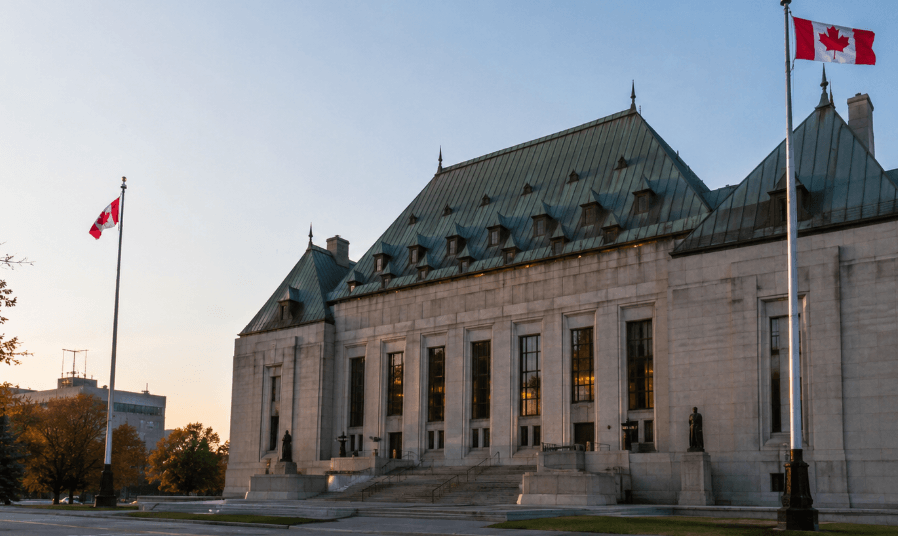
The British Columbia Civil Liberties Association (BCCLA) will appear before the Supreme Court of Canada on October 13, 2026, to argue that prisoners must retain access to judicial review when prison policies or operational decisions restrict their liberty.
The organization will intervene in Diggs v Nova Scotia Health Authority, a case examining whether prisoners can use habeas corpus to challenge restrictions arising from decisions affecting an entire correctional facility or broader groups of detainees.
The hearing, scheduled for 9:30 a.m. Eastern Time in Ottawa, could have significant implications for prisoners’ constitutional protections and the accountability of correctional authorities across Canada.
Supreme Court to Examine Prisoners’ Access to Habeas Corpus
At the centre of the case is the legal principle of habeas corpus, commonly described as the “great writ of liberty,” which allows individuals to seek prompt judicial review of the lawfulness of their detention.
The protection is guaranteed under section 10(c) of the Canadian Charter of Rights and Freedoms. It is also closely connected to section 7, which protects life, liberty and security of the person, and section 9, which prohibits arbitrary detention or imprisonment.
The BCCLA maintains that prisoners should be able to challenge restrictions on their remaining liberty regardless of whether those restrictions result from individual decisions or policies applied more broadly.
According to the organization, excluding operational and policy-based decisions from habeas corpus review could limit judicial oversight of correctional institutions and weaken constitutional accountability.
Nova Scotia Court Decisions Raise Questions About Judicial Oversight
The Supreme Court proceedings follow differing interpretations of the availability of habeas corpus in the lower courts.
At trial, a judge determined that the applicants, Diggs and Wilband, had experienced deprivations of their residual liberty. The assessment compared their circumstances with those of a “general population inmate” under normal correctional facility operations.
However, the Nova Scotia Court of Appeal subsequently concluded that courts lacked jurisdiction to hear habeas corpus applications concerning operational or policy-based decisions involving “systemic issues”.
That distinction has become central to the Supreme Court appeal.
The legal question is whether restrictions affecting multiple prisoners should be treated differently from measures imposed on individual detainees when determining access to judicial review.
The outcome could influence how correctional institutions defend their policies and how prisoners challenge restrictions they believe are unlawful.
BCCLA Argues Government Policies Must Remain Subject to Charter Review
The BCCLA is challenging the position that operational or policy classifications should prevent prisoners from seeking constitutional remedies.
Constitutional Protections and Government Accountability
The association argues that governments should not be able to avoid scrutiny under the Charter simply by categorizing decisions as “policy” or “operational”.
Its position is that section 10(c) establishes a constitutional right to challenge the lawfulness of detention through habeas corpus, while section 7 supports judicial oversight of government decisions affecting individual liberty.
The BCCLA also points to Supreme Court jurisprudence recognizing that decisions made by government officials remain subject to constitutional review, including when those decisions involve broader administrative policies.
Under the association’s interpretation, the availability of habeas corpus should reflect these interconnected constitutional protections.
Potential Implications for Canadian Correctional Institutions
The case could clarify the legal responsibilities of provincial and federal correctional authorities when implementing policies that affect prisoners’ conditions of detention.
A ruling supporting broader access to habeas corpus could strengthen prisoners’ ability to obtain timely judicial review of restrictions resulting from institutional decisions.
Conversely, a narrower interpretation could maintain limits on the types of correctional decisions that courts may examine through this legal procedure.
The proceedings are therefore relevant to correctional administration, institutional accountability and the enforcement of constitutional rights throughout Canada.
Supreme Court Hearing Scheduled for October 13
The hearing will take place at the Supreme Court of Canada in Ottawa, on unceded Anishinaabe Algonquin territory, beginning at 9:30 a.m. Eastern Time on October 13.
The BCCLA will be represented by Frances Mahon of Pender Litigation.
The Supreme Court’s eventual decision is expected to provide guidance on whether prisoners can rely on habeas corpus when challenging restrictions imposed through correctional policies and operational practices.
The ruling could establish an important precedent concerning judicial oversight of prison administration and the protection of individual liberty under the Canadian Charter of Rights and Freedoms.
Discover more from Wire Service Canada
Subscribe to get the latest posts sent to your email.