

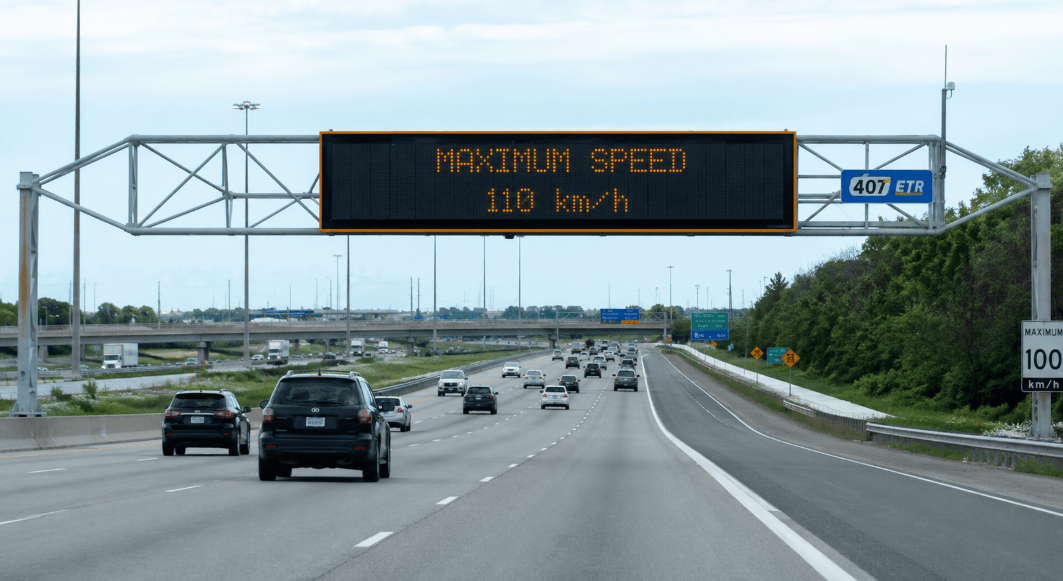
Province expands 110 km/h limit across an additional 938 kilometres of highways to improve travel efficiency and support economic growth
The Ontario government is expanding 110 km/h speed limits across an additional 938 kilometres of provincial highways, a move aimed at improving travel times for commuters, commercial transportation and businesses while maintaining road safety standards.
Announced by the Ministry of Transportation in King City on June 24, the expansion will increase the proportion of Ontario’s provincial highway network with a posted speed limit of 110 km/h to nearly 89 per cent by the end of September 2026, up from 43 per cent today. The province currently has 873 kilometres of highways posted at the higher speed limit.
The latest expansion follows previous speed limit increases introduced on six sections of provincial highways in 2022 and a further 10 sections in 2024. Provincial officials said the changes align Ontario’s highway speeds with those already in place in several other Canadian jurisdictions.
“Under the leadership of Premier Ford, our government is helping get drivers where they’re going faster and safely,” said Prabmeet Sarkaria, Minister of Transportation. “We’re going to keep supporting commuters, workers and businesses by investing in our $31 billion plan to build and expand roads and highways, so we can get people and goods moving across Ontario and keep workers on the job.”
Speed limit increases to begin in late June
The first phase of the rollout will begin on June 26, when speed limits will increase to 110 km/h on sections of Highways 401 and 416 in eastern Ontario. Additional sections of the Queen Elizabeth Way (QEW) and Highways 400, 401, 402, 403, 416 and 417 will follow in stages through to Sept. 30, 2026.
According to the province, the higher speed limits could reduce travel times significantly on some of Ontario’s busiest corridors. Drivers travelling between Sarnia and Toronto could save nearly 20 minutes, while those making the journey from Toronto to Ottawa could save close to half an hour.
Officials emphasized that the higher speed limits will only be introduced on highway sections that have undergone detailed engineering and technical assessments. Necessary infrastructure improvements are completed before any speed limit increase is implemented.
The Ministry of Transportation noted that most of Ontario’s freeway network was originally designed and engineered to safely accommodate posted speeds of 110 km/h.
Part of broader transportation investment
The speed limit expansion forms part of Ontario’s broader transportation infrastructure strategy, which includes approximately $31 billion in investments over 10 years to build, repair and expand highways, roads and bridges across the province.
The province also confirmed that all newly constructed freeways will be designed with a posted speed limit of 110 km/h, including Highways 413, 425 (Bradford Bypass), Highway 7 between Kitchener and Guelph, and Highway 69.
Highway 401 remains one of Ontario’s most critical transportation corridors, carrying more than $380 million worth of goods every day. Provincial officials said improvements to highway efficiency are intended to support the movement of both people and freight while contributing to economic productivity.
The government also highlighted Ontario’s long-standing road safety record, noting that the province’s roads have ranked among the safest in North America for more than 25 years, with one of the lowest fatality rates per 10,000 licensed drivers.
Industry and municipal leaders support expansion
Industry representatives and municipal leaders welcomed the announcement, citing potential benefits for commuters, businesses and economic development.
“RCCAO commends the Ontario government’s ongoing modernization policy reforms across the 400 series highways. The safe increase of speed limits across the network improves its efficiency and decreases travel times for drivers. Our members will continue to support road infrastructure improvements that advance additional upgrades across the critical highway network.”
- Nadia Todorova
Executive Director, Residential and Civil Construction Alliance of Ontario (RCCAO)
Municipal leaders also said improved transportation infrastructure will help accommodate population growth and strengthen regional economies.
“Vaughan understands the importance of a safe and efficient transportation network. Increasing speed limits where it can be done safely is a practical, common-sense approach that reflects modern vehicle standards and helps improve the movement of people and goods across our province. Strong transportation corridors are essential to supporting economic growth, attracting investment and ensuring Ontario remains competitive while keeping safety at the forefront. I want to thank Minister Prabmeet Sarkaria and the Ontario government for piloting this initiative and expanding it across the province. Together, we are taking meaningful steps to keep Ontario moving safely and support our growing economy.”
- Steven Del Duca
Mayor of Vaughan
“King welcomes the Province’s continued investment in improving transportation efficiency across Ontario. Expanding the 110 km/hour speed limit to additional highway sections will help people and goods move more efficiently. As communities like King continue to grow, initiatives like this help reduce travel times, strengthen economic connections, and support a modern transportation network that meets the needs of residents, businesses, and visitors alike.”
- Steve Pellegrini
Mayor of King City
“Our government is building new subways, highways, and GO transit to get Ontarians moving, faster. This new policy builds on our actions to reduce congestion on our roads and save families time, all while maintaining safety on and off the road. Ontario was proud to complete the widening of Highway 400 from Highway 9 to Major Mackenzie Drive, along with building the Bradford Bypass, Highway 413, and the largest public transit expansion in North America.”
- Stephen Lecce
MPP for King—Vaughan
Discover more from Wire Service Canada
Subscribe to get the latest posts sent to your email.