

A U.S. federal court has ruled that the U.S. Army Corps of Engineers acted unlawfully when it approved nine large-scale industrial shellfish operations in Washington state’s coastal waters without conducting adequate environmental reviews or providing proper public notice.
The decision, issued by the U.S. District Court for the Western District of Washington, represents a significant legal victory for the Center for Food Safety (CFS) and the Coalition to Protect Puget Sound Habitat, which challenged the federal approvals. The court found that the Corps improperly classified the projects as “minor,” allowing them to proceed under a streamlined permitting process rather than undergoing more comprehensive environmental scrutiny.
While the ruling is an important step in the case, defendants will have an opportunity to object before a final district court decision is issued.
Court Finds Federal Law Was Violated
According to the court, the Corps failed to comply with federal environmental laws by relying on abbreviated permitting procedures for projects that plaintiffs argued have substantial environmental impacts.
The ruling also reinforces a 2019 court order requiring the Corps to conduct full environmental analyses before approving industrial shellfish aquaculture operations in Washington’s sensitive coastal ecosystems.
“This is a landmark victory for Washington’s marine ecosystems, tribal communities, and the public’s right to clean and accessible shorelines,” said Kristina Sinclair, staff attorney for CFS and counsel in the case. “We are gratified the Court has agreed with our arguments that the Corps unlawfully authorized these industrial operations without fully evaluating their significant adverse impacts on the environment. The Corps cannot hide behind an abbreviated permitting process to evade its core legal obligations.”
Environmental groups argued that the nine facilities are among the largest shellfish operations in a region where commercial shellfish aquaculture already occupies a significant portion of Washington’s tidelands.
Environmental Concerns Over Industrial Aquaculture
According to CFS, between 38,700 and 50,000 acres of Washington tidelands—nearly one-quarter of the state’s total tideland area—are currently used for commercial shellfish production.
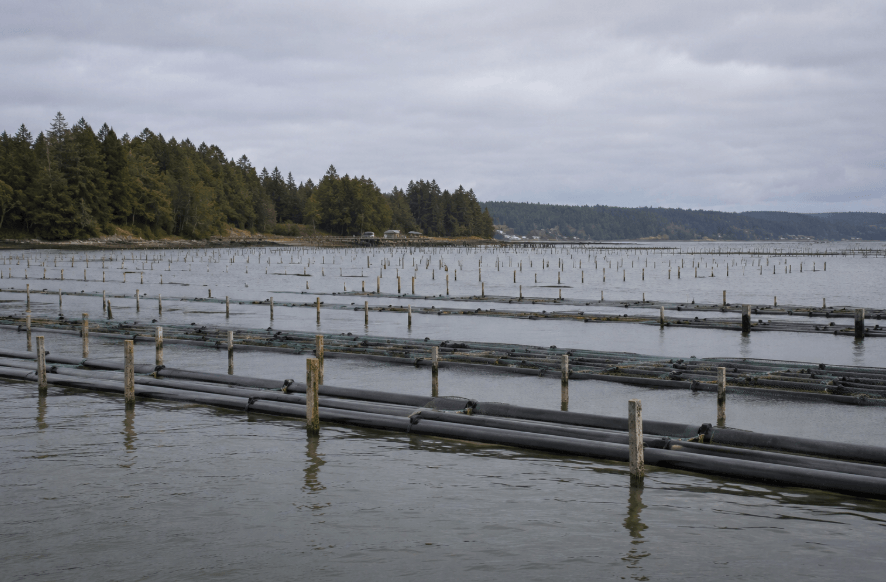
The organization said industrial shellfish operations rely extensively on plastic infrastructure, including more than 43,000 PVC tubes per acre, alongside protective netting, heavy machinery and other intensive farming practices.
The plaintiffs argued that these operations threaten critical salmon habitat, reduce water quality and disrupt migratory birds, as well as threatened and endangered species that depend on Washington’s coastal ecosystems.
The court agreed that the projects should not have been approved without the environmental assessments and public notification processes required under federal law.
Coalition Welcomes Decision
The Coalition to Protect Puget Sound Habitat said the ruling recognizes the cumulative environmental effects of expanding industrial aquaculture throughout the state’s coastal waters.
“The court correctly recognized that what the Industry and the Corps have been doing to Washington’s tide lands with the excessive permitting of these industrial scale aquaculture activities is creating a proverbial death by a thousand cuts. It has to stop, and some sort of rational balance in resource use needs to be restored.” said Karl G. Anuta, counsel for Coalition to Protect Puget Sound Habitat.
The decision follows years of litigation over industrial shellfish farming in Washington and builds on earlier court findings that federal regulators must fully evaluate environmental consequences before approving large-scale aquaculture developments.
Next Steps in the Case
Under the court’s order, defendants have two weeks to file objections through the district court. If the ruling stands, the permits for the nine shellfish operations will be declared null and void within 60 days.
The Corps would then be required to undertake the environmental assessment and public notice process that the court determined should have been completed before the projects received approval.
CFS said it intends to continue monitoring the Corps’ compliance with the court’s directives while advocating for a permitting process that it says is transparent, science-based and accountable to communities whose livelihoods and cultural traditions depend on Washington’s coastal waters.
The organization noted that it has been involved in efforts to limit the environmental impacts of industrial shellfish aquaculture nationwide. In 2019, CFS and the Coalition secured a court ruling aimed at protecting Washington’s coastlines from the expansion of industrial shellfish farming.
The latest ruling represents another chapter in the ongoing legal debate over balancing commercial aquaculture with environmental protection, tribal interests and public access to Washington’s ecologically significant shoreline.
Discover more from Wire Service Canada
Subscribe to get the latest posts sent to your email.