

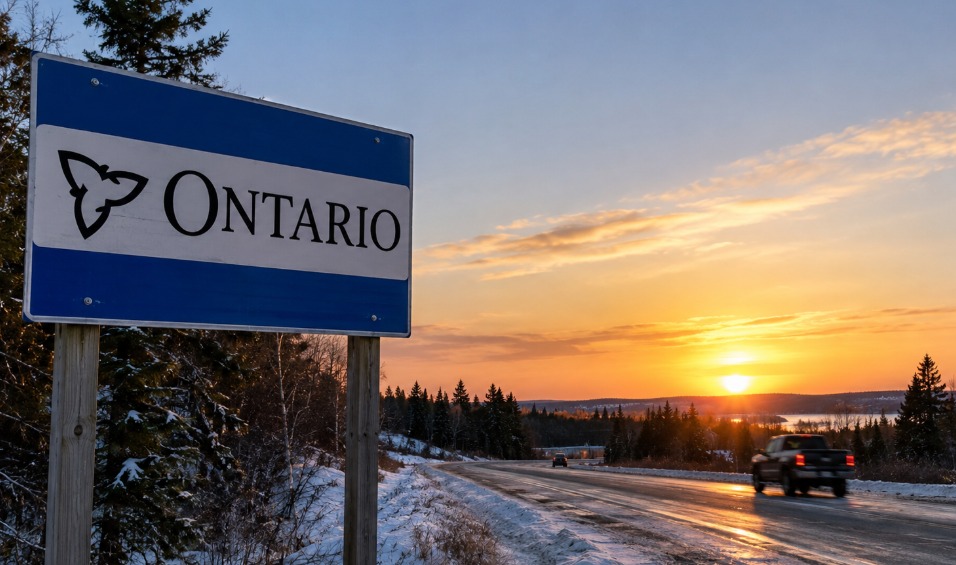
KENORA, Ontario — October 13, 2026 — The Ontario government is proposing to introduce permanent daylight saving time in Kenora and other parts of northwestern Ontario that operate in the central time zone, aligning the region with Manitoba’s planned time change. The proposed regulation would take effect by November 1, 2026, with the aim of reducing disruptions for businesses, families, Indigenous communities and essential service providers.
The announcement follows Manitoba’s decision to adopt permanent daylight saving time beginning November 1, a move that prompted Ontario to review how neighbouring communities could maintain consistent schedules across provincial boundaries.
Ontario Seeks to Maintain Time Zone Alignment With Manitoba
The proposed change would apply to communities in northwestern Ontario that have historically followed the same time as Manitoba.
Under the plan, affected communities would no longer turn their clocks back each autumn. Instead, they would remain on daylight saving time throughout the year, eliminating seasonal clock changes.
The government says maintaining consistent time across the Ontario-Manitoba boundary would support business operations, regional transportation and access to public services.
“Providing certainty and predictability is essential to supporting strong communities and a competitive economy,” said Attorney General Doug Downey. “By keeping this part of the province aligned with Manitoba, our government is taking a practical, common-sense approach to avoid unnecessary disruptions and ensure economic stability in communities that reside in Ontario’s central time zone.”
Economic and Business Implications for Northwestern Ontario
For businesses operating across provincial borders, differences in local time can complicate scheduling, employee coordination and customer services.
The proposed regulation is intended to prevent those complications as Manitoba moves toward permanent daylight saving time.
Consistent timekeeping could be particularly relevant for transportation providers, retailers, professional services and businesses with operations in both provinces.
Residents could also benefit from simpler scheduling for medical appointments, travel arrangements and other services involving neighbouring Manitoba communities.
The government has identified economic stability and operational predictability as central considerations in its proposal.
Consultations With Indigenous Communities and Regional Leaders
Ontario’s announcement follows consultations with communities across northwestern Ontario, including Indigenous leaders, after Manitoba announced its plans in September.
According to the provincial government, those discussions demonstrated substantial regional support for maintaining alignment with Manitoba.
“Through the collective efforts of communities and First Nations across the northwest, we’ve led a process to build consensus the right way, with detailed and nuanced considerations,” said Greg Rickford, Minister of Indigenous Affairs and First Nations Economic Reconciliation and Minister Responsible for Ring of Fire Economic and Community Partnerships. “What has emerged is unanimous support across the region to move to permanent daylight saving time, and our government is proud to support the people of northwestern Ontario as we make this decision, together.”
Ontario says it will continue working with municipal officials, Indigenous leaders and other regional representatives as the regulatory proposal advances.
How the November 1 Time Change Would Work
The proposed adjustment would be introduced through a regulation under Ontario’s Time Act.
Communities West of the 90th Meridian
Ontario’s central time zone begins west of the 90th meridian, a north-south line of longitude crossing northwestern Ontario.
Communities within the affected region that currently change their clocks seasonally would not turn them back on November 1, 2026, if the regulation is implemented.
As a result, those communities would observe the same clock time as the remainder of Ontario during winter, while maintaining alignment with Manitoba.
Communities elsewhere in Ontario operating on eastern time would continue changing their clocks twice annually.
Provincewide Daylight Saving Time Remains a Separate Issue
Ontario previously passed the Time Amendment Act, 2020, which provides for permanent daylight saving time across the province once brought into force.
However, broader implementation remains dependent on coordination with neighbouring jurisdictions, particularly Quebec and New York.
The government has emphasized the importance of consistent timekeeping for cross-border trade, financial markets and broadcasting.
The northwestern Ontario proposal represents a more geographically targeted approach, responding directly to Manitoba’s September 17, 2026, announcement.
Unlike the broader provincewide legislation, the proposed regional regulation would address communities already closely connected to Manitoba through business activity and public services.
Next Steps for Northwestern Ontario
Ontario intends to implement the proposed regulation by November 1, 2026, while continuing discussions with affected communities.
If finalized, the change would end seasonal clock adjustments in the designated northwestern region without changing the current system for most of the province.
The government’s immediate priority is to preserve regional coordination and minimize disruptions as Manitoba introduces permanent daylight saving time, while the wider question of year-round daylight saving time across Ontario remains unresolved.
Discover more from Wire Service Canada
Subscribe to get the latest posts sent to your email.