

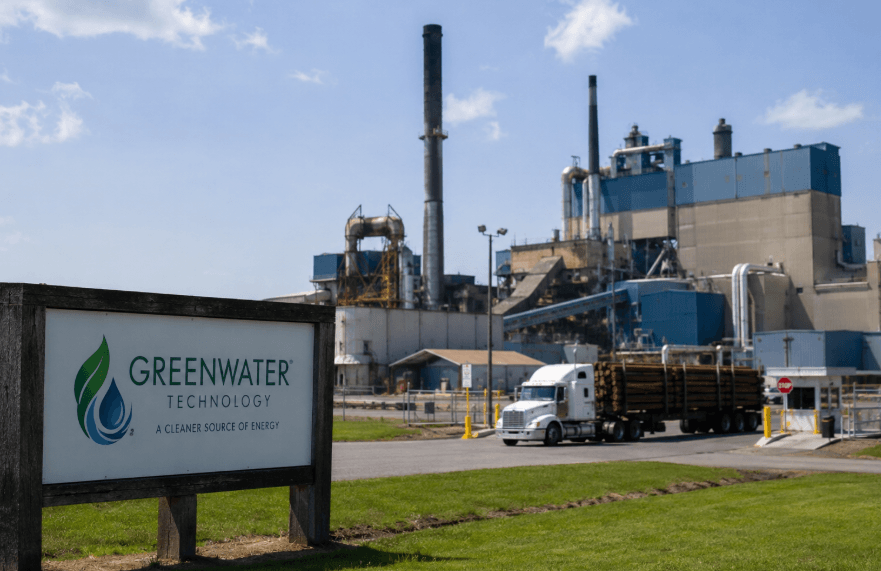
Province backs Greenwater Technology pilot plant to produce renewable diesel and sustainable aviation fuel from forest biomass
The Ontario government is investing more than $5.5 million in a new biofuel initiative in Thunder Bay aimed at expanding markets for forest products, strengthening Northern Ontario’s forestry sector and supporting the development of renewable transportation fuels.
The funding will support Greenwater Technology’s cleantech pilot plant project, which plans to produce renewable diesel and sustainable aviation fuel using mill by-products and underused wood fibre. The province said the investment is part of its broader strategy to help Ontario’s forest sector remain competitive and resilient amid ongoing U.S. trade pressures and tariffs.
“Under our government’s forest sector roadmap, we’re taking action to enhance Ontario’s reputation as a G7 leader in forest product manufacturing,” said Kevin Holland, Ontario’s Associate Minister of Forestry and Forest Products. “We are proud to invest in new technology that will deliver renewable fuels to power industries, accelerate productivity and grow business opportunity in Thunder Bay and across Ontario’s forest sector.”
Funding targets innovation and Northern economic growth
The provincial funding package includes $5 million through Ontario’s Forest Biomass Program and an additional $500,000 from the Northern Ontario Heritage Fund Corporation (NOHFC).
According to the province, the Forest Biomass Program investment is intended to support innovative technologies that increase the use of forest biomass, diversify the forestry sector and improve competitiveness in evolving global markets. The NOHFC contribution is designed to help Northern industries respond to trade disruptions while creating long-term economic opportunities.
The government said the project is expected to create three new jobs while opening new revenue streams for forestry businesses supplying biofuel markets in aviation and transportation.
Greenwater’s overall project is valued at $15.5 million and will involve converting a building at the Thunder Bay Pulp and Paper facility into a commercial-scale testing site. The demonstration plant will be used to assess the economic viability of the company’s technology and determine the optimal wood feedstock for high-quality biofuel production.
Biofuel production tied to Ontario forest sector strategy
The announcement aligns with Ontario’s 10-year Roadmap to Protecting Ontario’s Forest Sector, which focuses on defending forestry jobs, adapting the industry to global market changes and growing demand for Ontario wood products.
George Pirie, Ontario’s Minister of Northern Economic Development and Growth, said the investment demonstrates how innovation can create new economic opportunities for Northern communities.
“By pursuing new ideas, businesses like Greenwater are diversifying their products, turning forest biomass into alternatives to conventional fuels,” Pirie said. “Through the NOHFC, our government is supporting innovation in northern industries like forestry to help them grow, pivot and open up new markets for wood residuals, helping to build a stronger, more self-reliant North.”
Ontario’s forest sector generates nearly $21 billion in business revenue annually and supports close to 155,000 jobs across the province, according to government figures.
Since the launch of the Forest Biomass Program in 2023, Ontario has committed more than $55 million to over 55 projects, leveraging an additional $115 million in outside funding and creating more than 110 jobs.
Industry and regional partners highlight economic potential
Greenwater executives and regional partners said Thunder Bay offers the infrastructure and expertise needed to support the emerging biofuel sector.
“Thunder Bay is the perfect location to build this demonstration facility. It has everything – from research support at Lakehead University, fabrication at Venshore Mechanical, design support with Nordmin Engineering, a location like the Thunder Bay Pulp and Paper facility and, of course, wood fibre from the local forestry operations. Above all, it has experienced people to help us build, maintain and operate the facility. We are very appreciative to the Government of Ontario for recognizing the value of this project – and being an early champion in making it a reality,” said James C. Irving, President of Greenwater Ltd.
Norm Bush, CEO of Thunder Bay Pulp and Paper, said the project could help position Northwestern Ontario as a centre for clean-energy innovation tied to the forestry sector.
“Thunder Bay Pulp and Paper is excited to be the host site for Greenwater’s bio-energy pilot plant. This project reflects the growing opportunity to transform Ontario’s sustainably managed wood fibre into clean energy and high-quality jobs for Northern Ontario. As traditional paper demand evolves, initiatives like this position our region at the forefront of innovation, creating shared economic and environmental benefits for our companies, the City of Thunder Bay, local First Nations, and the Province,” Bush said.
Research institutions and local leaders support project
Several regional organizations and institutions also welcomed the investment, citing its potential to support economic diversification and sustainability goals.
Scott Jackson, CEO of the Centre for Research and Innovation in the Bio-economy (CRIBE), said the initiative supports Ontario’s broader energy and economic objectives.
“Today’s announcement supports the vision of growing Ontario’s forest sector and our bio-economy through innovation and cross sectoral collaboration. Support for these types of projects is critical in the province’s ongoing efforts to achieve energy security and position our economy for long-term success,” Jackson said.
Lakehead University, which is serving as a technical partner on the project through its Biorefining Research Institute, also emphasized the importance of research collaboration in scaling clean fuel technologies.
Local officials, including Thunder Bay Mayor Ken Boshcoff and representatives from the Northwestern Ontario Municipal Association and Thunder Bay Community Economic Development Commission, said the project could help create new opportunities for communities with longstanding ties to the forestry industry.
Greenwater said it plans to eventually integrate biofuel production facilities directly at anchor mills, allowing forestry operations to make greater use of biomass materials while improving supply-chain efficiency and creating additional sources of revenue.