

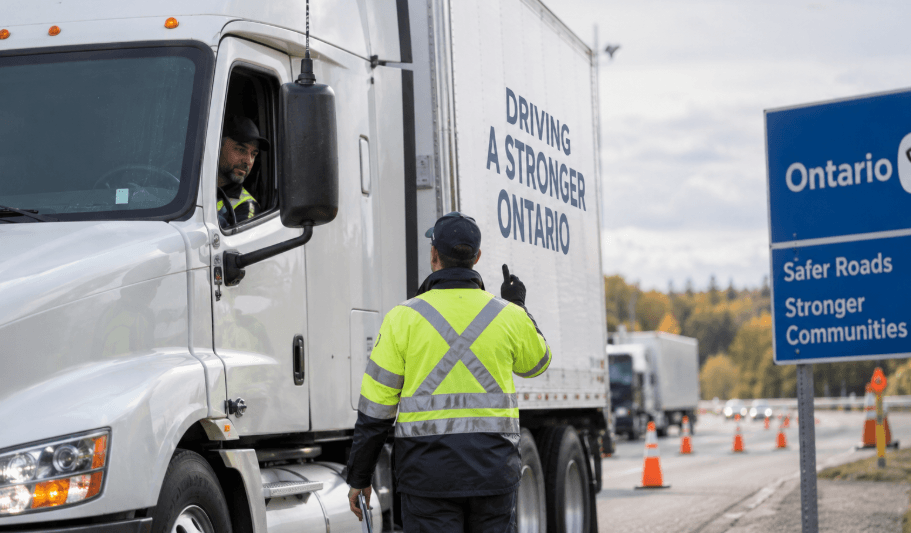
Ontario is moving to strengthen commercial driver training and licensing requirements with a new standardized entry-level curriculum for truck drivers, part of a broader provincial effort to improve road safety and oversight of the trucking sector.
The province said the planned curriculum will establish consistent training requirements for organizations that prepare drivers for a Class A commercial driver’s licence. The changes will include more than 103 hours of training and are expected to begin rolling out early next year following consultations with industry representatives and training providers.
New Curriculum to Set Province-Wide Training Standards
Under the proposed framework, truck driver training organizations across Ontario will be required to follow the same standardized entry-level curriculum. The province said the goal is to ensure new commercial drivers receive consistent instruction regardless of where they complete their training.
“Our government is focused on keeping Ontario’s roads safe, and a new standardized curriculum will ensure truck drivers have the rigorous training they need before getting behind the wheel of a commercial vehicle,” said Prabmeet Sarkaria, Minister of Transportation. “By strengthening training standards and ensuring commercial drivers have the skills and experience they need, we’re making our roads safer for truck drivers, commuters and families in every corner of the province.”
The curriculum is expected to cover more than 103 hours of training. Ontario is also considering additional subjects including fatigue management, driving in northern, rural and remote areas, human trafficking awareness and mandatory air brake training.
The provincial government said the standardized curriculum aligns with recommendations contained in an Auditor General report calling for stronger commercial driver training standards.
Industry Groups Back Consistent Training
Several trucking and driver-training organizations welcomed the province’s move toward standardized instruction.
“Quality training saves lives. Standardized curriculum is an important step toward ensuring every new commercial driver receives the knowledge, skills, and professionalism necessary to operate safely on Ontario’s roads. TTSAO is proud to support measures that strengthen training standards and enhance public safety.”
The statement was made by Ken Adams, Chairman of the Truck Training Schools Association of Ontario (TTSAO).
Tej Dulat, Director of the Canada Truck Operators Association (CTOA), also supported the initiative.
“Stronger and more consistent driver training is good for road safety, good for responsible carriers and good for the future of Ontario’s trucking industry. CTOA appreciates Minister Sarkaria’s continued engagement with the industry and welcomes this important step toward better preparing new commercial drivers for the road.”
Narinderpal Jaswal, President of the Ontario Commercial Truck Training Association (OCTTA), said consistent standards could help improve the preparation of new drivers.
“OCTTA welcomes the standardized entry-level truck driver training curriculum. Consistent, quality training is essential to preparing safe and skilled commercial drivers. We look forward to working with the Ministry to support strong training standards across Ontario.”
Ontario Expands Commercial Vehicle Oversight
The curriculum is part of a wider series of changes affecting commercial drivers and training schools.
Ontario now requires commercial vehicle drivers to provide documentation verifying their eligibility to work in Canada. The province has also appointed a dedicated integrity manager for truck driver testing and introduced supervisor spot checks and weekly reviews of commercial driver training schools.
The government has tabled legislation proposing tougher penalties for distracted driving involving commercial vehicles and for operating a commercial vehicle without a functioning speed limiter.
Beginning January 1, 2027, drivers holding a Class G licence or higher will also face a mandatory six-month waiting period before they can attempt a Class A road test.
Drivers arriving from jurisdictions without reciprocal licensing agreements with Ontario must complete a G2 road test and then wait at least 12 months before taking a G road test to become fully licensed.
Northern Ontario Enforcement Measures Expand
The province is also increasing commercial vehicle enforcement along the Highway 11/17 corridor in northern Ontario.
Measures include increasing the number of Transportation Enforcement Officers in the region, expanding enforcement blitzes and deploying two mobile inspection support units. Ontario is also upgrading its northern rest-area network to provide additional year-round truck parking.
The government said it will work with trucking industry leaders, driver-training organizations and other subject matter experts over the coming months to finalize the standardized curriculum.
With implementation expected to begin early next year, the changes would establish a common training framework for new Class A drivers while expanding oversight of commercial driver testing and enforcement across the province.