

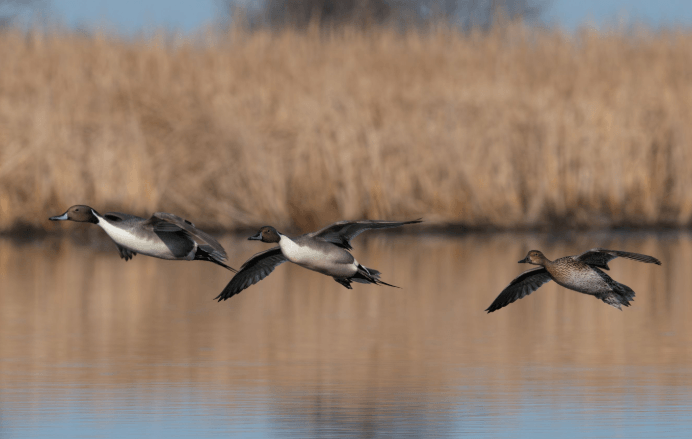
The Manitoba Wildlife Federation is urging hunters, outfitters and recreational water users to follow provincial regulations this fall, highlighting concerns about illegal waterfowl outfitting while also warning of newly confirmed zebra mussels in Lake Winnipegosis and Waterhen Lake.
The organization said compliance with hunting and aquatic invasive species rules is important for protecting legitimate outdoor businesses, Manitoba’s wildlife resources and the province’s lakes and rivers.
MWF Raises Concerns Over Non-Resident Waterfowl Hunting
With the non-resident waterfowl season approaching, the Manitoba Wildlife Federation said it has received reports that some outfitters without an allocation of Non-Canadian Resident Migratory Game Bird Licences, or those that have exceeded their allocation, may be directing clients to obtain licences through the province’s general non-resident licence draw.
According to the federation, that arrangement does not comply with requirements governing outfitted hunts.
Licence Requirements for Outfitters and Clients
An outfitter serving non-Canadian resident waterfowl hunters must hold a current Manitoba Resource Tourism Operator licence and be authorized to operate in the area where the hunt takes place.
The outfitter must also have an allocation of General Non-Canadian Resident Migratory Game Bird Licences. Clients participating in an outfitted hunt are required to obtain their licence directly from the outfitter’s allocation rather than through the general draw.
The federation said an outfitter without an allocation cannot legally provide those services to non-Canadian resident migratory game bird hunters.
Non-resident hunters also have responsibilities when arranging a trip. The general draw licences were designed for non-Canadian residents who hunt independently without using an outfitter.
“Enforcement action may involve both the outfitter providing illegal services and the non-Canadian resident hunter illegally participating in the outfitted hunt.”
Before booking, hunters are being encouraged to verify that their outfitter holds the appropriate licence, is authorized to work in the intended hunting area and has enough licence allocations for all clients.
Illegal Outfitting Can Be Reported
Under Manitoba legislation, a person can be considered an outfitter when, for compensation or the expectation of compensation, they provide two or more defined outfitting services related to hunting, fishing or ecotourism. Those services can include equipment or supplies, guiding and accommodation.
The MWF said legal outfitters make significant investments to comply with Manitoba’s licensing and allocation system, while illegal operations can undermine legitimate businesses and wildlife management.
Suspected illegal outfitting or other hunting violations can be reported to the Manitoba Conservation Officer Service through the Turn in Poachers line at 1-800-782-0076.
“Know the regulations. Ask questions before you book. And if something doesn’t look right, report it.”
Zebra Mussels Confirmed in Two Manitoba Lakes
The federation is also drawing attention to the confirmed detection of invasive zebra mussels in Lake Winnipegosis and Waterhen Lake.
The initial Lake Winnipegosis detection followed a report from a local fisher who found zebra mussels attached to a boat after it was removed from the water. Samples collected in late August were subsequently analyzed, confirming zebra mussel larvae, known as veligers, in Lake Winnipegosis and downstream Waterhen Lake.
So far, zebra mussels have been confirmed only in the southern portion of Lake Winnipegosis, with additional monitoring underway to determine the extent of the invasion.
Water Users Told to Clean, Drain and Dry
Water users leaving Lake Winnipegosis and Waterhen Lake are now required to decontaminate watercraft and water-related equipment before launching in another waterbody.
The federation is emphasizing its “Clean, Drain, Dry” approach as a practical way for anglers, boaters, hunters and other recreational users to reduce the risk of transporting invasive species.
Users are advised to clean aquatic plants, mud and debris from equipment, drain water from boats, motors, live wells and other gear, and allow watercraft and equipment to dry completely before entering another lake or river.
The MWF said individual action remains an important part of limiting the movement of aquatic invasive species and protecting Manitoba’s fisheries and waterways as fall hunting and outdoor recreation activity increases.