

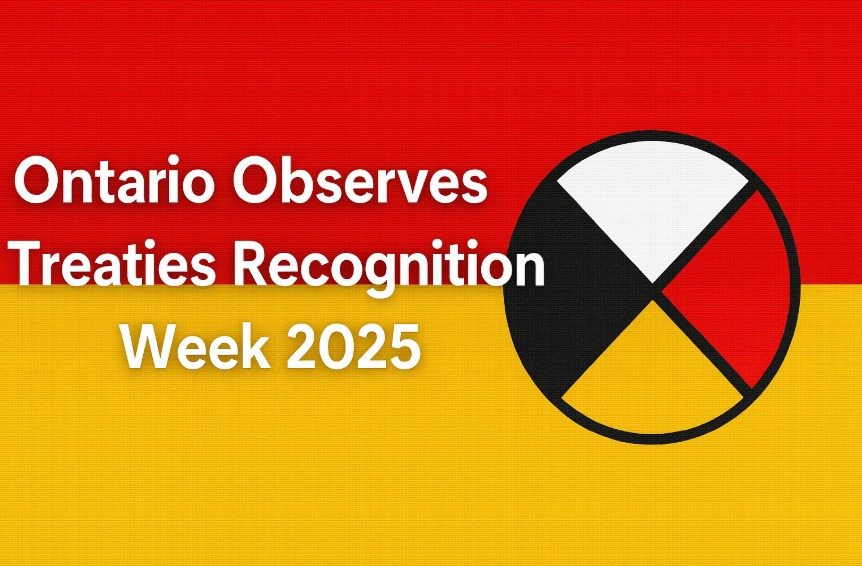
TORONTO — Ontario is observing the 10th annual Treaties Recognition Week, an initiative aimed at promoting public understanding of the treaties and agreements that underpin the province’s relationships with Indigenous communities. The government said the occasion serves as both a reminder of historic commitments and a call to strengthen partnerships for future shared prosperity.
The statement was issued by Greg Rickford, Minister of Indigenous Affairs and First Nations Economic Reconciliation and Minister Responsible for Ring of Fire Economic and Community Partnerships, who emphasised the enduring importance of these agreements in shaping Ontario’s economic and social development.
Building partnerships for reconciliation and growth
“Treaties Recognition Week, marked each year during the first week of November, is a time to learn more about the more than 40 Treaties and agreements that shape our relationships with Indigenous communities across Ontario,” said Greg Rickford.
The minister’s remarks positioned treaties not only as historical instruments but as living frameworks that continue to influence economic policy, infrastructure planning, and community collaboration across the province. Rickford stressed that Ontario’s approach to reconciliation is increasingly tied to mutual economic participation and long-term sustainability.
“Ontario’s prosperity is built on partnerships, and these agreements form the foundation for reconciliation and opening new pathways to shared economic prosperity,” he said. “Ontario is proud to work in partnership with Indigenous communities on initiatives that support Indigenous equity participation in transformational projects, skills development and new investments in resource and energy projects to build a more competitive, resilient and self-reliant economy that benefits everyone.”
Ten years of recognition and education
Launched in 2016, Treaties Recognition Week was created to increase public awareness of the treaties signed between Indigenous nations and the Crown. More than 40 treaties cover the province, each representing commitments of shared land, resources, and cooperation.
Now in its tenth year, the initiative has grown beyond classroom lessons and public events to include partnerships between schools, community groups, and Indigenous organisations. Activities typically include educational workshops, storytelling sessions, and community dialogues that explore both the historical context of treaty-making and its modern-day implications.
Ontario’s Ministry of Indigenous Affairs and First Nations Economic Reconciliation said the week encourages residents to reflect on their own connections to the land and the treaties that govern it. The government continues to promote online and in-person resources to help Ontarians understand the responsibilities and benefits that stem from these agreements.
Economic reconciliation and the Ring of Fire
Rickford’s statement also highlighted the province’s ongoing efforts to align economic development with reconciliation, particularly through projects in resource-rich regions such as the Ring of Fire in northern Ontario. The area is viewed as one of Canada’s most significant mineral reserves and a cornerstone for the country’s emerging green economy, given its deposits of critical minerals essential for electric vehicle and battery manufacturing.
By placing Indigenous equity participation at the heart of these ventures, the province aims to ensure that communities benefit directly from investments in infrastructure, mining, and clean energy. Rickford noted that Ontario’s collaboration with Indigenous partners is essential to building a “more competitive, resilient and self-reliant economy.”
These initiatives, he said, form part of a broader government commitment to balance economic growth with respect for Indigenous governance, land stewardship, and cultural priorities.
A call to reflection and shared understanding
In concluding his statement, the minister urged all Ontarians to take time during Treaties Recognition Week to learn more about the land they live and work on and the agreements that make those communities possible.
“This week and beyond, I encourage everyone to take time to learn about the Treaties that cover the land where you live, work or study,” Rickford said. “By deepening our understanding of these commitments, we strengthen our partnerships and continue working together to build a stronger, more prosperous Ontario for generations to come.”
The province’s recognition of treaties and continued focus on partnership-driven development underscores a wider commitment to reconciliation through action—linking history, education, and shared economic progress.
