

Proposed legislation would expand enforcement powers and target drug production networks
TORONTO — The Ontario government is preparing new legislative measures aimed at curbing illegal drug use on public transit and disrupting the production of illicit substances, as part of a broader push to enhance community safety across the province.
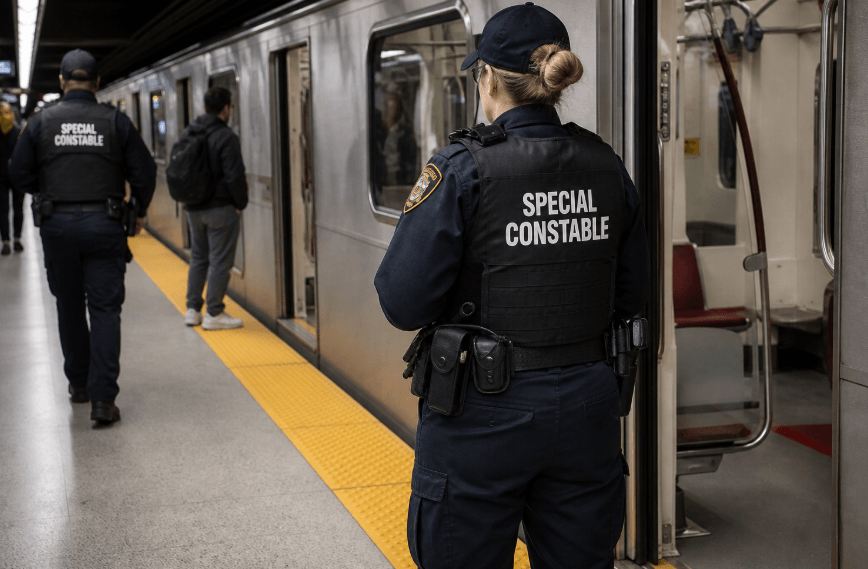
The proposed changes, announced Monday by the Ministry of the Solicitor General, would grant additional enforcement authority to transit special constables while introducing stricter penalties for individuals involved in illegal drug manufacturing and distribution.
“Protecting Ontario means making sure people feel safe when they use public transit,” said Michael Kerzner, Solicitor General. “Through these proposed changes we are giving law enforcement and their partners the tools they need to keep our communities and transit systems safe, while holding offenders and those who enable them accountable.”
Expanded powers for transit enforcement
Under the proposed regulatory framework, special constables operating on designated transit systems would be authorized to enforce the Restricting Public Consumption of Illegal Substances Act, 2025. This would allow them to intervene directly in cases of illegal drug use on buses, trains, subways, and other transit areas.
Enforcement measures would include the ability to stop individuals from consuming illegal substances, issue tickets, and make arrests if compliance is refused. Transit agencies such as Metrolinx, the Toronto Transit Commission, and OC Transpo already employ special constables, positioning them to play a more active role under the new rules.
The initiative comes as Ontario continues to invest heavily in transit expansion, with officials emphasizing that safety must keep pace with infrastructure growth.
“People deserve to feel safe when they take transit to work, school or home,” said Prabmeet Sarkaria, Minister of Transportation. “As our government makes historic investments to expand public transit across Ontario, we are making it clear that illegal drug use has no place on buses, subways, streetcars or trains, and we are taking action to help keep riders, transit workers and communities safe.”
Targeting drug production and supply chains
Beyond transit enforcement, the legislative package would introduce new restrictions aimed at dismantling illegal drug production networks. Proposed measures include prohibiting the ownership, use, or sale of designated equipment—such as pill presses—when intended for manufacturing illicit drugs.
The rules would also ban the possession, production, or trafficking of precursor chemicals commonly used in drug synthesis.
A key component of the plan involves bringing the Measures Respecting Premises with Illegal Drug Activity Act, 2025 into force. Once implemented, the law would make it an offence for commercial landlords to knowingly permit illegal drug production on their properties. It would also grant police expanded authority to shut down such operations.
The government noted that certain facilities, including retirement homes, long-term care homes, and shelters providing homelessness support, would be exempt from the regulations.
Broader strategy to enhance public safety
Officials say the proposed regulatory changes are part of a wider legislative effort to strengthen enforcement of existing laws, protect vulnerable populations, and improve overall public safety across Ontario.
“Illegal substances threaten the safety of our communities. Our government plans to propose changes that will strengthen law capabilities, disrupt the production and sale of illegal substances, and prevent dangerous drugs from reaching our streets,” said Doug Downey, Attorney General.
Industry and enforcement groups have signalled support for the measures, particularly the expanded role for transit constables.
“The Ontario Special Constable Association (OSCA) welcomes the provincial government’s actions to equip transit special constables with additional legislative tools to enhance public safety for riders and staff. The OSCA is pleased to see the government’s recognition of special constables as essential, professional law enforcement partners that can be relied on to deliver public safety within our varied roles across Ontario,” said Sarah Kennedy, President of the Ontario Special Constable Association.
Legislative timeline and context
The Restricting Public Consumption of Illegal Substances Act, 2025 came into force in June 2025 as part of the Safer Municipalities Act, while the premises-related legislation was enacted earlier that same month under the Protect Ontario Through Safer Streets and Stronger Communities Act.
The forthcoming regulatory updates would operationalize and expand these frameworks, reflecting the province’s evolving approach to drug enforcement and public safety.
If passed, the measures are expected to significantly increase the role of transit enforcement personnel while tightening oversight of properties linked to illegal drug activity—steps the government argues are necessary to keep pace with growing safety concerns in both urban transit systems and communities across Ontario.