

Industry group warns of governance, economic, and land-use implications in northern Manitoba conservation plan
Proposed Indigenous Protected Area could reshape provincial policy and tourism economy
The Manitoba Lodges and Outfitters Association (MLOA) is raising concerns over a sweeping proposal to designate the Seal River Watershed (SRW) in northern Manitoba as an Indigenous Protected and Conserved Area (IPCA), warning that the plan could have far-reaching consequences for land management, tourism, and provincial authority.
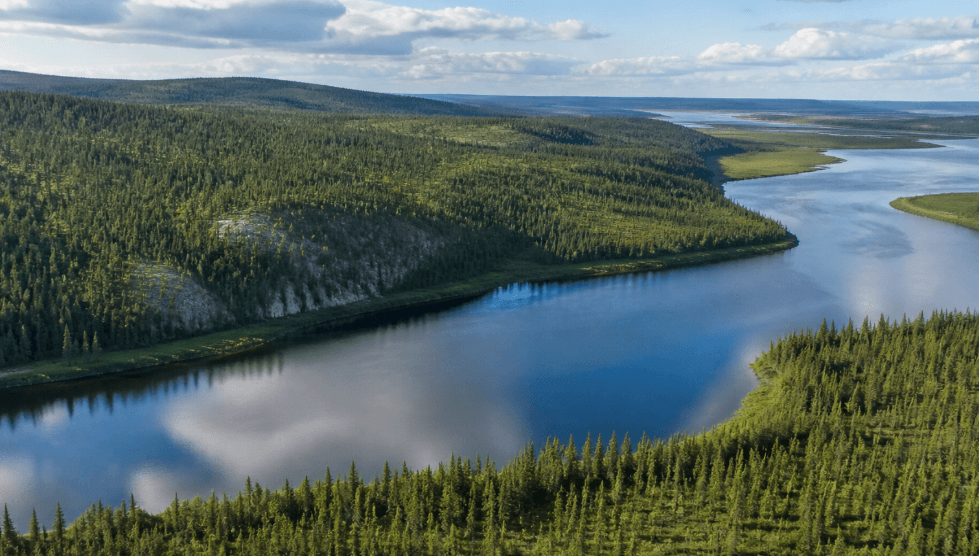
Spanning more than 50,000 square kilometres—roughly eight per cent of Manitoba—the Seal River Watershed is widely regarded as one of the province’s most pristine ecological regions. It is also a cornerstone of northern Manitoba’s outdoor tourism industry, home to established lodges and outcamps that support hunting and angling activities.
That sector contributes approximately $1.5 billion annually in combined direct and tourism-related spending across Manitoba. Data from 2019 suggests that up to 42 per cent of lodge and outfitter operators are located in northern parts of the province, underscoring the region’s economic importance.
The current proposal follows years of development. In 2019, four First Nations formed the Seal River Watershed Alliance to advance protection efforts. A feasibility study conducted in partnership with the provincial and federal governments concluded in early 2025 that establishing an IPCA in the region was viable.
A formal proposal has now been released for public consultation, with submissions open until June 2. It outlines a “mosaic model” that would designate the entire watershed—49,779 square kilometres—as an IPCA. The framework includes the potential creation of a national park, a new provincial park, and boundary adjustments to three existing provincial parks.
National park proposal draws opposition
MLOA cites wildfire management, economic losses, and federal oversight concerns
While the MLOA says it supports conservation, it strongly opposes the proposed national park component, which would transfer approximately 18,500 square kilometres of provincial Crown land to federal jurisdiction.
“The Manitoba Lodges and Outfitters Association (MLOA) strongly supports conservation. In fact, we often suggest the outdoor tourism industry is synonymous with conservation as, without it, the industry would crumble.”
However, the association argues that federal involvement raises operational and environmental risks, particularly in light of recent wildfire seasons.
“2025 saw one of the worst wildfire years on record which drew resources from every corner of the province and country. The Federal government’s history of land and wildfire management does not bode well for Manitobans, particularly in an area as remote as the SRW.”
The group also pointed to challenges observed in similar protected area models elsewhere in Canada, emphasizing the need for accountability and regional expertise.
“There are also examples across Canada where similar protected area models have faced challenges related to governance and long-term management outcomes. These experiences highlight the importance of ensuring that any new model is supported by clear accountability, adequate resources, and region-specific expertise particularly in remote areas such as the SRW.”
Economic concerns are also central to the MLOA’s position. The proposal includes a 10-year phase-out of outfitting and licensed hunting under federal legislation, a move the association says would remove a key funding stream for conservation and restrict access.
“The proposal of a 10-year phase-out of outfitting and licensed hunting under the Canada National Parks Act eliminates dollars that go directly from licensed hunting sales to conservation and removes long-standing public access for only licensed hunters while still allowing First Nations hunting.”
Governance model raises jurisdictional questions
Concerns focus on management board authority and provincial control
The proposal calls for a joint management board comprising Indigenous, federal, and provincial representatives to oversee the entire watershed. The MLOA says the structure lacks clarity and could undermine Manitoba’s authority over Crown land.
“The proposal to designate management authority of the entire SRW to a single management board that oversees the proposed National and provincial parks raises significant concerns, particularly without clarity regarding the composition, respective authority and dispute process.”
The association is particularly opposed to federal involvement in decisions related to land use, hunting regulations, and industry operations.
“The MLOA firmly opposes the Federal government having input over decisions related to provincial land use and access as well as regulatory decisions that directly affect the health and longevity of the outfitting industry including allocating tags, setting season dates and enforcing regulations.”
It also emphasized the importance of industry representation in any governance model.
“The MLOA strongly upholds that should any management board be established, outfitters and licensed hunters and anglers must have meaningful representation on that board as a direct voice to government.”
Boundary design and access remain unresolved
Industry seeks clarity on mapping, park classifications, and operational impacts
Beyond governance, the MLOA is questioning the technical basis for the proposed watershed boundaries, including whether modern mapping technologies were used.
“The MLOA has concerns regarding the scientific data used to create the proposed SRW boundaries, specifically whether done utilizing provincial topographic databases or lidar drone scan.”
The group argues that more precise methods would better reflect natural drainage patterns and reduce uncertainty for existing operators.
It also flagged concerns about how new provincial park classifications—such as Indigenous Traditional Use Park designations—could affect access to land and infrastructure.
Additionally, the proximity of proposed boundaries to existing outcamps and operating areas has raised alarms within the industry.
“Furthermore, the MLOA has significant concerns about the proximity of the proposed boundaries to established outcamps and allocated operating areas effectively leaving these operations vulnerable.”
Call for balanced approach ahead of consultation deadline
The MLOA maintains that conservation and economic sustainability are not mutually exclusive, but must be carefully balanced in any final decision.
“The MLOA supports responsible, meaningful conservation and recognizes the importance of protecting the ecological integrity of the Seal River Watershed. However, this must be achieved through a balanced approach that respects existing operators, maintains sustainable economic contributors, and ensures Manitoba retains authority over its lands and resources.”
As Manitoba’s first IPCA proposal, the outcome is expected to influence future conservation and land-use decisions across the province.
“It is critical that it is done thoughtfully, transparently, and with meaningful input from those directly affected.”
With the public consultation period underway, the MLOA is urging Manitobans to review the proposal and submit feedback before the June 2 deadline.