

Construction ramps up across Toronto as province pushes forward with multibillion-dollar transit expansion
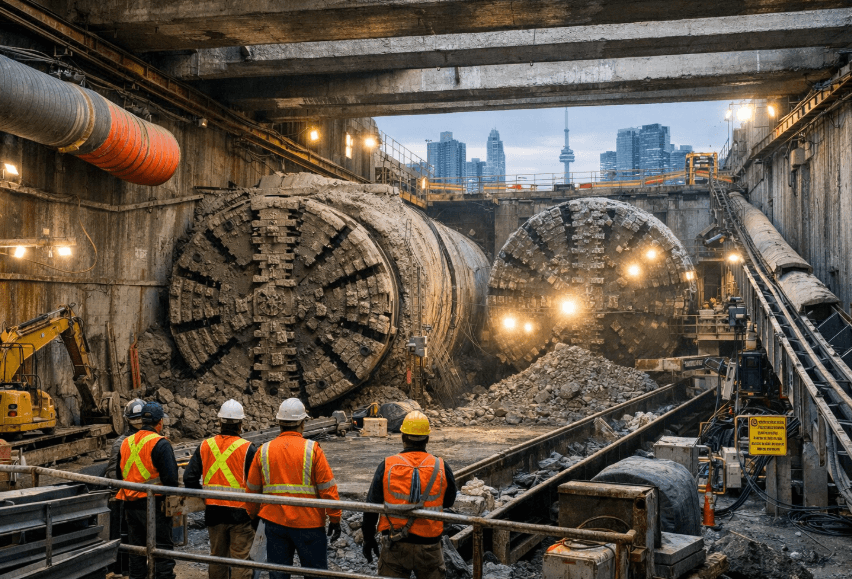
TORONTO — The Ontario government has begun tunnelling work on the long-anticipated Ontario Line, signalling a significant step forward in one of the largest public transit expansions in Canadian history.
The milestone marks the transition from preparatory construction to full-scale underground development, with crews now actively boring tunnels beneath Toronto’s downtown core. The project, led by the government of Government of Ontario under Premier Doug Ford, is positioned as a central piece of the province’s strategy to reduce congestion and improve transit accessibility across the Greater Toronto Area (GTA).
“The start of tunnelling is a historic milestone for the Ontario Line which, once complete, will help cut travel times for commuters across Toronto by 40 minutes,” said Ford. “Our government will continue to fight gridlock and keep workers on the job by leading the largest expansion of public transit in North America.”
Twin tunnels underway as project reaches deeper phase
Two tunnel boring machines have been deployed from Exhibition Station, digging twin tunnels toward the Don Yard near the Don Valley Parkway and Lakeshore Boulevard. The tunnels will reach depths of up to 40 metres below ground before trains emerge east of the Don River and continue above grade.
Once complete, the 15.6-kilometre line will stretch from Exhibition Place to the Eglinton Crosstown Light Rail Transit (LRT) at Don Mills Road. The route will include 15 stations and more than 40 connections to existing transit services, positioning it as a major new spine in Toronto’s transit network.
Transportation Minister Prabmeet Sarkaria said the project is advancing both infrastructure and economic goals.
“Under the leadership of Premier Ford, we’re getting the Ontario Line done to tackle gridlock and increase access to fast, reliable and affordable transit for millions of people across the GTA,” Sarkaria said. “This major milestone moves us another step closer to delivering world-class transit for people across the GTA while supporting thousands of good-paying jobs.”
The province estimates the project will support approximately 4,700 jobs annually during construction.
Station construction progresses alongside tunnelling
Above ground, major construction continues at Exhibition Station, where platforms and entrances are taking shape. The station is expected to become a key interchange with GO Transit, serving the rapidly growing Liberty Village neighbourhood.
Officials project that more than 12,000 passengers will use Exhibition Station during peak periods, including over 6,000 transferring between regional and local transit systems.
Work is also advancing at several downtown stations, with excavation completed at King West, Moss Park and Distillery District, and nearing completion at Chinatown.
To improve wayfinding and better reflect local communities, the province has finalized new names for several stations, replacing earlier working titles with neighbourhood-based identifiers.
Federal and municipal leaders highlight economic impact
Federal and municipal leaders emphasized the broader economic and social benefits tied to the project, including improved productivity and housing development opportunities.
“The Ontario Line will help to transform the GTA, making it faster and easier for residents to reach home, school or work,” said Gregor Robertson. “By working together, we are building the first new subway line in Toronto in decades, and we are thrilled to see progress continue.”
Toronto Mayor Olivia Chow added that the project aligns with the city’s broader transit affordability and service goals.
“today marks a major step forward as we begin tunnelling the Ontario Line through the heart of downtown Toronto. This project is part of a historic investment in public transit to fight gridlock, cut commute times and keep people moving across our city. As Mayor, I am committed to keeping the TTC affordable by freezing fares for three years while increasing service and improving reliability. We are introducing fare capping this year so Torontonians can ride more and pay less and advancing the design of the Scarborough East Rapid Transit Line, formerly the Eglinton East LRT. The city and province will continue working together to deliver affordable and safe transit that keeps Toronto moving.”
The federal government is contributing more than $4 billion toward the Ontario Line, part of a broader push to support transit infrastructure in the region.
Business and community groups back project benefits
Business organizations say the transit expansion will have measurable economic benefits, including improved labour mobility and reduced congestion.
“The start of tunnelling on the Ontario Line is a key milestone for Toronto and the region’s economy. Better transit connects workers to jobs and businesses to talent, takes cars off the road and boosts productivity and growth,” said Daniel Tisch, representing the Ontario Chamber of Commerce.
Metrolinx CEO Michael Lindsay highlighted the historical significance of the work now underway.
“It’s been more than 60 years since we last tunnelled a subway in Toronto’s downtown core, so this is a very pivotal moment for the people of this great city. With excavation nearly complete for all downtown stations and major construction underway across the full length of the route, it’s undeniable that we’re full steam ahead on a rapid transit line that will put nearly 230,000 more people within walking distance of fast, reliable, modern rapid transit.”
Long-term outlook tied to housing and growth
The Ontario Line is part of a nearly $70-billion provincial transit investment plan that also includes the Scarborough Subway Extension, Eglinton Crosstown West Extension and Yonge North Subway Extension.
Acting Infrastructure Minister Todd McCarthy linked the project to broader housing and economic development goals.
“Under Premier Ford’s leadership, we are investing $236 billion to build and protect Ontario, including delivering new homes in vibrant, transit-oriented communities along the new Ontario Line. These TOCs will enable close to 15,000 new homes and support over 47,000 new jobs in retail and commercial spaces, making it easier than ever to connect to transit, work and recreation across the GTA.”
Once completed, the Ontario Line is expected to handle nearly 390,000 daily trips and significantly reduce travel times across Toronto, reinforcing its role as a cornerstone of the region’s long-term growth strategy.
Discover more from Wire Service Canada
Subscribe to get the latest posts sent to your email.