

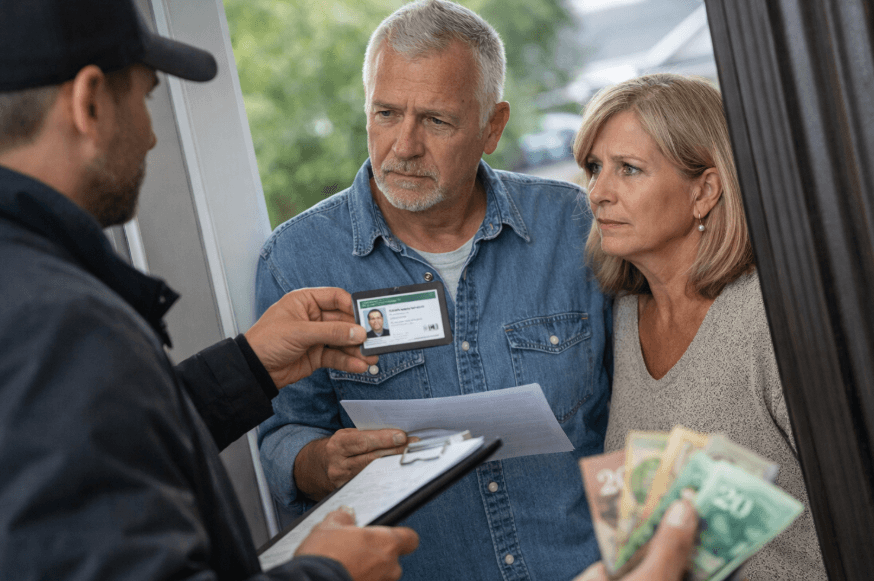
Spring Campaign Targets Rise in Unlicensed Sellers and Consumer Complaints
Residents Encouraged to Verify Licences and Take Time Before Signing Contracts
SAINT JOHN — As door-to-door sales activity ramps up across the province this spring, Financial and Consumer Services Commission of New Brunswick is warning residents to remain vigilant when approached with unsolicited offers for home services.
In a campaign launched April 15, the regulator is urging New Brunswickers to slow down and carefully assess offers made at their doorstep, particularly as complaints about unlicensed sellers continue to rise.
Door-to-door pitches for services such as driveway paving, roofing repairs, solar panel installations and attic inspections are common during warmer months. While many vendors operate legitimately, the Commission says some individuals may be working without the proper credentials required under provincial law.
In New Brunswick, direct sellers must be licensed and bonded with the Commission. They are also required to carry proof of their licence and represent a registered company. According to the regulator, this system is designed to protect consumers by ensuring only qualified sellers operate under the province’s Direct Sellers Act.
“We’re asking New Brunswickers, ‘Would you know what to do if a scam came knocking?’” said Marissa Sollows, the Commission’s Director of Communications and Public Affairs. “We want New Brunswickers to have the confidence to pause and consider the deal they are being offered. They should ask to see the salesperson’s licence, take time to read the contract, and ask friends and family for their opinions if they need help or feel pressured to make a decision.”
Complaints Increasing as High-Pressure Tactics Persist
The Commission reports a noticeable increase in complaints in recent years կապված unlicensed door-to-door sellers. These cases often involve aggressive sales tactics or misleading claims aimed at pushing consumers into quick decisions.
Officials say it is not uncommon for fraudulent operators to pressure homeowners into signing contracts on the spot or making immediate payments, sometimes in cash. Such practices can leave consumers financially exposed, especially when services are not delivered as promised or contracts contain unfavourable terms.
To address these concerns, the Commission’s new multi-platform awareness campaign provides practical guidance on how residents can protect themselves, their finances and their property when dealing with direct sellers.
Key Steps to Protect Against Door-to-Door Scams
The regulator advises consumers to take several precautions before agreeing to any purchase at their doorstep. These include verifying the seller’s licence, ensuring it is valid and matches the company being represented, and confirming that it has been signed by both the Commission and the salesperson.
Consumers are also encouraged to independently verify whether a seller or company is licensed by consulting the Commission’s online database. Gathering full contact details, asking detailed questions about pricing and terms, and understanding cancellation policies are also critical steps before entering into any agreement.
Seeking second opinions remains another key safeguard. The Commission suggests consulting friends, family members or community contacts, as well as checking independent reviews or resources such as the Better Business Bureau.
Payment practices are another area of concern. Consumers are advised to avoid paying the full amount upfront and to be cautious of any seller insisting on cash payments or applying pressure to complete a transaction immediately.
“And don’t forget, as a consumer, you have the right to a 10-day “cooling-off” period that allows you to cancel a direct sales contract,” Sollows pointed out.
Reporting সন্দicious Activity and Seeking Help
The Commission is encouraging residents who encounter high-pressure sales tactics or suspect deceptive practices to report incidents through its website. In cases involving suspicious or potentially criminal behaviour, consumers should contact local law enforcement.
The awareness campaign underscores a broader push by regulators to strengthen consumer protection as in-person sales channels remain active despite the growth of digital commerce.
For New Brunswickers, the message is straightforward: take the time to verify, ask questions and avoid making rushed decisions at the door.
More information about direct selling regulations, licence verification and consumer rights is available through the Commission’s official resources.