

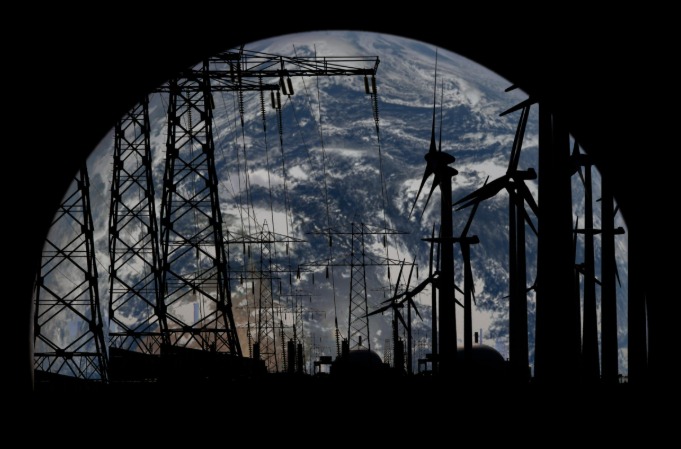
Global electricity demand is poised for sustained and rapid growth through the end of the decade, reinforcing the urgency of investment in power grids, system flexibility and energy security, according to new analysis from the International Energy Agency (IEA).
In its latest annual outlook, Electricity 2026, the IEA projects global power demand will increase by more than 3.5% per year on average for the rest of the 2020s. That pace is more than 2.5 times faster than growth in overall energy demand, underscoring what the agency describes as the accelerating “Age of Electricity.”
The surge is being driven by multiple structural forces: rising industrial electrification, the continued uptake of electric vehicles, increased use of air conditioning, and the rapid expansion of data centres and artificial intelligence applications. To meet that demand, electricity generation from renewables, natural gas and nuclear power is expected to expand in tandem over the coming years.
By 2030, renewables and nuclear energy combined are projected to account for 50% of global electricity generation. While natural gas-fired power output is also set to rise through the end of the decade, coal-fired generation is expected to lose ground globally as cleaner sources expand. As a result, global carbon dioxide emissions from electricity generation are forecast to remain roughly flat between now and 2030, even as demand rises sharply.
The IEA warns, however, that the changing profile of electricity supply and demand brings new challenges. A growing share of weather-dependent generation, alongside evolving consumption patterns and emerging technologies, is placing increasing strain on existing power systems. The report stresses the need for a rapid and efficient expansion of electricity grids, as well as greater investment in system flexibility, including storage, demand-side response and smarter network management.
Affordability, security and resilience are also moving higher on policymakers’ agendas, particularly as electricity becomes more central to economic activity and daily life. The IEA’s analysis highlights policy measures aimed at maintaining reliable and affordable power while managing the risks associated with tighter supply chains and infrastructure bottlenecks.
Those issues will feature prominently later this month when energy ministers from around the world gather in Paris for the IEA’s 2026 Ministerial Meeting. The biennial event, taking place on 18 and 19 February, will bring together ministers and vice ministers to assess recent developments in energy markets and policies, and their implications for energy security, affordability and sustainability.
The meeting will be chaired by Dutch Deputy Prime Minister Sophie Hermans, who will lead the opening alongside the IEA’s Executive Director, Fatih Birol. Countries represented at ministerial or vice-ministerial level will include major economies such as Canada, the United States, the United Kingdom, Germany, Japan, India and Australia, alongside a broad group of emerging and developing economies.
Industry leaders, heads of international organisations and civil society representatives are also expected to take part, with the IEA’s third annual Energy Innovation Forum running in parallel on 18 February.
Beyond Paris, the agency’s leadership has been actively engaging with governments on energy market developments and longer-term challenges. Dr. Birol recently met with Recep Tayyip Erdoğan in Istanbul to discuss global energy market trends and preparations for COP31, which will be held in Antalya in November. Türkiye is hosting and presiding over COP31 in partnership with Australia, which is leading the negotiation process. Dr. Birol has also held discussions with Australia’s Minister for Climate Change and Energy, Chris Bowen, on how the IEA can support a successful conference.
In Riyadh, the IEA Executive Director led a delegation to the 16th IEA-IEF-OPEC Symposium on Energy Outlooks, where global energy trends, electricity demand growth and clean energy transitions were among the central themes. Separately, meetings in Berlin and Rome focused on European energy security, industrial competitiveness and the growing importance of critical minerals.
Critical mineral supply security is set to be another key topic at the Paris ministerial. The IEA notes that highly concentrated supply chains pose economic and national security risks, prompting renewed interest in strategic stockpiling systems. While such stockpiles can help buffer countries against supply shocks, the agency cautions that effective design requires careful consideration of governance, costs and logistics.
Taken together, the IEA’s latest findings point to a decade in which electricity will play an increasingly dominant role in the global energy system. Meeting surging demand while maintaining affordability, security and sustainability will depend not only on new generation capacity, but also on modernized grids, flexible systems and coordinated policy action across borders.
Discover more from Wire Service Canada
Subscribe to get the latest posts sent to your email.
