

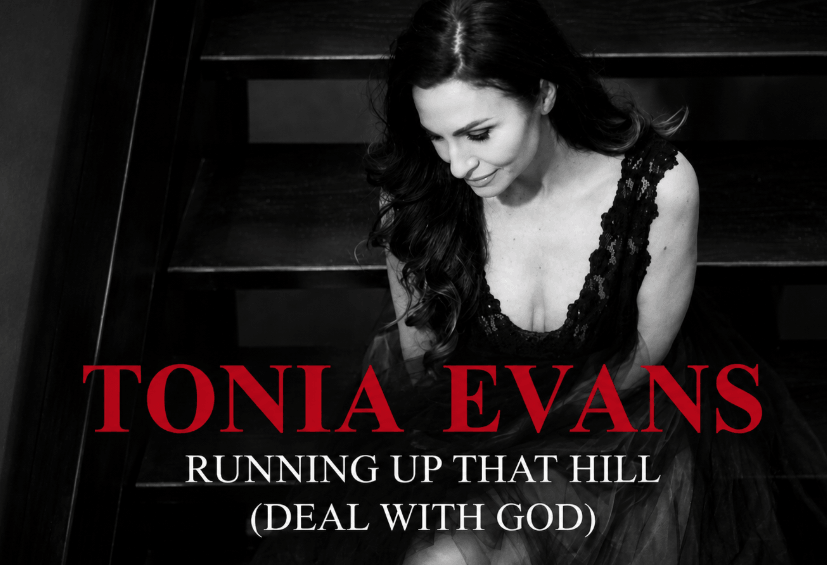
Toronto-based, Newfoundland-born singer-songwriter Tonia Evans (Cianciulli) is bringing a deeply personal perspective to Kate Bush’s “Running Up That Hill,” using the cover as part of a broader musical project centred on identity, healing and personal change.
The recording forms part of Evans’s forthcoming album, Love Me Till I’m Me Again, and follows a difficult period in her personal life. Rather than approaching the song simply as a reinterpretation of a well-known track, Evans says its themes became closely connected to her own experiences.
Personal upheaval shapes Evans’s interpretation
Evans filed for divorce after 23 years of marriage following revelations that changed how she viewed the relationship.
“Three years ago, the answers arrived unexpectedly through an avalanche of anonymous emails, text messages, and even a Bell payphone call containing details and photographs of a betrayal that would ultimately unravel a 27-year relationship and forever change the course of my life,” she says. “Healing through betrayal trauma has been messy, emotional, and heartbreaking as a woman, a mother, and an artist, it will never define who I am. However, it has moulded me in ways I never could have imagined, stronger, more resilient, and more unapologetic than ever before.”
The song had been on Evans’s mind for years. An opportunity in January 2026 gave her 24 hours to select and rehearse a song before a one-hour vocal session.
“I immediately knew this was the moment for Running Up That Hill,” Evans says. “I dragged myself out of bed and into the recording studio to trust the process of an opportunity that spontaneously presented itself.”
Recording session focuses on emotional expression
Working with engineer Anthony Wright, Evans completed the main vocals in only a few takes.
“Vocal coach Lorraine Lawson was present that day, and has helped me unlock a deeper, more vulnerable expression when it comes to popular music. There were goosebumps. There were tears. We got what we needed,” Evans recalls. “I truly felt like God’s hand was on my voice that day, especially as I sang the words, make a deal with God. Those lyrics no longer felt like they were directed toward another person. I was singing them to myself.”
That sense of introspection also connects with comments Kate Bush has made about solitude and creativity.
“I had friends but I was spending a great deal of my time alone and for me that was vital because there’s an awful lot you learn about yourself when you’re alone,” Bush said.
A song reframed as a conversation with herself
For Evans, the meaning of “Running Up That Hill” is less about conflict between partners and more about confronting her relationship with herself.
“It is an apology to my inner child, to the voice I ignored, dismissed, and even gaslit into silence,” she explains. “Betrayal trauma isn’t only about infidelity. Sometimes the deepest betrayal is abandoning yourself.”
Her approach was also influenced by training with the Institute of HeartMath and by her interest in how people process difficult experiences.
Evans says the recording deliberately favours emotional openness over technical perfection.
“Sung with raw vulnerability rather than polished perfection, these performances invite listeners into the messy, beautiful process of becoming fully human,” Evans says. “I am no longer interested in hiding behind the technical excellence or carefully curated appearances of the classical music industry. I am interested in truth.”
Black-and-white video extends the theme
The accompanying music video, created with director DIMMANTI, uses black-and-white imagery as a visual representation of honesty and self-reflection.
“After living through years of deception, I believe more than ever that honesty is the only path to freedom, even when it hurts,” Evans says.
The single was produced, recorded, mixed and mastered by Dima Graziani, who also contributed piano and synth. It joins previously released originals “Bravery,” “Churchyard Roses” and “Thousand Cries.” The forthcoming album also includes covers of “Lightning Crashes,” “Runaway,” “Fix You” and “Say My Name.”
From classical performance to a new musical chapter
Evans trained in church and classical music and has performed with the Cambridge Symphony Orchestra, Toronto Concert Orchestra, Southern Ontario Lyric Opera and Casa Loma Symphony Orchestra.
She has also worked to preserve Newfoundland’s musical heritage. CBC has recognized her work connected to The Heart’s Obsession: An Intimate Biography of Newfoundland Songstress Georgina Stirling, which she co-wrote with her grandfather, historian Calvin D. Evans.
Outside music, Evans is a Registered Psychotherapist (Q), founder of the non-profit Wish Arts and author of the children’s book Flick Your Heart-Light On, Let Your Fears Be Gone!
Her latest release also marks a return to her family name as she begins a new phase of her career.
“Welcome back, Tonia Evans,” she says simply. “This next chapter of music is rooted in radical honesty, healing, and rediscovering who I am.”
Discover more from Wire Service Canada
Subscribe to get the latest posts sent to your email.