

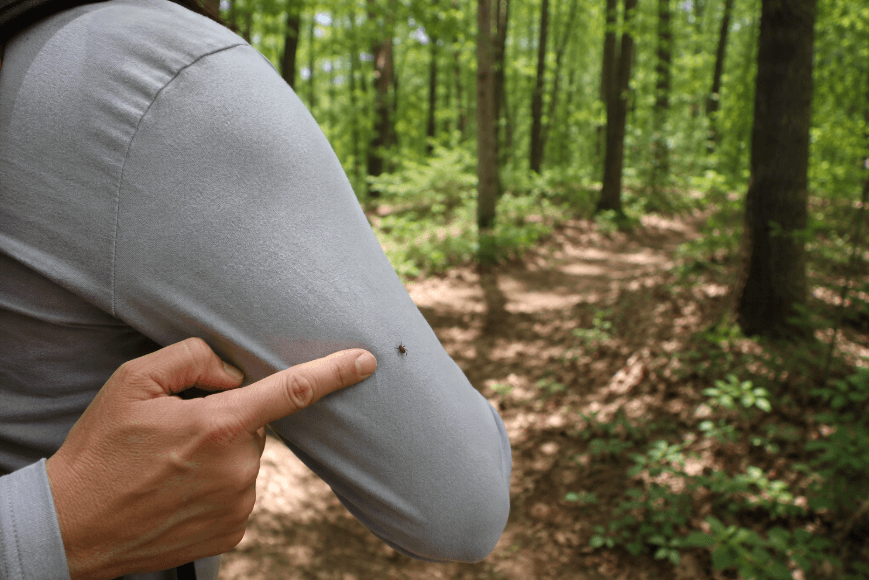
Health officials encourage precautions as outdoor activity increases during summer
TORONTO — As Ontarians spend more time outdoors during the summer months, the provincial government is reminding residents to take preventive measures against tick bites amid ongoing concerns about Lyme disease and other tick-borne illnesses.
The Ministry of Health issued its annual summer advisory on Thursday, urging people to remain vigilant while enjoying parks, trails and other outdoor spaces. Health officials say infected blacklegged ticks, commonly known as deer ticks, can be found across much of Ontario, increasing the risk of exposure to Lyme disease and other illnesses transmitted through tick bites.
Lyme disease is a bacterial infection that can become serious if left untreated. Symptoms may include fever, headache, chills, fatigue, muscle and joint pain, and a distinctive expanding circular rash that resembles a bull’s-eye. The province advises anyone experiencing symptoms following a tick bite to seek medical attention promptly.
“As we head outside to enjoy the warmer weather, it is important to protect ourselves from Lyme disease and other tick-borne illnesses,” said Sylvia Jones, Deputy Premier and Minister of Health. “By taking simple precautions, Ontarians can protect themselves and their families while enjoying the outdoors in our beautiful province.”
Simple preventive steps can significantly reduce risk
Provincial health officials recommend several measures to reduce the likelihood of tick bites. These include wearing light-coloured clothing to make ticks easier to spot, choosing long-sleeved shirts and long pants tucked into socks, and using insect repellents containing DEET or icaridin.
Residents are also encouraged to perform thorough tick checks after spending time outdoors, including examining children and pets. Clothing worn outdoors should be placed in a dryer on high heat for at least 10 minutes before washing, as heat can help kill ticks that may be attached to fabric.
Health experts further advise staying on marked trails and avoiding tall grass, brush, leaf litter and trail edges where ticks are commonly found.
“As cases of Lyme disease and other tick-borne illnesses rise and ticks continue to expand into new areas, more Ontarians may be at risk of tick bites,” said Dr. Kieran Moore, Chief Medical Officer of Health. “Simple precautions can help reduce that risk, including being vigilant in wooded and grassy areas, even close to home, wearing appropriate clothing and doing routine tick checks after spending time outdoors.”
Prompt tick removal remains critical
Because ticks are often extremely small and difficult to detect, health officials emphasize the importance of checking for them regularly after outdoor activities.
When a tick is discovered, it should be removed immediately using fine-tipped tweezers. Experts recommend grasping the tick as close to the skin as possible and pulling it out carefully without crushing it. After removal, individuals should wash the affected area and their hands with soap and water before disinfecting with rubbing alcohol or an iodine-based product.
The province also encourages residents to contact their local public health unit or consult its website for advice on tick identification. Individuals can also submit photographs of ticks to eTick.ca, an online identification service.
Pharmacists play growing role in Lyme disease prevention
Ontario officials highlighted expanded access to care through community pharmacies as part of the province’s effort to improve timely treatment.
Pharmacists are now authorized to assess tick bites and, when appropriate, prescribe medications that may help prevent Lyme disease following exposure. The service is part of a broader initiative allowing pharmacists to assess and prescribe treatments for 19 common ailments.
According to provincial data, more than 10,000 cases of Lyme disease have been reported in Ontario since 2021. The province has also recorded more than 300 cases of anaplasmosis, approximately 20 cases of Powassan virus and 30 cases of babesiosis since 2023.
Health officials note that while ticks are most active during spring and summer, they can remain active at any time of year when temperatures rise above freezing.
Laboratory testing of ticks in Ontario is conducted through local public health units using a surveillance method known as tick dragging, which helps track where infected and uninfected tick populations are present across the province.
With summer recreation season underway, provincial health authorities are urging Ontarians to remain aware of tick risks and take preventive steps to stay safe while enjoying outdoor activities.
Discover more from Wire Service Canada
Subscribe to get the latest posts sent to your email.