

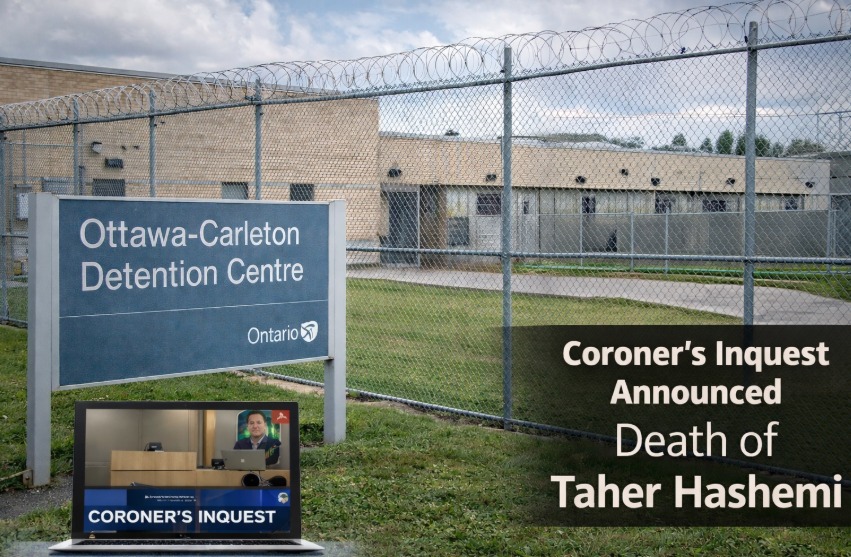
OTTAWA — Ontario’s Office of the Chief Coroner has scheduled a coroner’s inquest into the death of Taher Hashemi, who died in custody at the Ottawa-Carleton Detention Centre in 2021, with proceedings set to begin Feb. 2, 2026.
Dr. Louise McNaughton-Filion, Regional Supervising Coroner for the East Region at the Ottawa Office, announced Friday that the inquest will start at 11 a.m. on Monday, Feb. 2. Dr. Geoffrey Bond will preside over the hearing, and Jai Dhar has been appointed inquest counsel.
Hashemi, 49, died on Aug. 24, 2021, while detained at the provincial correctional facility. Under Ontario’s Coroners Act, an inquest is mandatory when a death occurs in custody.
The inquest will examine the circumstances surrounding Hashemi’s death, with the coroner’s jury authorized to make recommendations aimed at preventing similar deaths in the future. While inquests do not assign criminal or civil liability, they are a formal public process used to review evidence and identify potential systemic or operational changes.
According to the ministry’s release, the inquest is expected to last five days and will hear testimony from approximately five witnesses. The proceedings will be conducted by video conference, allowing members of the public to watch remotely.
Public access to the hearing will be available through a live stream link provided by the Office of the Chief Coroner. Additional information about Ontario’s inquest process is also available through the provincial government’s website.
The Ottawa-Carleton Detention Centre, located in Ottawa, is one of Ontario’s largest provincial correctional institutions. Like other detention centres across the province, it houses individuals awaiting trial, sentencing or transfer, as well as those serving shorter custodial sentences.
Deaths in custody can trigger heightened public scrutiny and review, particularly when they involve questions around inmate health care, supervision, emergency response protocols and overall conditions inside facilities. In Ontario, a coroner’s inquest is one mechanism used to assess what happened and whether changes could reduce future risks.
The jury’s role during the inquest will be to consider the evidence presented, including witness testimony and any relevant documentation, to determine the facts surrounding the death. If the jury issues recommendations, they are typically directed to institutions, ministries or agencies that may be in a position to implement reforms.
Although recommendations from coroner’s inquests are not legally binding, they are often closely reviewed by government bodies and public institutions, particularly in cases involving public safety, correctional oversight and health outcomes.
The ministry’s release did not provide additional details about the circumstances of Hashemi’s death beyond confirming it occurred while he was in custody at the Ottawa-Carleton Detention Centre. The inquest is expected to provide more information through the evidence and testimony presented during the proceedings.
Ontario’s Office of the Chief Coroner oversees investigations into deaths that are sudden, unexpected, unexplained or occur under specific circumstances outlined in legislation, including deaths in custody. Inquests are held in select cases where they are mandatory or where the coroner determines a public hearing could serve the public interest.
In announcing the scheduled date, the ministry emphasized that the inquest process is designed to examine the circumstances of a death and provide an opportunity for recommendations that could help prevent similar incidents.
The hearing is scheduled to begin at 11 a.m. on Feb. 2, 2026, and is expected to conclude within five days, depending on the length of witness testimony and jury deliberations.
Members of the public who wish to view the proceedings will be able to do so live through the video conference link provided by the Office of the Chief Coroner.
