

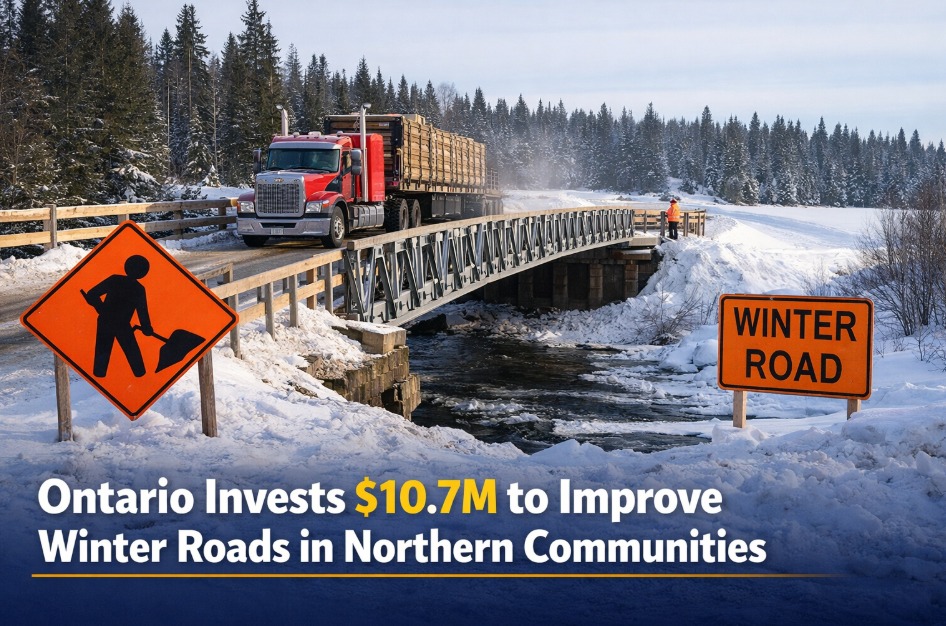
Funding Targets Bridges and Culverts to Improve Safety, Access and Economic Opportunities
The Ontario government is investing more than $10.7 million to build and upgrade bridges and culverts across the winter roads network in Northern Ontario, aiming to strengthen transportation links that remote and Indigenous communities rely on for essential goods, employment and critical services.
The funding, delivered through the Winter Roads Program’s Bridges and Culverts Stream over the next two years, will support water-crossing infrastructure across several northern winter road routes. Provincial officials say the investment is part of a broader plan to strengthen northern transportation infrastructure and support economic development in isolated regions.
“In remote northern communities, a reliable winter transportation network is key to boosting economic growth and connecting residents to the goods and services they need,” said George Pirie, Minister of Northern Economic Development and Growth. “Building a reliable winter roads network in the North is one more way our government is supporting stronger, more resilient and self-reliant communities.”
Winter roads play a critical role in Northern Ontario, where many communities are not connected to the provincial highway network by all-season roads. These temporary routes, built across frozen terrain, allow trucks to deliver bulk supplies such as food, fuel and building materials during a limited operating window each year.
The Bridges and Culverts Stream of the program is designed to improve safety and reliability by installing modular bridges and culverts at water crossings along these routes. The upgrades can help extend the usable season of winter roads while reducing risks associated with unstable ice crossings.
Provincial funding announced Friday will support multiple projects across northern First Nations communities.
Wawakapewin First Nation will receive $4.13 million to complete designs and install four modular bridges at water crossings on the winter road connecting the community with Kasabonika Lake First Nation.
Another $3.19 million will go to Windigo First Nations Council to purchase and install two modular bridges at the Meen River and Dobie River crossing sites along the Cat Lake–Pickle Lake winter road network.
Matawa First Nations Management will receive $2.91 million for upgrades to the Matawa 808 winter road network. The funding will support the installation of two bridges on the Eabametoong and Nibinamik winter roads, along with technical studies needed for future bridge installations on routes serving Webequie, Nibinamik and Eabametoong.
Additional funding includes $307,857 for Neskantaga First Nation to install 15 cross-drainage culverts along the Otoskwin River Road to help reduce flooding and improve access to the Otoskwin River crossing site.
Windigo First Nations Council will also receive $250,000 to complete engineering and geotechnical work to support future water-crossing infrastructure on the Four First Nations Group winter road network.
The investment adds to the province’s broader Winter Roads Program funding. Ontario has already allocated $8 million to support the construction and operation of roughly 3,200 kilometres of temporary winter roads serving 32 remote First Nation communities and the Town of Moosonee.
Officials say these roads provide vital logistical connections to approximately 24,000 residents in the Far North. Typically open between late January and the end of March, winter roads operate for about six to 11 weeks each year depending on weather conditions.
Greg Rickford, Ontario’s Minister of Indigenous Affairs and First Nations Economic Reconciliation, said improving transportation infrastructure in the Far North is central to strengthening economic development and community safety.
“Improving the safety and reliability of winter roads, especially spanning the far North, remains essential to supporting First Nations communities,” said Rickford. “Our government’s investments throughout the North are strengthening community connections, improving safety and ensuring local communities are best positioned to lead regional development.”
Transportation Minister Prabmeet Sarkaria said the initiative also aligns with the province’s broader infrastructure strategy aimed at supporting northern communities and improving access to essential services.
“Under the leadership of Premier Ford, our government is protecting Ontario by investing in winter road infrastructure across Northern Ontario,” said Sarkaria. “This funding will ensure isolated northern communities can safely use winter roads to connect to essential goods and services at this time of year.”
Local leaders say the infrastructure improvements are particularly important as climate change increasingly affects the stability of ice crossings used on winter roads.
“The community is advancing its bioeconomy and this bridge infrastructure will be critical to long-term success. Meen River and Dobie River ice crossings posed significant safety risks to contractors, community members and other road users – risks that have been intensifying each year because of climate change. Thanks to this funding program, Cat Lake First Nation was able to upgrade these water crossings, effectively addressing the dangers associated with unreliable ice bridges and improving overall safety for all road users.”
The Ontario government increased annual funding for the Winter Roads Program to $13 million in November 2025, up from $11 million, reflecting growing demand for reliable infrastructure in the province’s northernmost communities.