

BCCLA Intervenes at Appeal Level Over Dismissed Class Action
Civil liberties group argues alternative complaint processes fall short of protecting Charter rights
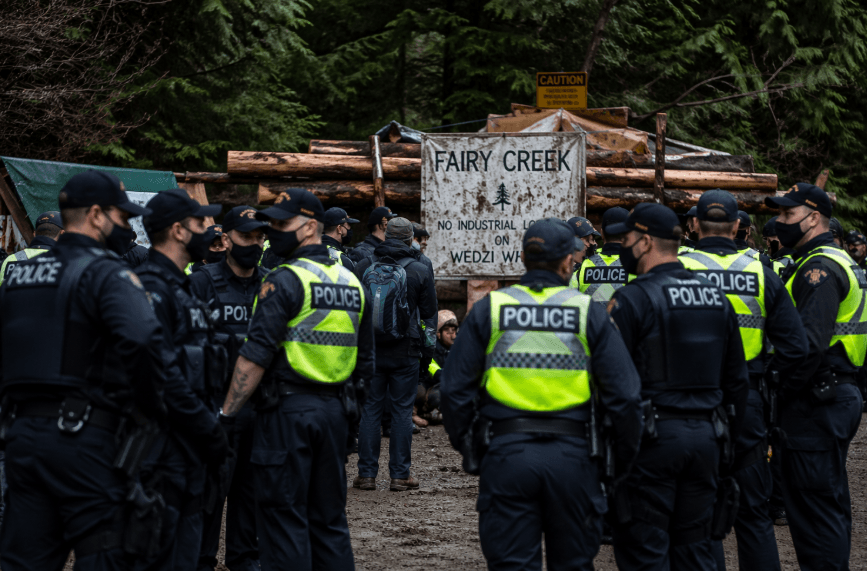
VANCOUVER — The BC Civil Liberties Association (BCCLA) appeared before the BC Court of Appeal on Tuesday to challenge what it describes as significant gaps in police accountability, intervening in a case tied to protests against old-growth logging near Fairy Creek.
The case, Dang v. Attorney General of Canada, stems from a proposed class action lawsuit against the Royal Canadian Mounted Police (RCMP), alleging violations of Charter rights during enforcement actions at the high-profile protest site on Vancouver Island.
The proposed class action was previously dismissed by the BC Supreme Court, which ruled that it failed to meet the legal threshold required for certification. Central to that decision was the court’s conclusion that alternative avenues — such as individual lawsuits or complaints to police oversight bodies — would be more appropriate mechanisms for addressing alleged rights violations.
Debate Over Access to Justice
The BCCLA is now urging the appellate court to reconsider that reasoning, arguing that the suggested alternatives do not provide adequate remedies for individuals whose Charter rights may have been infringed.
At issue is a key component of class action certification: whether a class proceeding is the preferable method for resolving common claims. The lower court determined that individuals could pursue their own legal actions or file complaints through existing oversight channels, thereby negating the need for a collective lawsuit.
However, the BCCLA contends that such options are insufficient in practice, particularly in cases involving widespread or systemic misconduct.
“When it comes to holding the RCMP accountable for widespread misconduct including Charter violations in the context of mass protests, police oversight bodies can only go so far. Access to justice demands that every option for meaningful remedy remain on the table,” said Veronica Martisius, BCCLA Staff Lawyer.
Limitations of Oversight Bodies
In its submissions, the BCCLA highlighted structural limitations within Canada’s police oversight framework. The Civilian Review and Complaints Commission for the RCMP (CRCC), for example, can review complaints and make recommendations, but those recommendations are not binding and do not include financial compensation for affected individuals.
Similarly, British Columbia’s Independent Investigations Office of BC (IIO) is limited to investigating incidents involving death or serious harm, with a mandate focused on determining whether criminal charges are warranted. It does not provide remedies or compensation for individuals who allege rights violations outside those narrow circumstances.
The BCCLA argues that these limitations undermine the effectiveness of oversight bodies as substitutes for civil litigation, particularly in cases involving Charter breaches during large-scale police operations.
Broader Implications for Protest Policing
The outcome of the appeal could have broader implications for how Canadian courts assess access to justice in cases involving alleged police misconduct, especially in the context of protests and civil disobedience.
Fairy Creek became a focal point for environmental activism in Canada, drawing widespread attention and hundreds of arrests as demonstrators sought to block logging activity in old-growth forests. Allegations of excessive force, unlawful detention, and violations of freedom of expression and assembly have been central to ongoing legal challenges.
By intervening in the appeal, the BCCLA aims to ensure that courts consider not only the existence of alternative processes, but also their effectiveness in delivering meaningful remedies.
Awaiting Appellate Guidance
The BC Court of Appeal is expected to weigh whether the lower court properly assessed the adequacy of alternative mechanisms in denying certification of the class action.
A ruling in favour of the appeal could reopen the door for collective legal action against the RCMP, potentially reshaping how courts approach class proceedings tied to constitutional rights violations.
For now, the case underscores ongoing tensions between institutional accountability mechanisms and access to justice for individuals alleging harm at the hands of law enforcement.