

Province invests over $560 million to build integrated recovery-focused care network
New Durham Region facility aims to improve access, housing stability and community safety
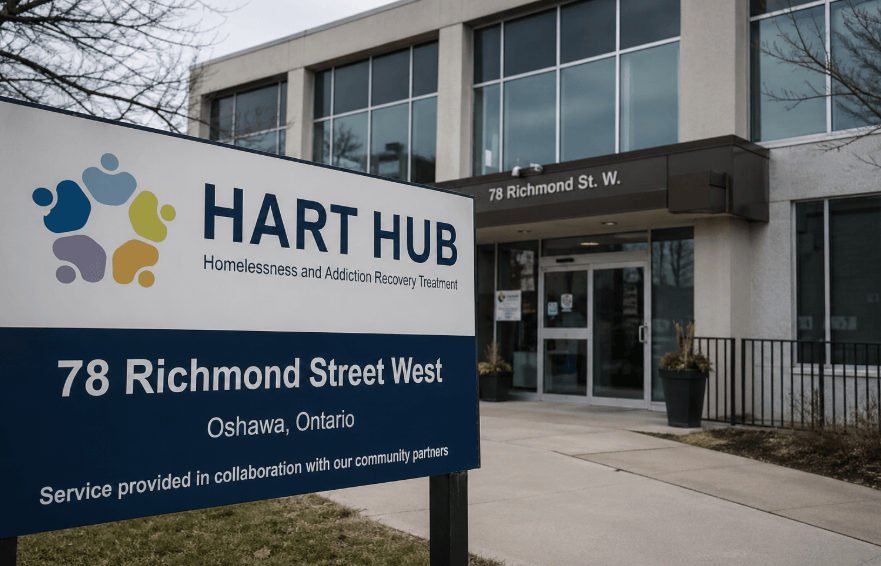
OSHAWA — The Ontario government has opened a new Homelessness and Addiction Recovery Treatment (HART) Hub in Oshawa, marking a significant step in its broader strategy to expand mental health and addictions care across the province.
The Oshawa facility is part of a $560-million provincial initiative to establish 29 HART Hubs aimed at addressing homelessness, substance use and mental health challenges while enhancing public safety. The hubs are designed to provide coordinated, community-based services that support long-term recovery and stability.
“We are building a stronger, more connected system of mental health and addictions care that better reflects the needs of communities and focuses on lasting recovery,” said Vijay Thanigasalam, Associate Minister of Mental Health and Addictions. “The opening of this new HART Hub will ensure that people struggling with mental health and addictions challenges in Durham Region can access support services that prioritizes their path to recovery and strengthen community safety.”
Integrated care model anchored in local partnerships
The Oshawa HART Hub offers a range of services, including primary care, mental health and addictions treatment, employment support, and housing assistance. It operates under a collaborative model led by Canadian Mental Health Association Durham, working alongside regional partners such as Lakeridge Health, Ontario Shores Centre for Mental Health Sciences and the John Howard Society.
This integrated approach is intended to streamline access to care while addressing the complex and overlapping needs of individuals facing housing instability and substance use challenges.
The hub provides services such as symptom management, medication support, trauma-informed care, and case management for income and employment supports. It also includes access to supportive housing and culturally appropriate Indigenous services.
Local leaders highlight community impact
Provincial and municipal leaders say the Oshawa hub will play a critical role in strengthening the region’s social safety net.
“With a $6,300,000 investment, the new Oshawa HART Hub brings people the right care, at the right time, supporting recovery, stability and dignity. By strengthening local partnerships and focusing on treatment, we are helping individuals rebuild their lives while making communities safer and more connected,” said Peter Bethlenfalvy.
“The Oshawa Homelessness and Addiction Recovery Treatment (HART) Hub, alongside the Whitby HART Hub, will serve as a cornerstone of support for those facing mental health and addiction challenges in Durham Region. By focusing on treatment and recovery, these Hubs will help residents regain control of their lives while ensuring our communities remain supported. Together, they reflect our government’s long-standing commitment to providing meaningful resources and compassionate care to those who need it most,” added Lorne Coe.
Todd McCarthy also emphasized the importance of the initiative, stating: “The new Homelessness and Addiction Recovery Treatment (HART) Hub here in Oshawa will be a cornerstone of support for those struggling with addiction and mental health challenges and this initiative reflects our commitment to providing meaningful resources and compassionate care to those who need it most. Compassionate care is central to our approach and by focusing on treatment and recovery, this hub will help individuals regain control of their lives while ensuring the community remains supported.”
At the municipal level, Dan Carter welcomed the investment, noting: “We welcome the new HART Hub in Oshawa, where recovery-focused care will connect individuals in need to coordinate, wrap-around mental health and addictions services. We sincerely thank the Province of Ontario for its significant investment and for expanding the HART Hub network into Oshawa in partnership with CMHA Durham.”
Building a province-wide system of care
The Oshawa location joins an existing HART Hub in Whitby, expanding service coverage across Durham Region. The province initially announced plans for 28 hubs in 2025, later adding a Kingston site to bring the total to 29.
HART Hubs are expected to deliver not only treatment services but also nearly 900 supportive housing units across Ontario—more than originally planned—to help individuals transition into stable, long-term housing.
The initiative aligns with the province’s broader mental health strategy, including the “Roadmap to Wellness,” a 10-year, $3.8-billion plan to modernize Ontario’s mental health and addictions system. Additional funding of $303 million over three years, announced in Budget 2025, is earmarked for community-led mental health programs.
According to Sheryl Wedderburn, the Oshawa hub represents a shift toward more accessible and coordinated care delivery.
“HART Hub Oshawa is a significant advancement toward a more connected and accessible system of care. Through strong cross-sectoral collaboration, we are reducing barriers and improving timely access to the support people in our community need, when they need it. This program reflects a shared commitment to an integrated system of care in Durham Region, one that is coordinated, responsive and grounded in our communities’ priorities.”
Focus on recovery and community safety
Unlike some existing harm-reduction programs, HART Hubs will not provide safer supply, supervised consumption or needle exchange services. Instead, the province is positioning the hubs as treatment-focused centres aimed at long-term recovery outcomes.
With demand for mental health and addiction services continuing to rise, provincial officials say the expansion of HART Hubs is a critical step toward closing service gaps and improving outcomes for vulnerable populations.
The Oshawa hub, located at 78 Richmond St. West, is now operational and accepting clients, offering what officials describe as a more connected and responsive model of care for individuals and families across Durham Region.