

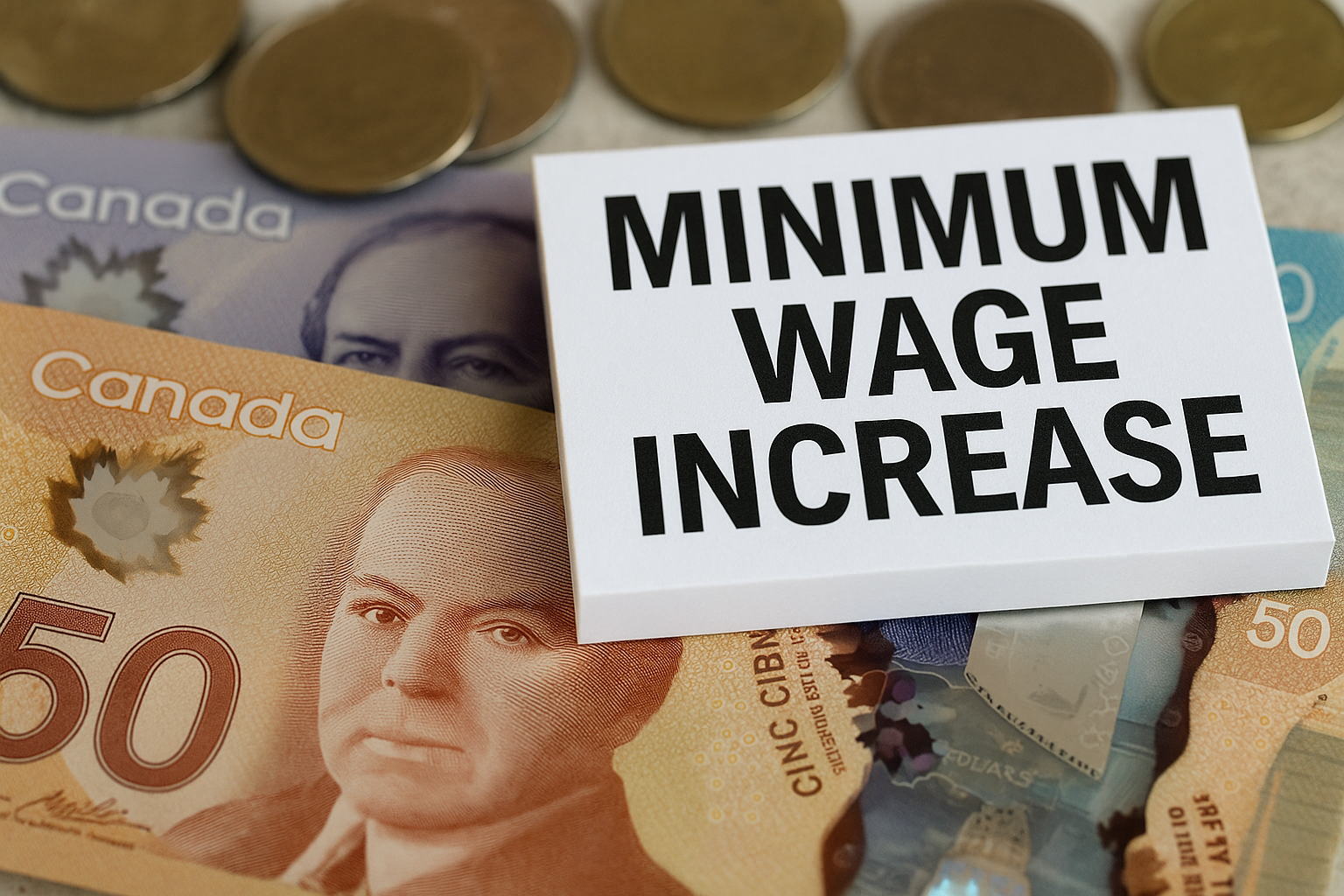
TORONTO — September 29, 2025 — Ontario will raise its minimum wage to $17.60 per hour on October 1, a move the provincial government says will protect workers from inflation and strengthen competitiveness as trade pressures intensify.
The 40-cent increase, up from $17.20, represents a 2.4 per cent annual adjustment tied to the Ontario Consumer Price Index (CPI). The Ministry of Labour, Immigration, Training and Skills Development estimates that more than 800,000 workers will benefit directly from the change.
“At a time when many families are feeling the pressure of global economic uncertainty, our government will protect Ontario workers with a minimum wage increase that supports our world-class workforce,” said David Piccini, Minister of Labour, Immigration, Training and Skills Development. “We will continue to take action to build a strong, resilient workforce ready to face whatever comes our way.”
Wage Hike Impact
For full-time employees earning the general minimum wage, the adjustment translates to an additional $832 annually based on a 40-hour workweek. The increase is mandated under the Employment Standards Act, which pegs minimum wage to the CPI to reflect price changes faced by Ontario consumers.
The government noted that specialized minimum wages for students, homeworkers, and hunting and fishing guides will also rise in tandem with the general rate.
Retail trade and hospitality workers will see the greatest impact. Roughly 36 per cent of minimum wage earners in Ontario work in retail, while 23 per cent are employed in accommodation and food services.
Long-Term Trend
Ontario’s minimum wage has grown steadily in recent years. In 2018, the rate stood at $14 per hour. With the upcoming adjustment, the provincial minimum wage will reach $17.60, making it the second-highest in Canada.
Labour advocates have long argued that rising living costs demand predictable, inflation-linked adjustments to ensure workers can keep pace. By maintaining automatic increases tied to the CPI, the government says it is providing stability for both employees and employers.
Skills Development Strategy
The minimum wage hike comes alongside a broader government push to expand workforce training and development. Since 2021, Ontario has channelled $1.5 billion into its Skills Development Fund (SDF) through both the Training and Capital streams, supporting more than one million workers in preparing for in-demand jobs.
Budget 2025 committed a further $1 billion over three years, bringing total program investment to $2.5 billion. Officials say the funding will target key industrial sectors, bolster productivity, and ensure Ontario’s workforce remains competitive in light of external economic challenges, including U.S. tariffs.
Economic Context
The decision arrives as inflationary pressures continue to shape wage policy debates across the country. While Ontario’s CPI-linked formula provides predictability, it also sparks debate among business groups who caution that higher labour costs could weigh on employers already navigating slower growth.
At the same time, provincial officials argue the strategy strikes a balance by protecting worker purchasing power without subjecting businesses to abrupt, unpredictable jumps in payroll expenses.
For the Ford government, the minimum wage policy reinforces a broader economic narrative: supporting workers while safeguarding Ontario’s competitive edge.
Quick Facts
-
Ontario’s minimum wage increases annually on October 1, based on the Ontario CPI.
-
Specialized minimum wages for students, homeworkers, and hunting/fishing guides will rise along with the general rate.
-
Retail trade (36%) and accommodation/food services (23%) account for most minimum wage earners.
-
The minimum wage has grown from $14 per hour in 2018 to $17.60 as of October 2025.
-
Ontario now holds the second-highest provincial minimum wage in Canada.
