

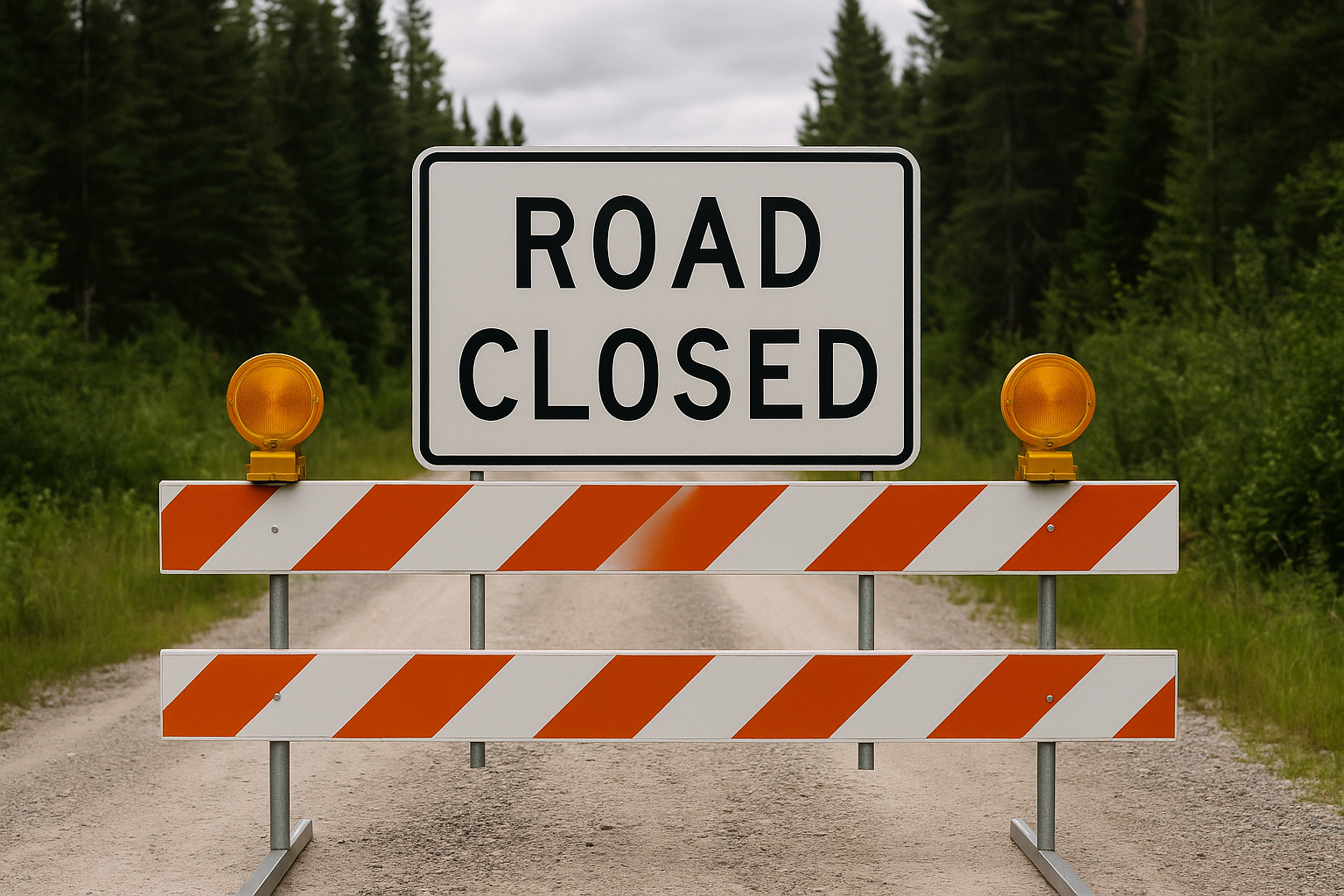
Winnipeg, MB — A growing conflict over land access in eastern Manitoba is raising alarm across the province’s billion-dollar outdoor tourism industry, as Manitoba Lodges and Outfitters Association (MLOA) calls on the provincial government to urgently resolve a blockade set up by Bloodvein First Nation.
On August 23, Bloodvein First Nation leaders publicly announced the establishment of a blockade near their community, east of Lake Winnipeg. At the announcement, representatives said “No Trespassing” signs had been erected throughout what they describe as their “territory,” and declared that licensed hunters, anglers, and trappers would not be allowed to enter the area. The community is also pressing the government to stop issuing hunting licenses for the lands in question.
Concerns from Tourism Operators
MLOA, which represents lodge and outfitter operators across the province, says the blockade poses a direct threat to businesses that rely on access to Crown lands and waters.
“This is a crisis for Manitoba outdoor tourism operators. The region surrounding Bloodvein First Nation is crown land that any Manitoban can legally access. Our businesses rely on accessing crown lands and waters, if we can’t access the land to run our operations, we’d be out of business,” said Melanie MacCarthy, President of the MLOA.
Executive Director Don Lamont added that members fear broader repercussions if the standoff spreads. “This isn’t the first threat of this kind coming from indigenous communities in recent months. We’re concerned that this kind of action could happen elsewhere. Our members are deeply concerned. Without urgent Government mediation and action, the potential negative impacts from this kind of conflict would be devastating to Manitoba’s $1 Billion dollar outdoor tourism industry,” Lamont said.
Hunting Season at Stake
The contested area includes Game Hunting Areas 17, 17A, and 17B. The fall bear hunting season in those zones opened August 15, with moose hunting season scheduled to begin September 15.
“Hunting seasons are upon us. Operators have sold hunts and have clients coming. If the blockade is not removed, what are outfitters supposed to do?” asked MacCarthy.
She also stressed that wildlife populations in the region remain healthy. “Furthermore, our operators feel that bear populations are at an all-time high and that moose populations are stable. The government conducted a moose survey March of 2024 in GHA 17A which is adjacent to Bloodvein First Nation, estimating 462 moose, which is an increase over the last estimate in 2018 of 383. The government estimate supports our members’ observations that the moose population is stable. The current hunt is sustainable where we are operating and do not agree that our hunts should be stopped, and government’s science supports that view,” MacCarthy said.
Tensions and Safety Concerns
The blockade has already led to confrontations, according to media reports. CBC has reported that Bloodvein members stopped two hunters from entering the area, turning them away at the barricade.
“What concerns me most is the safety of outfitters and their clients. We are deeply concerned about the potential for conflict,” Lamont said. Despite the rising tensions, he emphasized the association’s commitment to reconciliation. “MLOA members support reconciliation and we’ve had a long history of working positively with First Nation communities providing employment and in some cases, sharing some of the meat harvested. We want to maintain that goodwill.”
Call for Government Action
In response to the blockade, MLOA sent a formal letter on August 25 to Premier Wab Kinew, the Minister of Natural Resources and Indigenous Futures, the Justice Minister, and the Minister of Sport, Culture, Heritage and Tourism. The letter urged the government to mediate the dispute and ensure removal of the blockade.
“We have requested an urgent meeting with our Premier. We are asking for action. Our Billion dollar industry requires certainty of land and water access for us to continue to operate. To maintain Manitoba’s brand as a world class destination for hunting and fishing, we need strong, immediate leadership from our Government,” MacCarthy said.
Looking ahead, MLOA argues that a long-term solution will require structured collaboration among all stakeholders. “Long-term, the solution will be for all users of these resources to collaborate and share in the harvest, but also share in the work to manage the resources. We need government to set up processes that bring all of us together with shared responsibilities,” MacCarthy added.
Broader Implications
The conflict touches on complex questions of treaty rights, land use, and economic sustainability. For tourism operators, the immediate concern is the uncertainty facing a sector that brings significant revenue to the province through hunting, fishing, and outdoor recreation. For Bloodvein First Nation, the blockade represents a stance on sovereignty and stewardship of natural resources.
With hunting season underway and no resolution yet in sight, the provincial government faces mounting pressure to act swiftly to prevent economic disruption and ease growing tensions in the region.
