

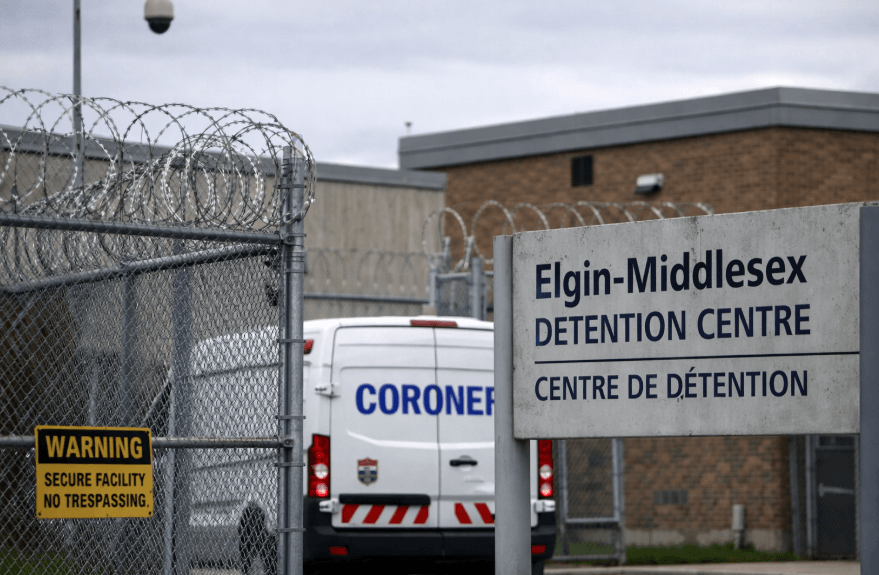
Ontario coroner to examine circumstances of 2022 in-custody death
The Ontario Ministry of the Solicitor General has announced that an inquest will be held into the death of Jamie Briggs, a 44-year-old man who died while in custody at a correctional facility in London, Ont., in late 2022.
The inquest, confirmed Friday, will focus on the events and conditions surrounding Briggs’ death at the Elgin Middlesex Detention Centre, a provincially operated facility that houses individuals awaiting trial or serving shorter sentences.
Coroner confirms formal review process
In a statement, Dr. Elizabeth Urbantke, Regional Supervising Coroner for the West Region based in London, said the inquest is being initiated as part of the province’s oversight process into certain types of deaths.
“Dr. Elizabeth Urbantke, Regional Supervising Coroner, West Region, London Office, has announced that an inquest will be held into the death of Jamie Briggs.”
Briggs died on November 16, 2022, while in custody. As is standard procedure in such cases, the coroner’s office has determined that a public inquest is warranted to examine the circumstances and identify any systemic issues that may have contributed to the death.
“Mr. Briggs, 44 years old, died on November 16, 2022, while in custody at the Elgin Middlesex Detention Centre in London.”
Scope of the inquest
Coroners’ inquests in Ontario are fact-finding proceedings, not trials. They do not assign legal responsibility or determine guilt. Instead, they are intended to provide transparency and help prevent similar incidents in the future.
“The inquest will examine the circumstances surrounding Mr. Briggs’ death. The jury may make recommendations aimed at preventing further deaths.”
A jury composed of community members will hear evidence from witnesses, including medical professionals, correctional staff, and other relevant parties. At the conclusion of the proceedings, jurors may issue recommendations directed at institutions or government bodies.
These recommendations, while not legally binding, often influence policy changes, operational procedures, and standards within correctional and health systems.
Ongoing scrutiny of custodial deaths
Deaths in custody continue to draw attention from oversight bodies, advocacy groups, and the public, particularly regarding conditions in detention centres, access to medical care, and mental health supports.
Facilities such as the Elgin Middlesex Detention Centre have faced periodic scrutiny over capacity pressures and resource constraints. Inquests can serve as a key mechanism for examining whether existing protocols were followed and whether improvements are needed.
The Ministry of the Solicitor General did not provide further details about the circumstances of Briggs’ death in the announcement.
Timeline and next steps
Officials have not yet confirmed when the inquest will begin or where it will be অনুষ্ঠিত.
“Further details regarding the inquest, including the date and venue, will be provided at a later date.”
Once scheduled, the proceedings will be open to the public, in keeping with the transparency mandate of Ontario’s coroner system.
Public access to information
The province encourages members of the public to learn more about the inquest process and its role within the broader justice and public safety framework.
“For more information about inquests, see: https://www.ontario.ca/page/coroners-inquests.”
Coroners’ inquests are one of several accountability tools used in Ontario to review deaths involving individuals in custody or under state supervision. The findings and recommendations that emerge can contribute to broader reforms aimed at improving safety and oversight within correctional institutions.
As the case moves forward, attention will likely focus on what the inquest reveals about conditions inside the facility and whether systemic changes are recommended to prevent similar deaths in the future.