

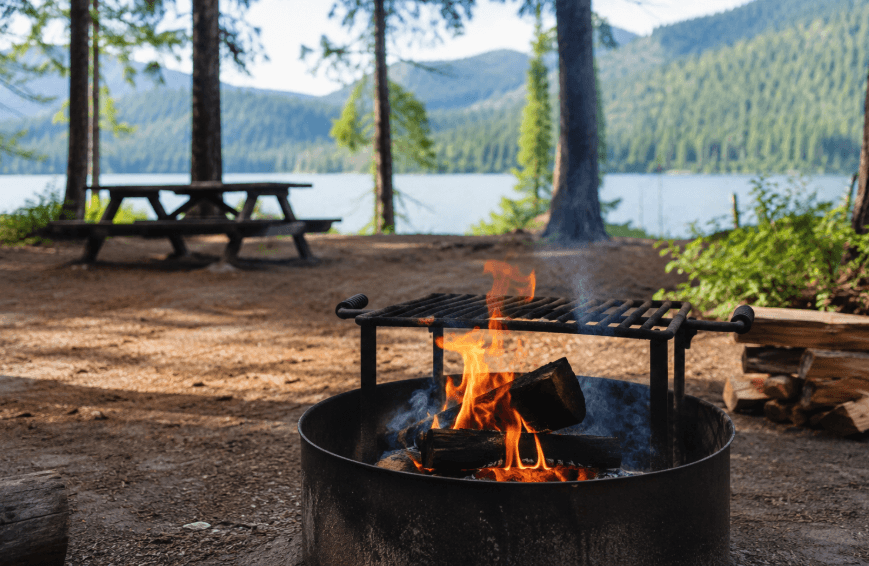
Coastal Fire Centre relaxes restrictions following improved weather conditions
CAMPBELL RIVER, B.C. — Campfires will once again be permitted across most areas of the Strathcona Regional District beginning Friday afternoon, following a decision by the Coastal Fire Centre to lift its regional campfire ban as weather conditions improve and wildfire risk declines.
The Strathcona Regional District (SRD) announced that the updated rules will take effect at 12:00 p.m. on May 15, 2026, allowing residents and visitors in several communities and electoral areas to resume recreational campfires after a period of heightened restrictions.
The easing of the ban comes after changing weather patterns and lower fire danger ratings across parts of Vancouver Island and surrounding coastal regions. Local governments and fire authorities, however, are continuing to urge residents to remain cautious as larger open fires remain prohibited throughout the Coastal Fire Centre jurisdiction.
Areas where campfires are now permitted
Under the revised restrictions, campfires will be allowed in the following locations:
Electoral Areas and Municipalities Included
- All of Electoral Area A (Kyuquot/Nootka–Sayward)
- All of Electoral Area B (Cortes Island)
- All of Electoral Area C (Quadra & Discovery Islands)
- All of Electoral Area D (Oyster Bay / Buttle Lake), except within the Black Creek / Oyster Bay Fire Protection Local Area
- City of Campbell River
- Village of Sayward
- Village of Tahsis
- Village of Zeballos
The SRD noted that beach fires remain prohibited year-round within the South Quadra Island Improvement District despite the broader lifting of restrictions.
Officials said the decision aligns with updated guidance from the Coastal Fire Centre, which monitors wildfire conditions and establishes fire prohibitions across coastal British Columbia.
Restrictions remain in place in select areas
While many communities are seeing restrictions eased, campfires, backyard fires, and beach fires remain banned in several locations where wildfire concerns persist.
Areas Still Under Prohibition
- Black Creek / Oyster Bay Fire Protection Local Area
- Village of Gold River
- South Quadra Island Improvement District (beach fires remain prohibited)
Authorities emphasized that Category 2 and Category 3 fires remain prohibited throughout the Coastal Fire Centre jurisdiction. These categories include any fire larger than 0.5 metres by 0.5 metres.
The continued ban on larger fires reflects ongoing concerns about dry conditions and the potential for wildfires to spread quickly, particularly in forested and rural regions.
Fire officials urge continued caution
Although campfires are once again permitted in many areas, fire officials are encouraging residents to remain vigilant and practice safe burning habits.
The SRD said fires should never be left unattended and anyone lighting a campfire must ensure they have water, tools, or other equipment available to extinguish the fire completely if conditions change.
Local authorities also reminded residents that weather conditions can shift rapidly during the spring and summer fire season, potentially resulting in new restrictions or expanded bans with little notice.
Public safety agencies across British Columbia continue to monitor wildfire activity closely as the province prepares for the peak summer fire season. In recent years, communities across the province have faced increasingly severe wildfire conditions driven by hotter temperatures and prolonged dry periods.
Residents encouraged to verify local fire rules
The regional district is advising residents and visitors to confirm current fire restrictions before lighting any type of fire, even in areas where campfires are currently allowed.
Officials said up-to-date information regarding fire bans, restrictions, and fire protection boundaries is available through the Strathcona Regional District website.
“To stay informed, learn more about fire restrictions, or determine which fire protection area you reside in, please visit: www.srd.ca/fire-protection.”
The SRD’s updated guidance is expected to provide relief for campers, outdoor recreation operators, and residents ahead of the Victoria Day long weekend, traditionally one of the busiest camping periods of the spring season in British Columbia.
Discover more from Wire Service Canada
Subscribe to get the latest posts sent to your email.