

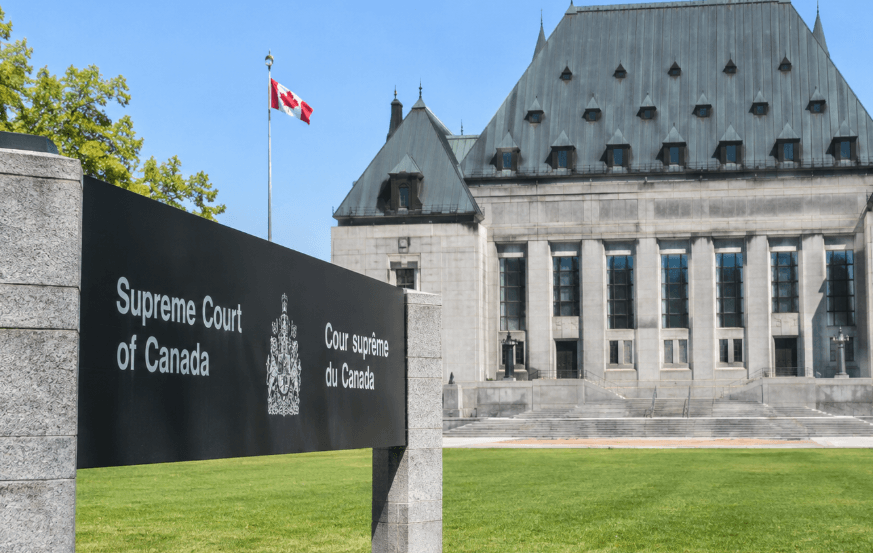
OTTAWA, ON — The British Columbia Civil Liberties Association (BCCLA) is challenging the scope of federal executive authority in a Supreme Court of Canada case examining the legality of regulations that prohibited approximately 1,500 firearm models in 2020.
The civil liberties organization is participating as an intervener in Canadian Coalition for Firearm Rights, et al. v. Attorney General of Canada, arguing that government regulations expanding criminal liability require heightened judicial scrutiny to protect constitutional rights and maintain executive accountability.
The case raises broader questions about the federal government’s ability to introduce criminal prohibitions through regulations rather than legislation passed directly by Parliament.
Supreme Court Examines Federal Firearms Regulations Introduced in 2020
The legal dispute centres on regulatory amendments introduced by the federal government in May 2020, when the Governor in Council (GIC) expanded Canada’s list of prohibited firearms.
The amendments, enacted under SOR/2020-96, prohibited approximately 1,500 firearm models that had previously been legal to possess under federal law.
The changes were implemented through the government’s delegated regulation-making authority under the Criminal Code, allowing the executive branch to establish specific firearm classifications within the existing legislative framework.
The regulations prompted legal challenges from firearm owners, businesses, advocacy organizations and shooting clubs, which questioned whether the federal government had exercised its authority reasonably.
Six separate applications for judicial review were subsequently brought before the Federal Court.
Federal Courts Previously Upheld Government’s Authority
The Federal Court dismissed all six applications, determining that the Governor in Council had acted within the authority granted under the Criminal Code.
The court also concluded that introducing the regulations represented a reasonable exercise of the federal government’s delegated regulatory powers.
The applicants appealed the decision, but the Federal Court of Appeal upheld the lower court’s ruling.
The dispute subsequently reached the Supreme Court of Canada, where the central legal questions include the permissible scope of executive regulation-making authority and the standards courts should apply when reviewing such decisions.
The outcome could have implications beyond firearms regulation, particularly for federal policies implemented through delegated legislation.
BCCLA Calls for Stronger Judicial Oversight of Executive Decisions
The BCCLA’s intervention focuses on the constitutional consequences of allowing executive regulations to create criminal offences or broaden existing criminal liability.
According to the organization, delegated legislation that exposes individuals to criminal prosecution should receive more rigorous judicial scrutiny because of the potential consequences for personal liberty.
Under the challenged regulatory framework, individuals who violate applicable firearm prohibitions may face criminal penalties, including imprisonment of up to five years.
The BCCLA argues that these consequences distinguish criminal regulations from ordinary administrative decisions and justify a more exacting approach to judicial review.
Civil Liberties Group Raises Transparency and Accountability Concerns
BCCLA Litigation Director Vibert Jack expressed concern about the increasing use of executive authority in decisions affecting fundamental rights.
“In recent years we have seen a troubling expansion of executive power. Executive decisions are often made behind closed doors, and in ways that are shielded from judicial oversight. From regulating firearms, to approving infrastructure projects and invoking the Emergencies Act, when fundamental rights are impacted by executive action transparency and accountability are undermined.”
The organization’s position extends beyond the specific firearms restrictions, highlighting broader concerns about government transparency, constitutional safeguards and the balance of authority between Parliament and the executive branch.
Its intervention does not necessarily require the Supreme Court to determine whether the firearms prohibitions represent appropriate public policy. Instead, it asks the court to consider how closely judges should examine regulations that significantly affect individual rights.
Supreme Court Decision Could Influence Future Federal Regulations
The proceedings carry potential implications for businesses operating in regulated industries, including firearms retailers, manufacturers and other organizations affected by federal executive decisions.
A Supreme Court ruling clarifying the limits of delegated authority could influence how future regulations are developed, challenged and reviewed across sectors where regulatory changes carry criminal consequences.
For businesses, the dispute also highlights the importance of regulatory certainty and the legal mechanisms available to challenge government decisions affecting commercial operations.
The federal government has maintained its legal authority to introduce the challenged firearms regulations, a position previously accepted by both the Federal Court and Federal Court of Appeal.
The BCCLA, meanwhile, is seeking stronger judicial safeguards when executive decisions expand criminal liability.
The Supreme Court’s eventual ruling could help define the relationship between executive regulatory powers, judicial oversight and constitutional accountability in Canada, with consequences extending well beyond the country’s firearms industry.
Discover more from Wire Service Canada
Subscribe to get the latest posts sent to your email.