

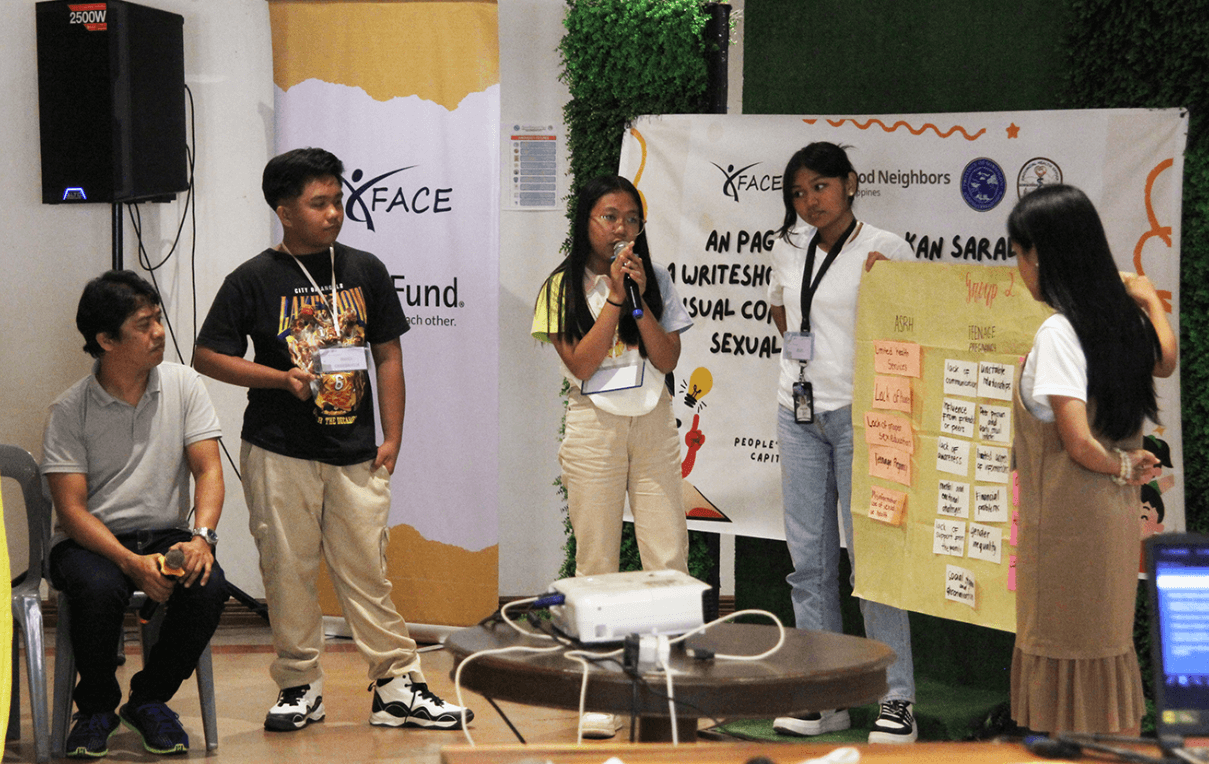
Youth-driven workshop transforms advocacy into action amid rising health concerns
SORSOGON CITY, Philippines — Adolescents in the province of Sorsogon are stepping into leadership roles to address pressing issues in adolescent sexual reproductive health (ASRH) and gender-based violence (GBV), as concerns over teenage pregnancy and limited access to reliable health information continue to grow.
A three-day creative workshop held in Sorsogon City brought together 25 to 30 students aged 10 to 19 from across the province, equipping them with tools to design and disseminate youth-centered communication materials. The initiative reflects a broader shift toward engaging young people not just as beneficiaries of programs, but as active contributors to solutions.
Collaborative effort targets gaps in youth health education
The workshop, titled “An Pag-Kurit ulit kan Saradit: A Writeshop on IEC Materials through Visual Communication on Adolescent Sexual Reproductive Health,” was organized by Federation of Associations for Communities and Children’s Empowerment Inc. in partnership with Good Neighbors Philippines, with support from ChildFund Philippines and the Sorsogon Provincial Health Office’s Adolescent Health and Development Section.
The program was developed in response to persistent challenges faced by adolescents, including insufficient access to accurate ASRH information, rising teenage pregnancy rates and the continued prevalence of GBV in communities.
Anchored on the Bicolano concept “An Pag-Kurit ulit kan Saradit,” which translates to “writing or drawing of the young,” the workshop emphasized the power of youth expression in shaping public discourse and addressing sensitive social issues.
Youth voices take centre stage in message creation
Participants engaged in hands-on sessions covering message mapping, storyboarding and visual communication, using digital tools such as Canva to produce posters, flyers, social media content and short videos. These materials focused on promoting informed decision-making, consent, respect and healthy relationships.
“Too often, young people are the subjects of programs but not the authors of the message,” said Jobeth Jerao, executive director of FACE Inc. “Through this workshop, we saw them take ownership of their narratives. They created messages grounded in their realities and capable of influencing their peers.”
Maria Fe “Peachy” Labayo, field manager of the Prieto Diaz Community Development Project of Good Neighbors Philippines, highlighted the importance of investing in youth-led initiatives.
“Young people have the creativity, insight and courage to challenge harmful norms,” Labayo said. “By bringing together participants from different municipalities, we are fostering shared learning and strengthening a network of young advocates who can champion these messages in their communities.”
Creative communication seen as key to tackling sensitive issues
Experts involved in the workshop underscored the effectiveness of visual storytelling in addressing complex and often stigmatized topics such as sexually transmitted infections, teenage pregnancy and gender-based violence.
“Visual communication makes difficult topics like STIs, teenage pregnancy, and GBV more accessible and relatable,” said Geri Matthew Carretero, a resource speaker and co-founder of Kurit-Lagting. “When adolescents create the messages themselves, the result is not only more authentic — it is more powerful and more likely to spark real conversations and positive behavior change.”
Joyce Dechavez, PPO IV and PopDev and Adolescent Health and Development program coordinator, emphasized that youth participation is central to strengthening public health strategies.
“Empowering adolescents to become advocates of their own health and rights is a key strategy in addressing teenage pregnancy and gender-based violence,” Dechavez said. “When young people are equipped with the right knowledge and platforms for expression, they become powerful partners in creating informed, safe and resilient communities.”
Participants report lasting impact and expanded advocacy
For many of the students, the workshop marked a turning point in their ability to engage with sensitive topics and communicate effectively with their peers.
“I used to find it difficult to talk about these issues, but through the workshop, I learned how to express them in a way that my fellow young people can understand,” said Angelica Noga, 17, of Gallanosa National High School.
“I learned that we can use creativity to speak up about serious issues affecting young people,” said Ingrid Fidelson, 16, of Prieto Diaz National High School.
Beyond producing three to five IEC prototypes, participants also developed an adolescent-led communication plan aimed at disseminating their materials across schools, barangays and online platforms throughout Sorsogon.
Building a model for adolescent-led public health advocacy
Organizers say the initiative demonstrates the value of inclusive, youth-driven approaches in addressing public health and protection challenges. By empowering adolescents to create and share their own messages, the program seeks to foster more informed, resilient and proactive communities.
As teenage pregnancy and GBV remain critical concerns in the Philippines, initiatives like “An Pag-Kurit ulit kan Saradit” highlight a growing recognition that sustainable solutions require the voices and leadership of young people themselves.
Discover more from Wire Service Canada
Subscribe to get the latest posts sent to your email.