

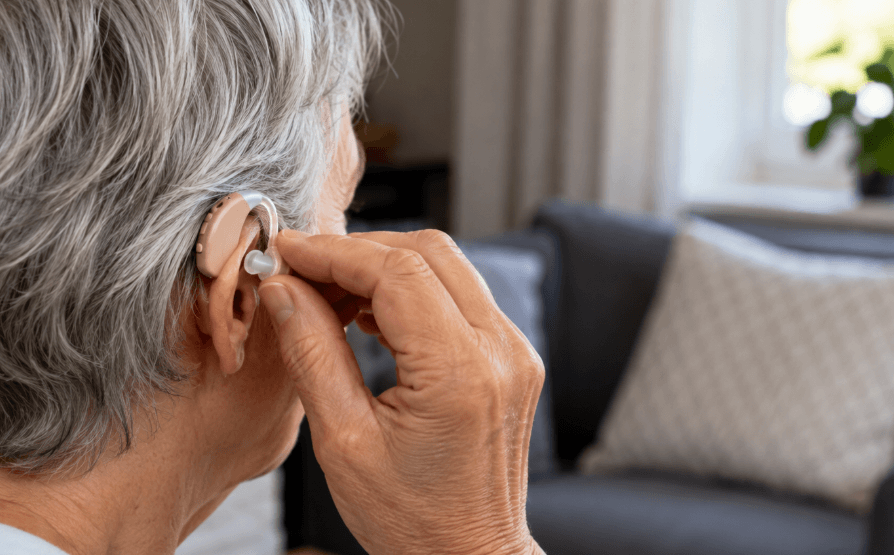
TORONTO, The Ontario government is advancing legislative and regulatory changes that would permit the sale and use of Health Canada-approved over-the-counter hearing aids, giving adults with mild to moderate hearing loss more options for accessing hearing support without a prescription.
The proposed changes, announced by the Ministry of Health, form part of Ontario’s Health Innovation Pathway, an initiative designed to accelerate the adoption of medical technologies and improve access to health-care services across the province.
Ontario Plans to Expand Access to Hearing Aid Technology
Under Ontario’s current regulations, hearing aids require a prescription from a regulated health professional. The proposed framework would introduce an additional option for adults seeking hearing assistance, while maintaining existing prescription-based services.
Once the legislative and regulatory changes are completed, manufacturers of compatible headphones and earbuds with integrated hearing aid capabilities would be permitted to activate those functions for consumers in Ontario.
“Our government is continuing to take bold and innovative action to protect our health-care system and connect more Ontarians to best-in-class health-care solutions,” said Sylvia Jones, Deputy Premier and Minister of Health. “By making life-changing technologies like over-the-counter hearing aids more accessible, we’re giving Ontarians more choice and flexibility to get the hearing support they need, when and where they need it.”
The government emphasized that the proposed measures would supplement rather than replace existing hearing care services.
Public Consultation Supports Regulatory Changes
The initiative follows a 30-day public consultation launched in April 2026, during which residents, health organizations, industry representatives and other stakeholders were invited to comment on allowing over-the-counter hearing aids.
According to the province, the consultation received overwhelming support, prompting the government to proceed with legislative and regulatory amendments.
Finance Minister Peter Bethlenfalvy said the changes would help remove barriers to hearing care.
“Our government is strengthening health care in Ontario by supporting innovative approaches that support a comprehensive, convenient and connected health-care system for everyone. Allowing over-the-counter access to hearing aids would reduce barriers to treatment for mild to moderate hearing loss and give people faster access to high-quality health care when and where they need it.”
Existing Hearing Aid Funding Will Remain Available
Ontario confirmed that its Assistive Devices Program (ADP) will continue providing financial assistance for eligible residents with long-term hearing loss who require prescribed hearing aids.
The program currently covers up to 75 per cent of the cost of a prescribed hearing aid, subject to a maximum contribution of $500 per device.
However, over-the-counter hearing aids purchased without a prescription will not qualify for ADP funding.
Health Innovation Pathway Supports Medical Technology Adoption
The regulatory initiative is part of Ontario’s broader Life Sciences Strategy, which seeks to strengthen the province’s health technology sector and accelerate the adoption of innovative medical products.
The Health Innovation Pathway covers medical devices, digital health tools, diagnostic technologies, laboratory testing and new models of health-care delivery.
Ontario Health oversees the initiative in partnership with several provincial ministries and Supply Ontario, which supports technology assessment and procurement.
Economic Development Minister Vic Fedeli highlighted the potential benefits for Ontario’s health technology industry.
“Through the Health Innovation Pathway, our government is ensuring life-changing medical technologies, like over-the-counter hearing aids, can be adopted more widely and quickly. By reducing barriers to care for our workers and families through these latest measures, we will further strengthen Ontario’s leadership in the life and health sciences sector and unlock new opportunities for our health-tech innovators.”
Province Emphasizes Consumer Choice and Accessibility
Minister for Seniors and Accessibility Raymond Cho welcomed the proposal, drawing on his personal experience with hearing aids.
“As someone who uses a hearing aid, I know just how important it is to remain independent and connected. Having over-the-counter options gives people personal choice and access to the professional care and coverage that they need whenever necessary.”
Stephen Crawford, Minister of Public and Business Service Delivery and Procurement, also emphasized the government’s focus on expanding access to emerging medical technologies.
“Ontario is creating new opportunities for innovative health technologies to reach the people who need them. Supporting solutions such as over-the-counter hearing aids helps increase access and choice, while modernizing and strengthening our health-care system.”
The government has not announced a specific implementation date for the proposed changes.
Further details about Ontario’s broader health-care and economic priorities are expected in the province’s 2026 Fall Economic Statement, scheduled for release on or before November 15, 2026.
The initiative represents another step toward expanding consumer access to hearing technology while preserving Ontario’s existing professional hearing care and financial assistance programs.
Discover more from Wire Service Canada
Subscribe to get the latest posts sent to your email.