

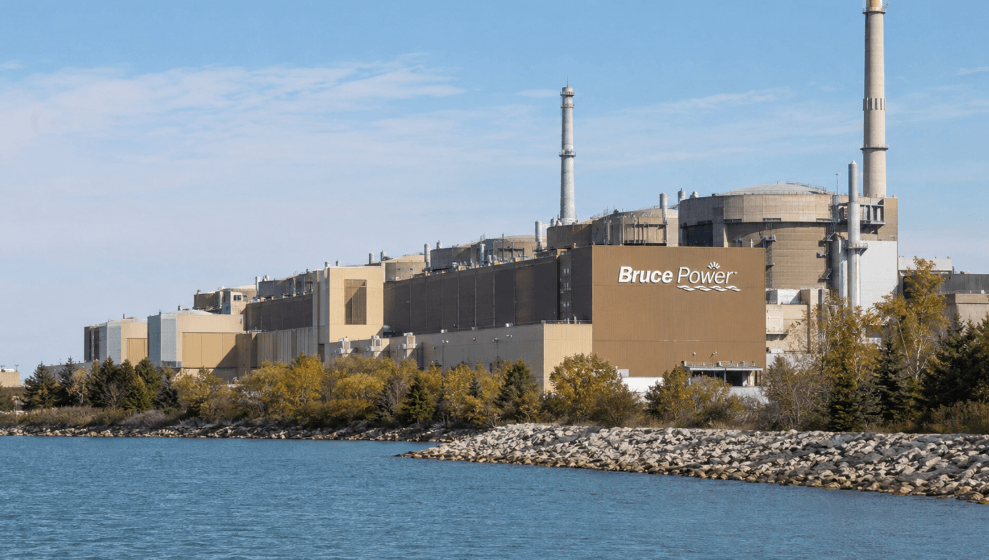
Province moves forward with first large-scale nuclear build in more than three decades
ETOBICOKE — The Ontario government is moving ahead with the early development phase of the proposed Bruce C Nuclear Project, marking the province’s first large-scale nuclear expansion initiative in more than 30 years as it seeks to meet rising electricity demand and strengthen domestic energy security.
Ontario announced Wednesday that it has directed the Independent Electricity System Operator (IESO) to enter into a cost-sharing and recovery agreement with Bruce Power. The agreement will allow the company to proceed with preliminary work tied to the proposed project, including Indigenous and community engagement, workforce planning, site preparation studies and other pre-construction activities.
The province said those activities are expected to cost approximately $300 million and continue through 2030.
If approved, the proposed Bruce C generating station would deliver up to 4,800 megawatts of electricity — enough to power an estimated 4.8 million homes — while contributing an estimated $238 billion to Canada’s gross domestic product over the life of the project. Provincial estimates also suggest the project could support 18,900 jobs during construction and 6,700 permanent positions once operational.
Ontario positions nuclear expansion as economic and energy strategy
The announcement comes as Ontario projects electricity demand could rise by as much as 90 per cent by 2050, driven by population growth, industrial expansion and electrification initiatives.
“At a time when our economy faces threats from abroad, Ontario’s government is doubling down on made-in-Canada nuclear power,” said Stephen Lecce, Ontario’s Minister of Energy and Mines.
“The Bruce C project will advance generational employment creating 18,900 net-new jobs per year, transforming Bruce Power into the world’s largest nuclear generating facility. Our government is thinking big and long-term as we build on-time and on-budget, leading the largest nuclear expansion on the continent that will help put 150,000 Canadians to work.”
The province said the project forms part of its long-term “Energy for Generations” strategy, aimed at ensuring Ontario maintains a reliable electricity supply while reducing dependence on external energy sources.
Ontario currently relies on nuclear power for roughly half of its electricity generation, helping maintain one of the cleanest electricity grids in North America.
Bruce Power operates eight reactors across its Bruce A and Bruce B generating stations on the eastern shore of Lake Huron. The company said the proposed Bruce C expansion would build on existing infrastructure at the site, potentially lowering development costs and shortening construction timelines.
Federal review process already underway
Bruce Power launched the federal Impact Assessment process for the project in 2024, beginning what is expected to be a multi-year regulatory review. The company anticipates that process could conclude by 2028, subject to approvals from the federal government and the Canadian Nuclear Safety Commission.
“Today’s support for pre-development work on the Bruce C Project is a critical step in ensuring Ontario has the reliable, affordable and carbon-free electricity it needs for generations to come,” said Eric Chassard.
“We are taking important next steps to advance early development work while continuing meaningful engagement with Indigenous communities, local municipalities and our supply chain and labour partners.”
The province also confirmed continued engagement with the Saugeen Ojibway Nation, including the Saugeen First Nation and Chippewas of Nawash Unceded First Nation, as part of planning and consultation efforts tied to the project.
Industry groups and labour organizations back expansion plans
The announcement drew support from business groups, labour unions and nuclear industry stakeholders, many of whom framed the project as a long-term economic and industrial development opportunity.
“The Ontario Chamber’s research shows that the Bruce C nuclear project can contribute $238 billion to Canada’s GDP and support 18,900 jobs nationwide, while strengthening Ontario’s domestic supply chain,” said Daniel Tisch. “It’s an investment in both meeting growing electricity demand and keeping Ontario competitive.”
Ontario Chamber of Commerce previously released research estimating the project could contribute an average of $2 billion annually to local GDP while supporting approximately 3,400 full-time jobs in surrounding communities.
Labour organizations also emphasized the role the project could play in sustaining skilled trades employment across the province.
“Ontario is taking an important step forward by advancing early work on Bruce C, helping ensure the province is prepared for rising electricity demand,” said Andrew Clunis. “This project reflects the strength of Ontario’s nuclear sector, while supporting thousands of highly skilled union jobs.”
Several major nuclear suppliers and engineering firms, including AtkinsRéalis, Westinghouse Canada, Aecon Group Inc. and Framatome, also voiced support for the initiative, citing opportunities for supply-chain growth and long-term investment in Ontario’s nuclear sector.
Province continues broader nuclear expansion strategy
The Bruce C proposal is one of several nuclear initiatives currently underway in Ontario.
The province is also advancing the refurbishment of the Pickering Nuclear Generating Station, continuing Bruce Power’s life-extension program and constructing the first of four small modular reactors at the Darlington Nuclear Generating Station.
Ontario officials said early planning for Bruce C is intended to position the province to meet future energy needs while supporting industrial competitiveness and long-term economic growth.
“Ontario’s electricity demand is expected to grow significantly in the coming decades, making long-term infrastructure planning essential,” said George Christidis. “Continued progress on new nuclear development helps strengthen energy security, support highly skilled jobs, and reinforce Canada’s position as a global nuclear leader.”