

Civil liberties group intervenes in challenge over suspended electoral map review
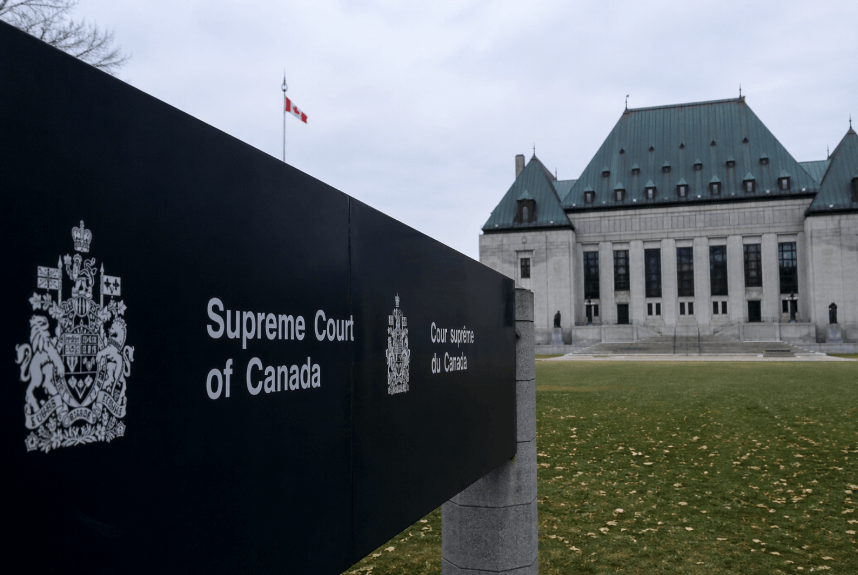
OTTAWA — The BC Civil Liberties Association (BCCLA) appeared before the Supreme Court of Canada on Wednesday to argue that governments must uphold voter equality when drawing electoral boundaries, as the court hears a constitutional challenge with potential national implications.
At the centre of the case, Attorney General of Quebec v. Lalande, et al., is whether Quebec’s decision to suspend a routine electoral boundary review violates voters’ rights under the Charter. The BCCLA, participating as an intervener, warned that political interference in electoral redistribution risks undermining democratic fairness.
Dispute centres on Quebec legislation halting redistribution process
The legal challenge focuses on Quebec’s Act to Interrupt the Electoral Division Delamination Process (ATI), which paused the work of an independent commission tasked with reviewing and updating the province’s electoral map.
That commission had recommended eliminating several rural ridings and redistributing them due to declining populations. Instead of implementing those changes, Quebec’s legislature passed the ATI, delaying any adjustments until after the next provincial election.
The Quebec Court of Appeal previously ruled that the suspension violated the rights of voters in more populous ridings, where representation disparities had grown.
The case now before the Supreme Court will determine the constitutional limits on how and when governments can intervene in electoral boundary-setting processes.
Concerns over political interference and voter inequality
The BCCLA argued that allowing legislatures to override independent commissions opens the door to partisan manipulation of electoral maps, a practice commonly referred to as gerrymandering.
While Canada has largely avoided the more extreme forms of electoral manipulation seen in other jurisdictions, the organization cautioned that recent developments signal potential risks.
In its submissions, the BCCLA noted that similar legislative actions are underway in Alberta, raising broader concerns about a trend toward political involvement in redistribution.
The group emphasized that how electoral districts are drawn directly affects the weight of each vote. Disparities in riding populations can lead to unequal representation, particularly as demographic shifts increase urban populations relative to rural areas.
According to the BCCLA, such disparities may disproportionately affect racialized communities in urban centres, effectively diluting their voting power.
Call for strong constitutional presumption of voter parity
In its intervention, the BCCLA urged the court to adopt a clear standard prioritizing voter parity — the principle that each vote should carry roughly equal weight.
The organization argued that any deviation from parity must be strictly justified, whether based on geography, history, or practical considerations.
Without such safeguards, the group contends, electoral systems risk becoming inequitable and undermining public confidence in democratic institutions.
Direct quote from BCCLA litigation director
Vibert Jack, BCCLA Litigation Director, says:
“Canada is an outlier in the international community as it tolerates extremely inequitable distributions of voting power. One person one vote is a commonly expressed ideal but is simply not the reality here. The right to vote is at the core of our democracy, and everyone should have an equal voice at the ballot box.”
Broader implications for Canadian electoral systems
The Supreme Court’s ruling could have significant implications beyond Quebec, particularly if it clarifies the extent to which governments can override independent electoral commissions.
A decision reinforcing strict limits on legislative intervention may strengthen protections for voter equality nationwide. Conversely, a ruling that allows greater flexibility could embolden provinces to take a more active role in shaping electoral maps.
Legal observers note that the case touches on foundational democratic principles, including representation by population and the balance between independence and accountability in electoral processes.
Legal representation and next steps
The BCCLA is represented in the case by Ewa Krajewski, Brian Studniberg, and Taylor Wormington of Henein Hutchison Robitaille LLP.
The Supreme Court is expected to reserve its decision, with a ruling anticipated in the coming months.
Discover more from Wire Service Canada
Subscribe to get the latest posts sent to your email.