

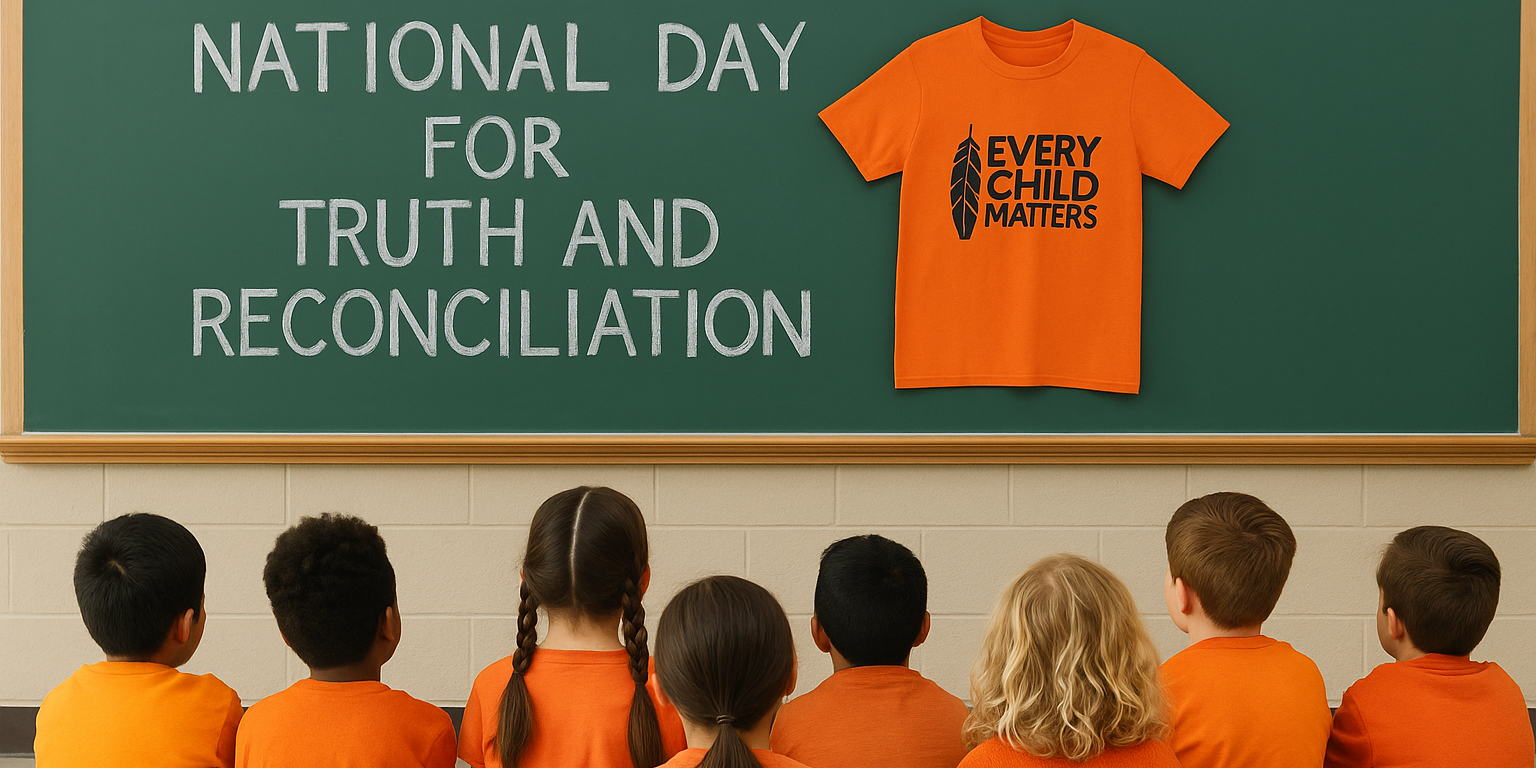
TORONTO — Ontario public schools will observe the National Day for Truth and Reconciliation on Tuesday, with new commitments from the provincial government to develop comprehensive classroom resources on the history and legacy of Indian Residential Schools.
Education Minister Paul Calandra and Indigenous Affairs and First Nations Economic Reconciliation Minister Greg Rickford announced the initiative on September 29, saying the effort builds on Ontario’s commitment to advancing reconciliation through education.
“Tomorrow, schools across the province will reflect and honour Survivors, their families and the many communities affected by the legacy of the Indian Residential Schools by observing Orange Shirt Day and the National Day for Truth and Reconciliation,” the ministers said in a joint statement.
Marking a Milestone
The 2025 observance carries particular significance as it coincides with the 10th anniversary of the Truth and Reconciliation Commission of Canada’s Calls to Action. Those recommendations emphasized the need for stronger education on the history and intergenerational impacts of the residential school system, which operated in Canada for more than a century and caused lasting harm to Indigenous peoples.
“As we mark the 10th anniversary of the Truth and Reconciliation Commission of Canada’s Calls to Action, Ontario continues to fulfill its commitment to advancing education for reconciliation,” the statement added.
New Curriculum Resources
The Ministry of Education has pledged to work with Indigenous partners over the next year to create a province-wide set of curriculum resources that will be used annually in classrooms on September 30. The goal is to ensure a consistent and meaningful approach to teaching about residential schools and their impact across all school boards.
“To further deepen our shared understanding of the enduring intergenerational impact and ensure every student across the province receives a consistent education on our history, we are taking further steps,” the ministers said.
The new curriculum resources are expected to be in place for the 2026 school year. By that time, teachers will have access to comprehensive lesson plans and materials, allowing students to engage more deeply with the stories of Survivors and the broader context of reconciliation efforts.
“By developing these materials for use in all classrooms by September 30, 2026, teachers and students will be able to engage further, learn about the impact of residential schools and commemorate those who have been affected,” the statement said. “These resources will ensure students and teachers are well supported and are learning consistently across the province.”
Education and Reconciliation
Ontario’s commitment comes as governments across Canada continue to grapple with how to respond to the Truth and Reconciliation Commission’s Calls to Action, many of which remain unfulfilled. Calls directed at education emphasize the importance of age-appropriate learning about Indigenous history, culture, and the harms caused by colonial policies.
The decision to embed new curriculum resources reflects ongoing demands from Indigenous communities and education advocates for standardized approaches that ensure all students receive the same foundational knowledge. In the past, curriculum implementation has varied widely between school boards.
By tying the new resources directly to the National Day for Truth and Reconciliation, Ontario is signaling that the observance will not only serve as a commemorative event but also as a structured educational opportunity.
Looking Forward
The announcement was welcomed by some education and community leaders who see the move as a chance to strengthen connections between classrooms and Indigenous voices. The engagement process with Indigenous partners over the next year will be critical in shaping materials that are accurate, respectful, and responsive to community perspectives.
The Ministry of Education has not yet released details on the scope of the resources, but officials said the development process would include consultations to ensure alignment with reconciliation goals and classroom needs.
For students, educators, and families, the introduction of new curriculum materials by 2026 is expected to deepen annual observances of September 30 beyond symbolic recognition, embedding reconciliation education into Ontario’s broader learning framework.
