

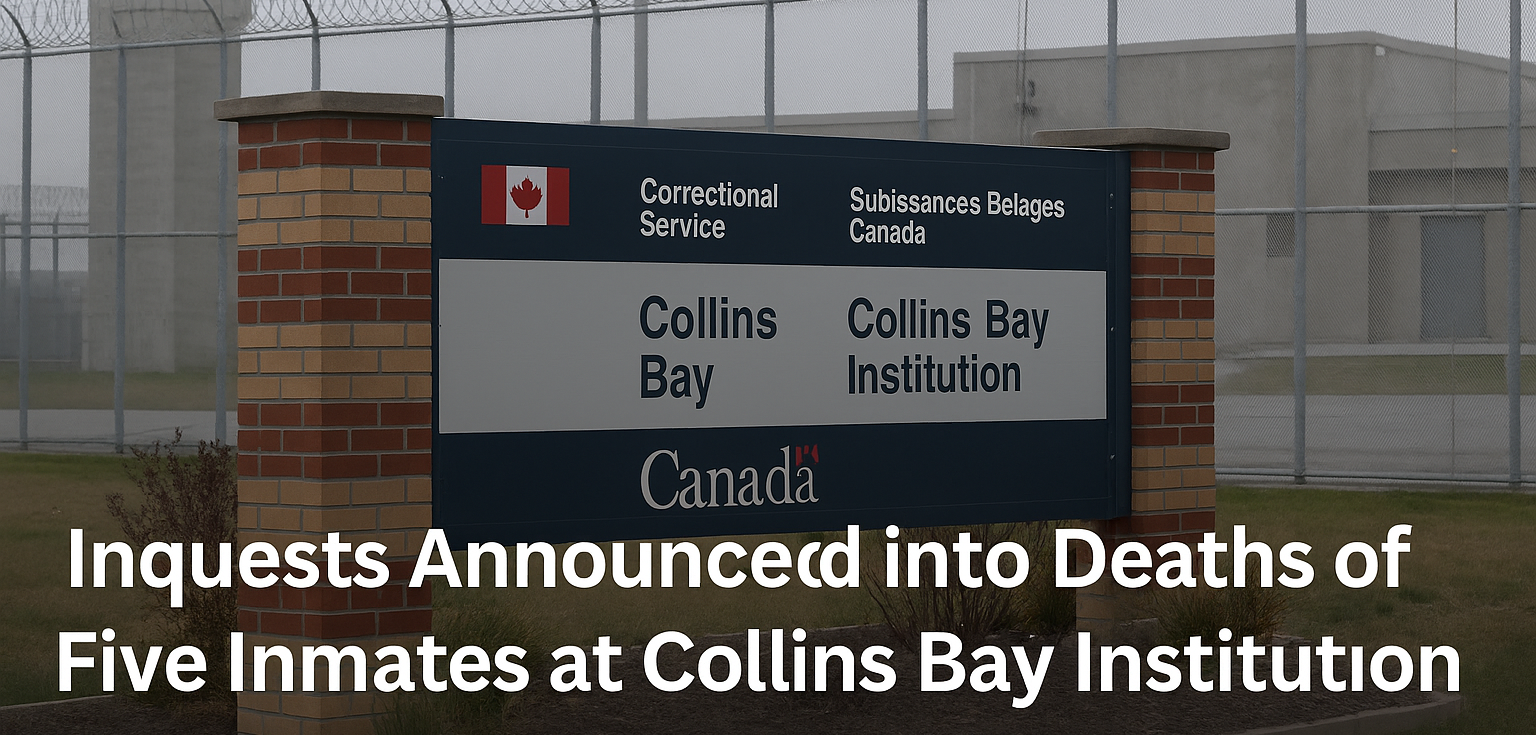
Kingston, Ont. — Ontario’s Office of the Chief Coroner will convene inquests into the deaths of five men who died while in custody or following transfer from Collins Bay Institution in Kingston, according to an announcement by Dr. Paul Dungey, Regional Supervising Coroner for the East Region, Kingston Office.
The inquests will examine the circumstances surrounding the deaths of Shimon Abrahams, 41; Quinn Borde, 39; Shane Gammie, 35; Christopher Sipes, 51; and Qin Long (Qinlong) Xue, 26. Each of the men died between 2018 and 2022 while serving time at the medium-security federal facility or shortly after being taken to hospital from the institution.
Mandatory Review under the Coroners Act
Inquests into these cases are not optional. Under Ontario’s Coroners Act, an inquest is mandatory whenever a person dies while detained in a correctional facility or in the custody of peace officers. The law requires a public hearing before a jury, which is tasked with reviewing evidence and potentially issuing recommendations aimed at preventing similar deaths in the future.
According to the Ministry of the Solicitor General, the decision reflects the importance of transparency and accountability in cases where individuals die while serving federal sentences. Although the inquests will not assign blame or determine criminal liability, they provide a mechanism for systemic review and may lead to recommendations for institutional or policy changes.
The Cases in Question
The five men whose deaths will be examined span a four-year period:
-
Shimon Abrahams, 41, died on June 13, 2022.
-
Quinn Borde, 39, died on April 2, 2022.
-
Shane Gammie, 35, died on November 24, 2018.
-
Christopher Sipes, 51, died on November 21, 2019.
-
Qin Long (Qinlong) Xue, 26, died on November 13, 2020.
Each death occurred either inside Collins Bay Institution, located on the western edge of Kingston, or after transfer to hospital from the facility. The Correctional Service of Canada has previously faced scrutiny regarding conditions inside federal prisons, and inquests such as these often raise questions about inmate healthcare, mental health supports, and institutional safety measures.
Role and Process of an Inquest
An inquest is a public proceeding presided over by a coroner, with evidence presented to a jury. Witnesses may include correctional staff, medical personnel, and experts in prison operations or healthcare. Families of the deceased are typically represented, and the jury has the authority to make non-binding recommendations to government agencies and institutions.
“The jury may make recommendations aimed at preventing further deaths,” the ministry confirmed in its announcement. While these recommendations are not legally enforceable, they are often closely examined by correctional officials and policymakers. Past inquests have prompted changes to prison healthcare protocols, staff training, and mental health interventions.
Broader Context
Collins Bay Institution, a medium-security penitentiary with an adjoining minimum-security unit, houses several hundred federal inmates. Over the years, it has been the subject of investigations related to inmate health, overdoses, and security incidents. While each of the five cases will be considered separately, the grouping of inquests suggests a broader review of systemic issues within the facility.
Correctional reform advocates note that inquests serve a dual purpose: they provide transparency for families and the public while also serving as an accountability mechanism for government institutions. Whether the outcomes lead to substantive changes depends on how the recommendations are received and implemented.
Next Steps
Details on the timing and location of the inquests have not yet been announced. The Ministry of the Solicitor General said further information will be released closer to the proceedings.
Members of the public and media can attend inquests, which are open by law, underscoring the principle of transparency in the justice and corrections system.
For more information about Ontario inquests, the government directs the public to: www.ontario.ca/page/coroners-inquests.
