

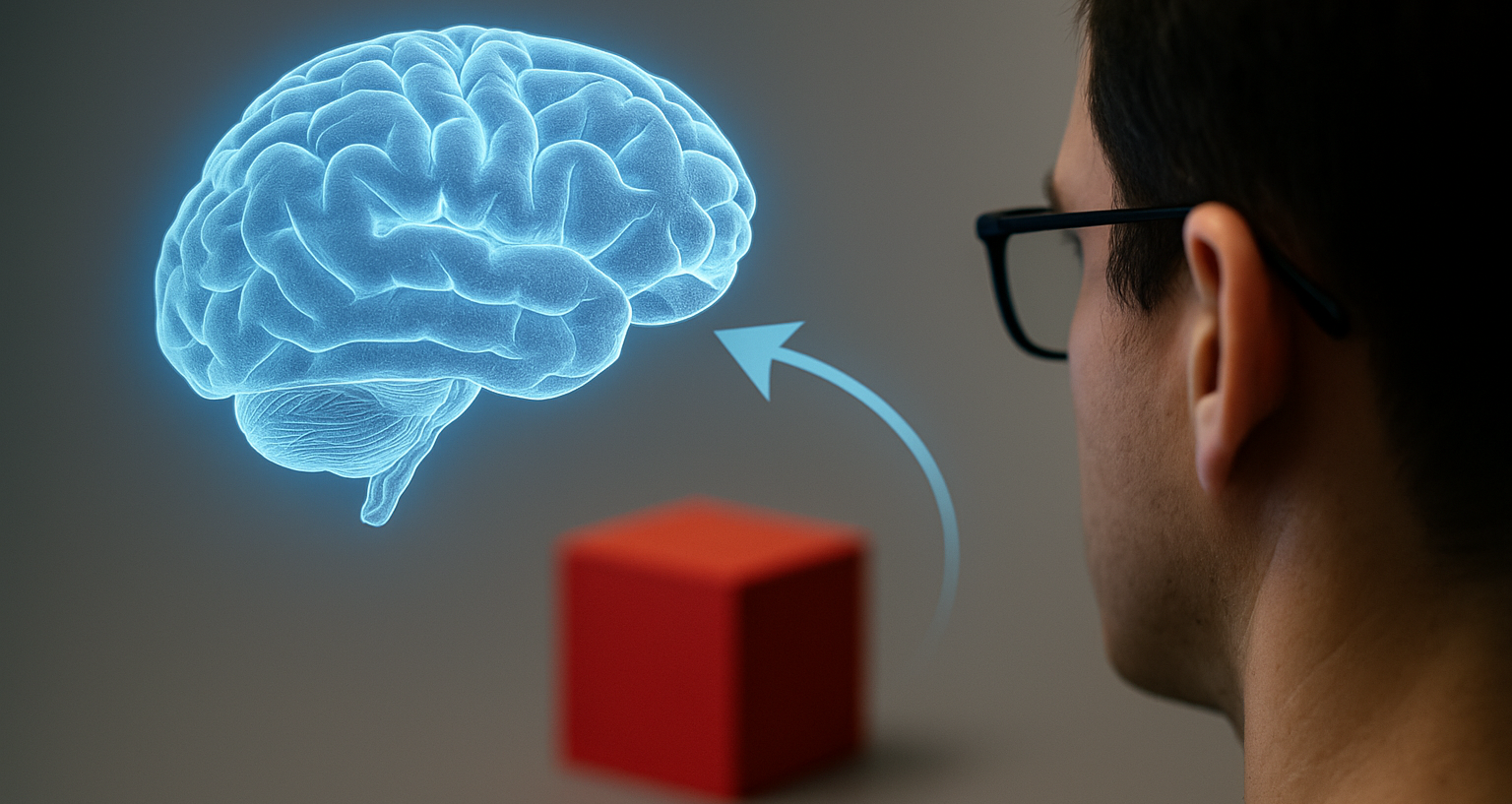
Montreal — Scientists at McGill University’s Montreal Neurological Institute-Hospital (The Neuro) and the University Medical Center Göttingen have uncovered new insights into how the brain relies on objects to determine direction, findings that could inform future research into Alzheimer’s disease and other disorientation-related conditions.
The study, published today in Science, reveals that visual landmarks play a more active role in the brain’s navigation system than previously understood. By demonstrating how objects can tune the brain’s “internal compass,” researchers say the discovery reshapes the scientific understanding of spatial orientation.
The Experiment
Using ultrasound imaging to measure brain activity, scientists studied mice as they were exposed to visual stimuli — either distinct objects or scrambled images without identifiable features. The researchers discovered that certain areas of the brain responded more strongly when the mice looked at recognizable objects.
These responses were traced to the postsubiculum, a brain region specialized in tracking the direction an animal is facing. Each direction corresponds to the firing of a specific cell in this region. When an object entered the mouse’s field of vision, the cell linked to that direction became more active, while cells tied to other directions were suppressed. This process reinforced the animal’s perception of where it was in relation to the object.
Importantly, this heightened response was not observed in other brain regions, suggesting that object recognition plays a uniquely central role in navigation.
Implications for Alzheimer’s and Dementia
The findings provide a potential explanation for why individuals with Alzheimer’s disease and dementia often struggle with spatial orientation. Previous research from Oxford University has shown that tau protein accumulation — a hallmark of Alzheimer’s — begins in brain regions tied to navigation.
By connecting object recognition with directional awareness, the new study offers clues to how the breakdown of this system may contribute to disorientation in neurodegenerative diseases.
“A very useful aspect of our study is it presents a very high-level understanding of two systems that interact together — the visual and spatial recognition systems,” said Stuart Trenholm, a researcher at The Neuro and the paper’s co-senior author. “We have a decent understanding now of how they modulate each other. They are both very high-level brain functions and lot of these neurodegenerative disorders lead to disconnections between these states, so that will be interesting to look into in the future.”
A Surprising Discovery
For neuroscientists, the most striking result is where object processing occurs in the brain. Instead of happening in the visual cortex — the traditional hub for interpreting visual information — object-related signals were detected in the navigation system itself.
“Our results are incredibly surprising,” said Adrien Peyrache, a researcher at The Neuro and the paper’s co-senior author. “Nobody would have predicted that object processing would occur in the navigation system and not in the visual cortex. For the first time, we have an inside-the-brain perspective of what an object is, and how we use an object to get a sense of the world around us.”
The finding, Peyrache added, provides “an inside-the-brain perspective” on how humans and animals use visual cues to anchor themselves in unfamiliar environments — an ability that often fails in the early stages of neurodegenerative disease.
Broader Significance
While the study was conducted in mice, the parallels to human brain function make the results significant for medical research. By mapping how the brain integrates object recognition with directional systems, scientists hope to uncover new pathways for diagnosing or treating conditions that impair navigation.
The Neuro emphasized that the research demonstrates how cross-institutional collaboration and advanced imaging technologies can push the boundaries of neuroscience. As Alzheimer’s and dementia continue to pose growing public health challenges, discoveries like these could influence future therapies and interventions.
About The Neuro
Founded in 1934 by neurosurgeon Dr. Wilder Penfield, The Neuro has grown into Canada’s largest specialized neuroscience research and clinical centre, and one of the largest worldwide. It is also recognized as the first academic institute globally to fully adopt Open Science, a commitment aimed at accelerating knowledge generation and treatment discovery for brain disorders.
As a bilingual institution integrated with McGill University and the McGill University Health Centre, The Neuro combines research, clinical care, and training of new generations of neuroscientists. Its latest study underscores both its global research reputation and its commitment to tackling some of the most complex challenges in brain health.
For more information, visit www.theneuro.ca.
