

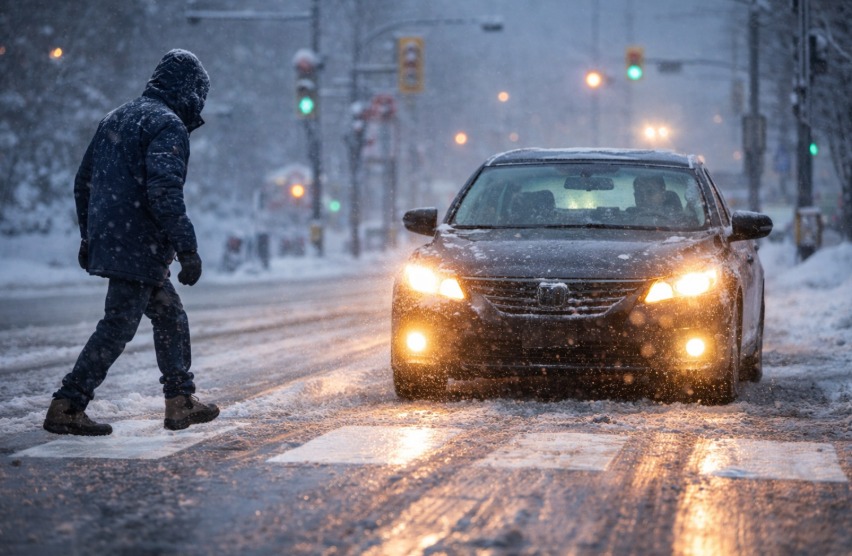
SURREY, B.C. — Health and road safety officials in Metro Vancouver are urging drivers and pedestrians to take extra precautions this winter as colder temperatures, reduced daylight and icy conditions contribute to a sharp increase in pedestrian-involved collisions across the Lower Mainland.
In a public service announcement issued Tuesday, Fraser Health warned that winter months consistently bring higher risks on local roads, particularly for people walking near busy intersections and arterial routes.
“The number of motor vehicle crashes involving pedestrians in the winter months drastically increases compared to the summer months in the Lower Mainland,” said Dr. Emily Newhouse, Fraser Health medical health officer. “Taking some simple precautions while driving can help reduce your risk this winter and help keep you and other road users stay safe and out of the hospital.”
The advisory comes as winter weather settles across much of British Columbia, creating slick road surfaces and visibility challenges that can affect both motorists and vulnerable road users. Fraser Health officials say the seasonal spike in collisions places additional pressure on emergency departments and trauma services already managing higher winter demand.
Health authorities are emphasizing that preparation and driver behaviour are among the most effective tools to reduce the likelihood of crashes. Among the key recommendations for motorists is ensuring vehicles are equipped with appropriate tires. Winter tires are mandatory on most provincial highways until April and are critical for maintaining traction during snow, slush and freezing rain.
Drivers are also being urged to check tire tread and air pressure regularly, confirm all exterior lights are functioning properly, and maintain clear windshields and windows to reduce glare and blind spots. Worn or streaking windshield wipers should be replaced promptly, the advisory noted.
Speed management is another central message. While posted speed limits reflect ideal driving conditions, officials stress that winter weather often requires slower speeds and increased following distances to allow for longer stopping times.
The advisory also reiterates that impaired driving extends beyond alcohol. Drivers who have consumed cannabis or other drugs are encouraged to plan alternate transportation, as impairment significantly increases collision risk, particularly in poor weather.
“The best way to avoid injuries on winter roads is to avoid collisions in the first place. Make sure you have winter tires, your roof and all your windows are completely clear of snow, and you are completely focused on your driving,” said Corporal Michael McLaughlin of the BC Highway Patrol. “If you don’t feel confident to drive, or you feel the need to fiddle with your phone behind the wheel, then you shouldn’t be on the road.”
Pedestrians, cyclists and people using mobility devices are also being advised to heighten their awareness during winter months. Reduced daylight hours and weather-related visibility issues can make it harder for drivers to see people crossing streets, particularly at intersections.
Fraser Health recommends that pedestrians remain alert when crossing roads, paying close attention to vehicles turning left or right across crosswalks. Officials note that even when pedestrians have the right of way, drivers may fail to see them due to glare, snow buildup or poor lighting.
Dr. Newhouse encouraged residents to take additional personal safety measures when travelling on foot during winter conditions. These include wearing footwear that provides warmth and traction, moving slowly on icy or snow-covered surfaces, and keeping hands out of pockets to help maintain balance and reduce the risk of falls.
Beyond transportation safety, Fraser Health is using the advisory to promote broader winter wellness planning. The authority is encouraging residents to stay current on flu and COVID-19 vaccinations, practice good hand hygiene, and familiarize themselves with appropriate care options to reduce strain on emergency services.
The campaign aligns with Fraser Health’s ongoing efforts to address preventable injuries and improve population health outcomes across one of Canada’s fastest-growing regions. The health authority serves communities on the traditional, ancestral and unceded lands of the Coast Salish and Nlaka’pamux Nations and works with 32 First Nations within the Fraser Salish region.
With more than 50,000 staff, medical professionals and volunteers, Fraser Health delivers hospital and community-based services to millions of residents across the region.
Officials say the message is simple: small, proactive steps taken now can significantly reduce injuries, hospital visits and long-term impacts throughout the winter season.
By planning ahead, adjusting behaviour to match conditions and remaining attentive on the road, both drivers and pedestrians can help ensure safer travel during the most challenging months of the year.
