

Industry Withdrawal Marks Final Chapter in Fight Over Marine Fish Farming
Environmental Groups Hail Decision as Precedent-Setting Victory
OLYMPIA, Wash. — A Washington State court has upheld one of the most sweeping bans on commercial finfish aquaculture in the United States, after industry groups abruptly withdrew their legal challenge to the measure.
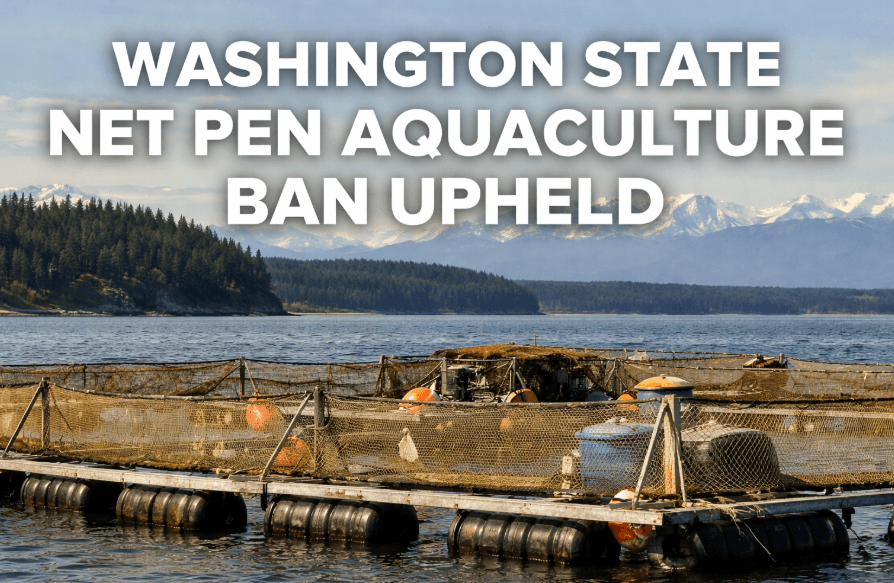
The decision effectively ends a prolonged dispute over the state’s prohibition on net pen aquaculture, a method of fish farming conducted in open-water enclosures. The court granted a motion by petitioners to dismiss their own lawsuit, cementing the ban as a permanent feature of Washington’s marine regulatory framework.
The case had been brought by the Northwest Aquaculture Alliance, a trade group representing industrial aquaculture interests, including Cooke Aquaculture. The company was previously linked to a major 2017 incident in Puget Sound that helped catalyze the state’s crackdown on the industry.
Environmental organizations, including the Center for Food Safety and Wild Fish Conservancy, intervened in the case to defend the rule. Their legal representation included counsel from Kampmeier & Knutsen PLLC alongside attorneys from the Center for Food Safety.
A Turning Point Rooted in Environmental Crisis
The origins of the ban trace back to a 2017 structural collapse of a commercial net pen facility in Puget Sound, which released approximately 250,000 farmed Atlantic salmon into state waters. Many of the fish were non-native and reportedly carried disease, raising alarms among scientists, regulators, and Indigenous communities.
The fallout from the incident triggered a multi-year public campaign led by conservation groups and Tribal Nations, ultimately resulting in legislative and regulatory action. In January 2025, the Washington State Department of Natural Resources finalized rules implementing the ban on commercial finfish net pen aquaculture in state marine waters.
That rule was immediately challenged by industry advocates, who argued it was overly restrictive and economically harmful. However, their decision to abandon the case now leaves the regulation intact and unchallenged.
Environmental Advocates Applaud Outcome
Supporters of the ban described the court outcome as a decisive win for environmental protection and public policy grounded in scientific evidence.
“Washington made history by banning this dangerous industry from our public waters. It serves as a model for other states seeking to preserve our oceans for future generations. The aquaculture industry’s decision to give up its challenge affirms what science and the public have made clear for years: these operations pose unacceptable risks and were properly outlawed,” said Kingsly A. McConnell, Staff Attorney for Center for Food Safety, an Intervenor in the case.
Advocates also emphasized the broader significance of the ruling in safeguarding marine ecosystems and reinforcing regulatory authority.
“This is a landmark, decisive victory for Washington, closing the chapter on a long fight led by the public to protect the health of Puget Sound,” said Emma Helverson, Executive Director of Wild Fish Conservancy. “For nearly a decade, the public took on a powerful global industry and fought tirelessly to reclaim our waters and turn that vision into lasting law. With this final challenge dismissed, the fight is over. This industry is gone, the ban is permanent, and commercial net pen aquaculture will never again threaten the health of our wild salmon, orcas, or Puget Sound. This victory stands as a testament to what we can achieve when we stand together with the law and science on our side.”
Broader Industry and Policy Implications
The Washington ruling arrives amid ongoing global debate over the environmental and economic viability of industrial aquaculture. Critics of net pen systems point to a range of documented risks, including water pollution from chemicals and fish waste, disease transmission to wild populations, and ecological disruption.
Escaped farmed fish, whether through equipment failure or extreme weather events, remain a central concern. These incidents can lead to competition with wild fish for resources, genetic interbreeding, and the spread of pathogens. Globally, more than 25 million farmed fish were reported to have escaped between 1996 and 2012.
In addition to environmental concerns, opponents argue that open-water aquaculture can undermine traditional fishing practices and Indigenous livelihoods by privatizing shared marine spaces.
While some U.S. states continue to permit aquaculture operations in their waters, attempts to expand the industry into federal offshore zones have repeatedly been blocked by courts, often citing insufficient legal authority and environmental review.
Internationally, regulatory approaches vary. Countries such as Denmark and Argentina have enacted outright bans on finfish aquaculture, citing environmental risks similar to those identified in Washington State.
A Model for Future Regulation
With the legal challenge now withdrawn, Washington’s ban stands as one of the most comprehensive restrictions on marine fish farming in North America. Observers say it could influence policy discussions in other jurisdictions, particularly as governments weigh economic development against environmental protection.
For now, the court’s decision signals a clear endpoint to a contentious chapter in the state’s marine policy — and a potential blueprint for others navigating similar debates.