

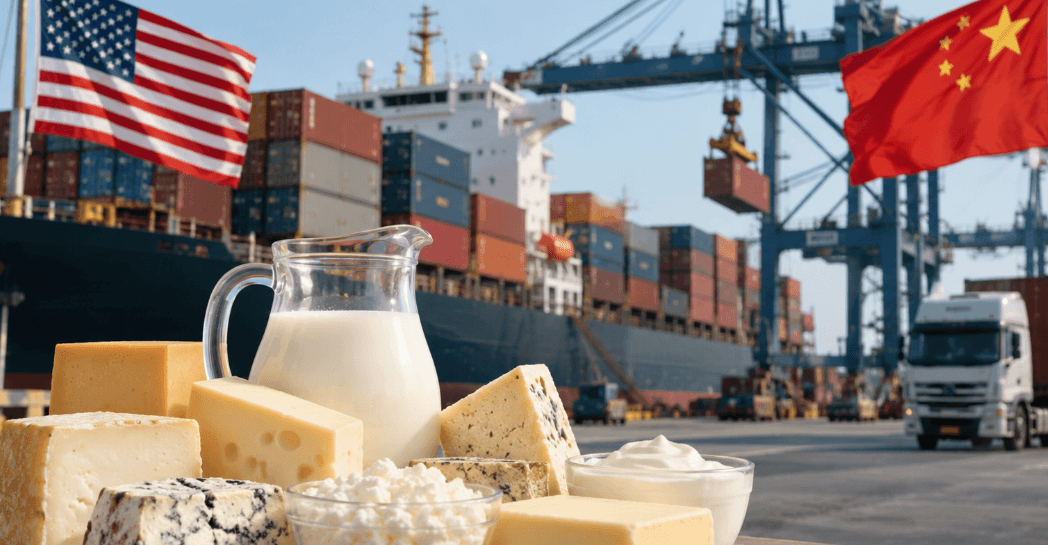
U.S. dairy industry groups are welcoming the launch of a new U.S.-China Board of Trade, saying the initiative could help reduce retaliatory tariffs and provide greater certainty for agricultural exporters navigating one of the world’s largest consumer markets.
The National Milk Producers Federation (NMPF) and the U.S. Dairy Export Council (USDEC) said the Board’s initial product scope includes dairy products that could be considered for tariff reductions. The organizations are calling for remaining retaliatory duties on U.S. dairy exports to China to be fully eliminated.
Dairy Groups Seek Relief From Retaliatory Tariffs
The announcement comes as U.S. agricultural producers continue to contend with trade barriers affecting access to the Chinese market. Dairy industry representatives argue that retaliatory tariffs have weakened the competitiveness of American suppliers while allowing producers from competing exporting countries to gain market share.
Gregg Doud, president and CEO of the National Milk Producers Federation, said the establishment of the Board represents a positive development for agricultural trade.
“America’s dairy farmers welcome the launch of the U.S.-China Board of Trade, and we commend USTR for prioritizing agricultural exports. Retaliatory tariffs continue to put U.S. dairy at a disadvantage in China while our competitors gain ground. We are encouraged by dairy’s inclusion as products slated for retaliatory tariff reductions. U.S. dairy farmers look forward to seeing China’s tariff retaliation on dairy fully lifted and urge the inclusion of dairy in as key part of China’s agricultural purchase commitments. The positive momentum today is good for farmers, good for trade and good for both countries.”
The industry’s focus is now expected to turn to how quickly the new trade mechanism can translate into concrete tariff reductions and whether dairy products will feature prominently in broader agricultural purchase commitments between the two countries.
Exporters Call for Predictable Market Access
Krysta Harden, president and CEO of the U.S. Dairy Export Council, said greater predictability would benefit both U.S. exporters and customers purchasing American dairy products.
“The U.S. dairy industry strongly supports the launch of the U.S.-China Board of Trade and the prospect it offers for giving U.S. dairy exporters and their customers the predictability they need. We are encouraged by the inclusion of U.S. dairy exports on the list of products to be considered for tariff reduction. USDEC urges the Board to swiftly deliver the full elimination of the retaliatory tariffs that still weigh on U.S. dairy so our suppliers can compete on a more level playing field. The two-month extension of the tariff truce is also a welcome step forward. As wider talks continue, it is essential that proposed port fees on Chinese ships are not passed along to U.S. agricultural exporters. Added freight costs would undercut the very gains the Board of Trade is meant to achieve.”
Her comments also highlight concerns that additional shipping expenses could offset the financial benefits of tariff relief. For agricultural exporters, transportation and logistics costs can significantly influence competitiveness in international markets.
Tariff Changes Will Not Take Effect Immediately
Despite the industry’s positive response, tariff relief under the new framework is not expected to be immediate.
Announcements from the U.S. and Chinese governments indicated that measures associated with the Board of Trade will be implemented “consistent with their respective domestic laws and processes.” That means changes will need to move through the applicable procedures in each country before taking effect.
The implementation timetable will therefore be closely watched by agricultural exporters, particularly businesses exposed to existing retaliatory duties.
Industry Groups Previously Sought Dairy Inclusion
NMPF and USDEC had already pushed for dairy to receive attention under the emerging trade framework. In July, the organizations submitted input on the Board of Trade’s design and proposed product coverage, emphasizing the need to address retaliatory tariffs affecting U.S. dairy shipments.
Both organizations said they intend to continue working with the U.S. government to eliminate remaining trade barriers and prevent additional restrictions from being introduced.
For the dairy sector, the creation of the U.S.-China Board of Trade represents an opportunity to improve market access, but its commercial impact will depend on the scale and timing of tariff reductions. Industry groups will now be watching for implementation details and further developments in broader U.S.-China trade negotiations.