

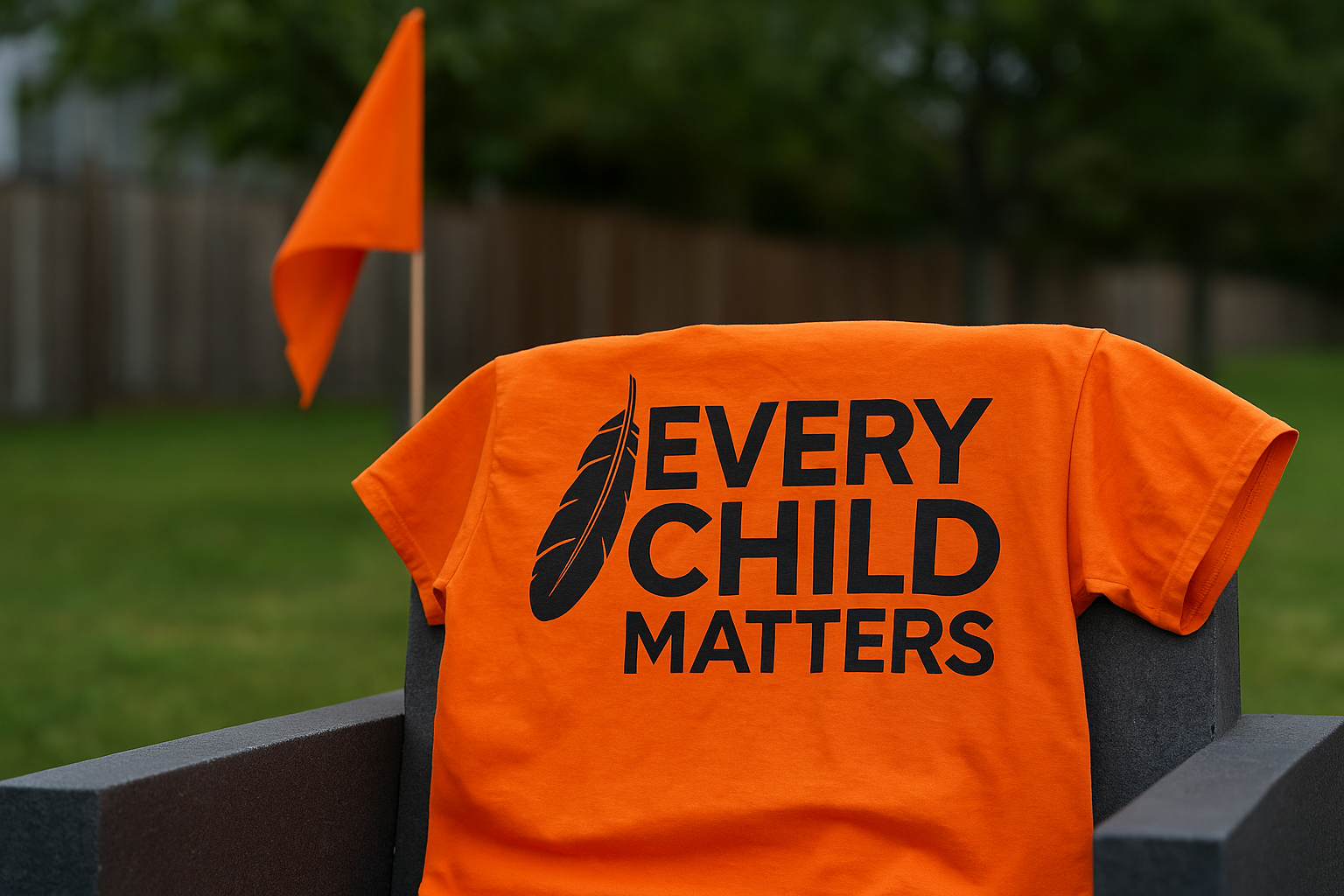
Campbell River, B.C. — The Strathcona Regional District (SRD) will join communities across Canada in observing the National Day for Truth and Reconciliation on Tuesday, September 30. The day honours survivors of residential schools, remembers the children who never returned home, and acknowledges the lasting impacts on families and communities.
SRD officials say the observance reflects an ongoing commitment to reconciliation. “The SRD board and staff are committed to continuous learning and building meaningful relationships with the Indigenous Peoples of this region as we work toward reconciliation,” the district said in its announcement.
Commemorating a Day of Reflection
The federal day of remembrance was established to recognize the painful history of Canada’s residential school system and to encourage education and reflection. For the SRD, the observance means facility closures and schedule changes across Campbell River.
The SRD Corporate Office at 990 Cedar Street will be closed for the day. At Strathcona Gardens Recreation Complex, operations will be limited. The facility will host a Public Swim, Everyone Welcome Skate, and Pond Hockey from 1:30 p.m. to 4:30 p.m., while the arena will remain open for all pre-booked user groups. Regular programming and classes, however, are cancelled.
The SRD is encouraging both employees and residents to take part in the day by reflecting personally, participating in community events, or wearing orange to support the message that “Every Child Matters.”
Opportunities for Education and Engagement
The observance extends beyond facility closures. The SRD’s announcement highlights a range of opportunities for residents to learn more about reconciliation and engage in awareness activities.
Local organizations and national institutions are offering a mix of in-person events and online programming in the days leading up to and on September 30. Among them is the Laichwiltach Family Life Society, which will host the Annual Every Child Matters Walk at 11 a.m. on September 30 in Campbell River’s Spirit Square. The walk will be followed by a ceremony and light lunch.
The National Centre for Truth and Reconciliation will host a series of webinars from September 22–26, designed to broaden understanding of colonialism’s legacy and the work still needed for reconciliation.
Other organizations are also contributing educational and cultural resources. The Orange Shirt Society continues its national campaign to raise awareness about the impacts of residential schools, while the Witness Blanket project offers a large-scale art installation incorporating hundreds of reclaimed items from schools, churches, and cultural structures across Canada.
Broader Movements for Change
The National Day for Truth and Reconciliation also ties into wider initiatives aimed at reconciliation, awareness, and community healing. The Moose Hide Campaign, a movement that began in British Columbia, brings together men and boys in a nationwide effort to end violence against women and children.
The Gord Downie & Chanie Wenjack Fund is providing free webinars on traditional Indigenous skills, sports, and cultural practices, offering Canadians another avenue to participate in the reconciliation process.
Educational institutions and museums are also taking part. The Indian Residential School History and Dialogue Centre at the University of British Columbia has made online records accessible to support learning about the history and ongoing impacts of the residential school system. The Royal BC Museum, meanwhile, has created an online learning portal dedicated to survivors and their stories.
A Call to Action
In its statement, the SRD underlined the importance of using September 30 as an opportunity for both individual reflection and collective engagement. By participating in events, accessing resources, or simply wearing orange, the district encourages residents to show support for reconciliation efforts and to honour the survivors and families affected by residential schools.
For additional information about the National Day for Truth and Reconciliation and the Truth and Reconciliation Commission’s 94 Calls to Action, the SRD directs residents to the Government of Canada’s website.
