

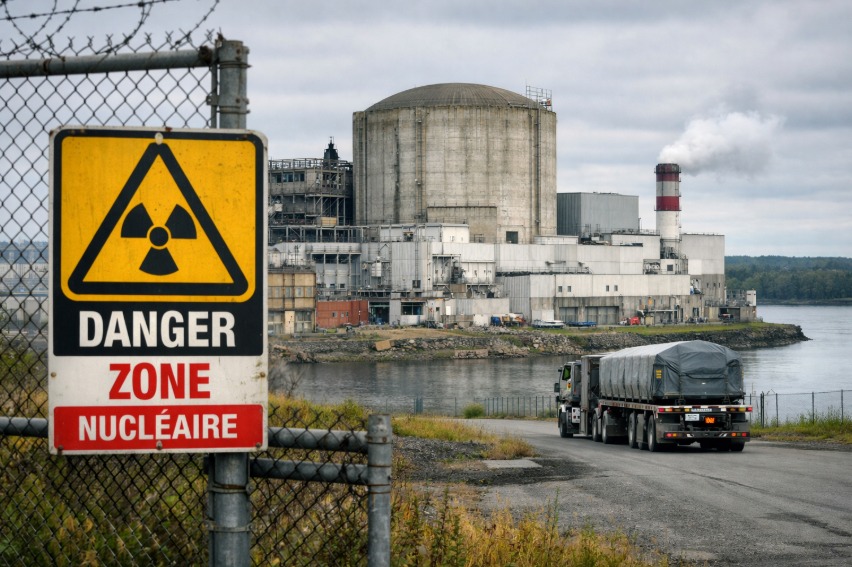
BÉCANCOUR, Que. — Plans by a U.S.-led consortium to dismantle the long-idled Gentilly-1 nuclear reactor on the banks of the St. Lawrence River are drawing criticism from environmental advocates and nuclear experts, who warn that the project could proceed without a full public environmental review or meaningful public engagement.
The Gentilly-1 (G-1) reactor, owned by Atomic Energy of Canada Limited (AECL), has been dormant for 47 years, standing as a contaminated industrial structure near the city of Bécancour. Despite its decades-long inactivity, the facility remains radioactive. Now, a U.S. consortium operating under the name Canadian Nuclear Laboratory Partners is preparing to dismantle and demolish the reactor, marking what would be the first full decommissioning of a CANDU power reactor.
The proposal follows a major outsourcing decision by AECL last December, when it awarded the consortium a $24-billion, 20-year contract to manage and operate its nuclear facilities across Canada. Those facilities include Gentilly-1, five other shut-down reactors located along major waterways — including the Winnipeg, Ottawa and Lake Huron basins — and the highly contaminated nuclear research complex at Chalk River Laboratories in eastern Ontario.
Under the current plan, waste generated from dismantling Gentilly-1 would be transported by truck from Quebec to Chalk River for disposal and long-term management.
Dr. Gordon Edwards, president of the Canadian Coalition for Nuclear Responsibility, said the risks associated with the project are significant and insufficiently examined. “The risks to the river, to workers, and ordinary citizens are real. Heavily contaminated radioactive concrete and steel would be trucked over public roads and bridges, through many Quebec and Ontario communities, to the Chalk River site just across the Ottawa River from Quebec.”
Details of the Gentilly-1 project only became public late last year, when a brief notice appeared on the federal Impact Assessment Registry just before Christmas. The posting offered a one-paragraph project description and linked to a single-page “notice of intent” titled “Decommissioning of the Gentilly-1 Waste Facility.” Critics say the language downplays the scope of the work and does not clearly state that the project would represent the first full decommissioning of a CANDU reactor.
No technical studies, environmental assessments or supporting documentation were included with the notice. Members of the public were directed to submit comments to the private consortium itself rather than to federal regulators. The public comment period is scheduled to close on Feb. 5.
Dr. Ole Hendrickson, a researcher with Concerned Citizens of Renfrew County and Area, warned that the current process could allow the project to move forward with limited oversight. He said “AECL could make a determination under the Impact Assessment Act allowing U.S. companies to proceed without public scrutiny, government oversight, or First Nations consent.”
The Gentilly-1 reactor sits on provincial land adjacent to the shut-down Gentilly-2 reactor, which is owned by Hydro-Québec. Edwards said a broader, coordinated approach involving the Quebec government could offer both environmental and economic benefits.
He suggested that joint remediation of the entire Gentilly site could create skilled jobs, strengthen Canadian expertise in reactor decommissioning, and provide valuable experience for Hydro-Québec as it prepares for the eventual dismantling of Gentilly-2. Such an approach, he said, would also better ensure protection of the public interest and the surrounding environment.
Concerns about standards are not without precedent. In 2016, a previous U.S.-led consortium contracted by AECL proposed filling two defunct reactors with concrete and grout and leaving them in place near the Winnipeg and Ottawa rivers. International nuclear safety standards generally permit such “entombment” strategies only in emergency situations, such as the aftermath of the Chernobyl disaster. Those proposals were later stalled amid public opposition.
Environmental groups now fear that, without a transparent review process, similar shortcuts could be applied at Gentilly-1.
As pressure builds ahead of the February deadline, critics are calling for a comprehensive federal impact assessment, direct oversight by Canadian authorities, and full public and Indigenous consultation before any demolition work begins. For communities along the St. Lawrence and Ottawa rivers, they argue, the stakes are too high for the project to proceed quietly.
