

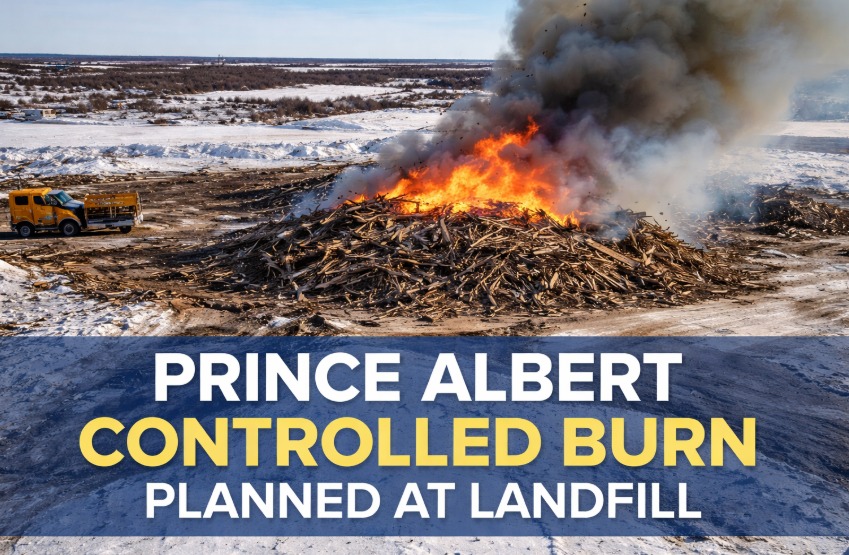
PRINCE ALBERT, Sask. — The City of Prince Albert will carry out a controlled burn of clean wood at its municipal landfill on Feb. 24, a routine operational measure authorized under provincial environmental regulations and coordinated with local and provincial safety agencies.
City officials said the burn will take place at the Prince Albert Landfill and is part of ongoing landfill management activities. The burn has been approved under the landfill’s operating permit issued by Saskatchewan’s Ministry of Environment, ensuring it meets regulatory requirements for environmental protection and public safety.
Municipal landfills commonly use controlled burns to reduce stockpiles of untreated wood that accumulate through residential and commercial waste disposal. Clean wood, which does not contain paint, chemicals, or other contaminants, can be safely burned under regulated conditions to manage volume and maintain landfill efficiency.
The city said the burn has been planned in coordination with emergency and public safety partners. The Saskatchewan Public Safety Agency will be notified ahead of the operation, and the Prince Albert Fire Department has already inspected the site to confirm readiness and safety compliance.
Smoke from the controlled burn may be visible to residents and businesses in Prince Albert and surrounding areas for several days following the operation, depending on weather and wind conditions.
Municipal officials emphasized that visible smoke will be part of the planned process and does not indicate an emergency situation.
Controlled burns at landfills serve several operational and financial purposes for municipalities. By reducing the size of wood waste piles, cities can extend the lifespan of landfill facilities, lower handling and transportation costs, and maintain safer working conditions for staff and equipment.
Waste management is a significant operational responsibility for Canadian municipalities, particularly mid-sized cities such as Prince Albert, which serves as a regional hub in north-central Saskatchewan. Managing landfill capacity efficiently helps municipalities avoid the high costs associated with landfill expansion, closure, or development of new waste disposal sites.
Environmental oversight from the provincial Ministry of Environment ensures such burns are conducted in compliance with air quality standards and environmental guidelines. Operating permits typically outline when burns can occur, what materials are allowed, and what precautions must be in place.
Prince Albert’s landfill accepts a range of materials from residential, commercial, and industrial sources, but clean wood is typically separated from general waste because it can be processed differently, including through reuse, recycling, or controlled burning.
Municipal infrastructure such as landfills represents a major long-term capital and operational cost for cities. Efficient waste diversion and volume reduction strategies can help municipalities control expenses and defer costly capital projects.
For Prince Albert, proactive landfill management is particularly important given population growth and regional usage patterns. Smaller cities often serve surrounding rural areas, increasing waste volumes and operational demands.
City officials did not indicate how long the burn itself will last but noted smoke may remain visible intermittently over the coming days.
Controlled burns are typically conducted under specific weather conditions to minimize smoke impact on nearby communities and ensure safe containment.
Residents are not required to take any action, and landfill operations will continue as usual.
The planned burn reflects routine municipal waste management practices rather than an emergency response and is part of the city’s broader effort to maintain essential infrastructure efficiently and in compliance with provincial regulations.
Prince Albert has not announced any changes to landfill hours or services during the burn period.