

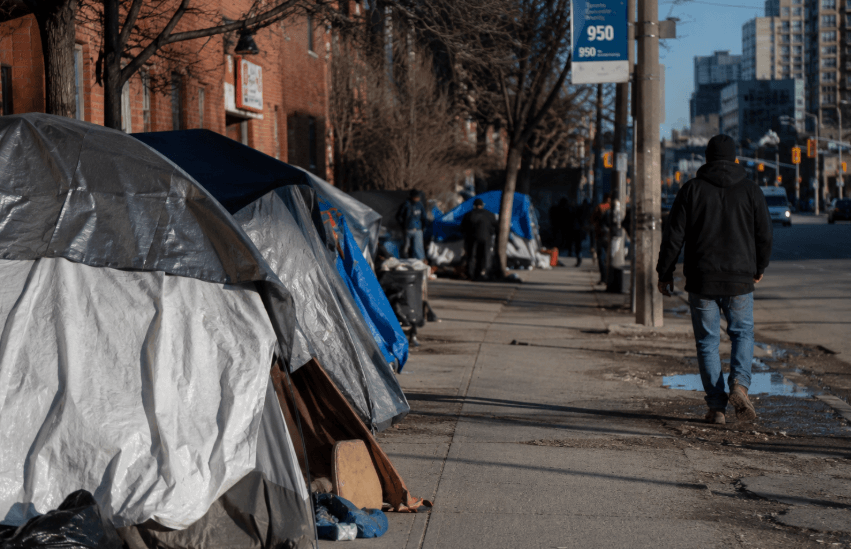
Ontario’s largest municipalities are renewing calls for the provincial government to take stronger action on homelessness, mental health and addictions, arguing that conditions in communities have deteriorated since municipal leaders launched a coordinated advocacy campaign two years ago.
Ontario’s Big City Mayors (OBCM) held a press conference in Ottawa on August 16 to highlight its Solve the Crisis campaign and press the province to move beyond short-term responses toward policies focused on recovery, treatment, housing and long-term community support.
Municipal Leaders Renew Solve the Crisis Campaign
The Solve the Crisis campaign was first launched in 2024 as Ontario municipalities faced growing pressure related to homelessness, mental health challenges and addictions. The initiative seeks changes in how governments address those interconnected issues and calls for a more coordinated response involving provincial and municipal authorities.
According to OBCM, the situation has continued to worsen since the campaign began, increasing the urgency for policy measures capable of producing sustainable improvements across Ontario communities.
Municipal governments are often on the front lines of the crisis. Cities oversee or support services ranging from emergency shelters and supportive housing to public transit, policing, paramedic services and community programs. Growing demand in these areas can place significant pressure on local budgets and municipal resources.
OBCM Calls for Shift From Reaction to Recovery
A central message of the campaign is that Ontario needs to move from what OBCM describes as a reactive approach toward a recovery-oriented model.
The organization is calling on the provincial government to seriously engage with policy solutions intended to address the underlying factors contributing to homelessness and provide stronger pathways toward mental health and addictions treatment.
For municipalities, the issue also has broader economic implications. Persistent homelessness and untreated mental health and addictions challenges can affect emergency services, health-care systems, public spaces and local businesses while increasing costs for governments and community organizations.
The mayors’ renewed appeal comes as cities across Ontario continue to manage pressures associated with housing affordability, shelter capacity and access to health and social services.
Ontario Cities Seek Greater Provincial Involvement
OBCM represents mayors from Ontario’s largest municipalities and regularly advocates on issues that extend beyond the financial and administrative capacity of individual cities.
The organization maintains that addressing homelessness, mental health and addictions requires cooperation across different levels of government, particularly because many of the services involved fall within areas of provincial responsibility.
The August 16 event was led by Burlington Mayor Marianne Meed Ward, who serves as chair of Ontario’s Big City Mayors. Additional speakers were expected to participate as part of the campaign’s renewed push for action.
Housing, Treatment and Community Services Remain Key Pressures
Ontario municipalities have increasingly faced the challenge of balancing immediate responses with longer-term solutions.
Emergency shelters and outreach programs can provide short-term assistance, but municipal leaders have repeatedly emphasized the need for permanent housing options, supportive services and accessible treatment to help people move toward stability.
The Solve the Crisis campaign is designed to keep those issues on the provincial agenda while encouraging policy changes that can be implemented consistently across communities.
The mayors’ position reflects the interconnected nature of the challenges. Housing shortages can contribute to homelessness, while untreated mental health conditions or addictions can make it more difficult for vulnerable residents to secure and maintain stable housing.
Municipal Campaign Seeks Long-Term Policy Response
The latest OBCM appeal marks a continuation of a campaign that has now been active for roughly two years. The organization says the worsening humanitarian situation demonstrates that existing measures have not been sufficient to reverse the trend.
By renewing its call for provincial involvement, Ontario’s Big City Mayors is seeking a broader strategy that combines immediate assistance with long-term recovery and prevention.
The next phase of the campaign will depend on how the Ontario government responds to the municipalities’ proposed policy solutions and whether additional resources or programs are introduced. For Ontario’s largest cities, the central message remains that homelessness, mental health and addictions require sustained provincial-municipal cooperation rather than isolated or temporary measures.