

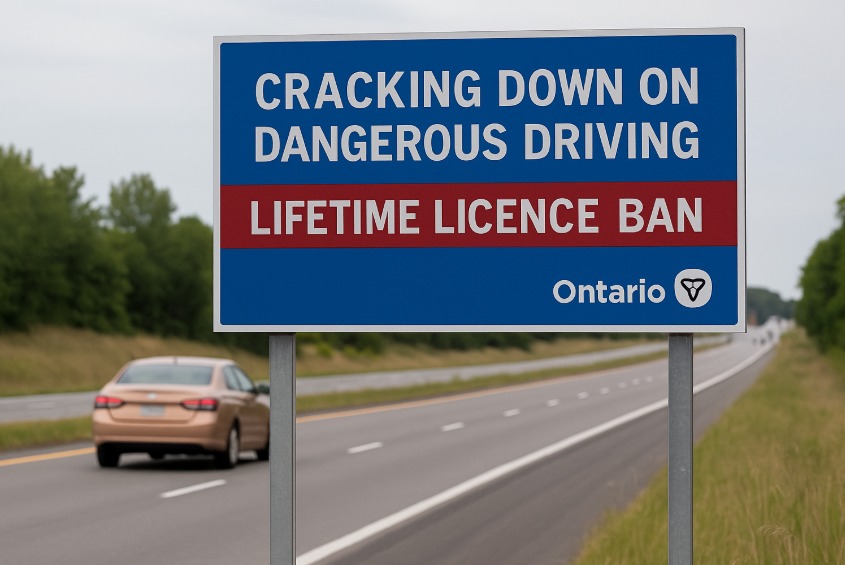
The Ontario government is moving to tighten road-safety laws with a suite of tougher penalties aimed at high-risk drivers, including lifetime licence bans for those convicted of dangerous driving causing death. The measures, to be tabled in the legislature later Tuesday, mark one of the most significant escalations in the province’s enforcement regime in recent years and respond directly to rising concerns about road violence and repeat offenders.
The legislative package is anchored by reforms inspired by “Andrew’s Law,” a petition launched after the death of Andrew Cristillo, a father of three killed by a driver who had been charged with dangerous and stunt driving. The new framework would introduce lifetime driving prohibitions, expand police powers to issue immediate roadside suspensions, increase fines across several offence categories and strengthen education requirements for young drivers.
“No family should ever face the heartbreak of losing a loved one or the trauma of a life-changing injury because of a dangerous and careless driver,” said Prabmeet Sarkaria, Minister of Transportation. “These proposed changes will deter reckless behaviour, hold offenders accountable and make our roads and highways safer.”
Under the proposals, anyone convicted of dangerous driving causing death would face a lifetime licence suspension, making Ontario one of the strictest jurisdictions in North America for such offences. Police would also gain authority to issue 90-day roadside suspensions and impound vehicles when they have reason to believe a driver is operating dangerously.
Vehicle impoundment and fine structures for driving while suspended would rise substantially. Penalties would include a 14-day impound and $2,000–$10,000 fine for a first offence, a 30-day impound and $5,000–$15,000 fine for a second, and a 45-day impound with fines of $10,000–$20,000 for a third or subsequent offence.
Careless driving rules would also be tightened. A new seven-day roadside suspension would apply to careless driving, while offences causing bodily harm or death would carry a 30-day suspension. Fines upon conviction would increase to between $1,000 and $5,000, up from the current $400 to $2,000 range.
The province is planning additional education measures for young and novice drivers, as well as stiffer penalties for commercial-vehicle operators. Distracted-driving fines for commercial drivers would double and would now include escalating licence suspensions — seven days for a first offence, 14 days for a second and 60 days for a third. Minimum fines for violations related to mandatory truck speed limiters would also rise sharply, from $250 to $1,000.
Cristillo’s family has been central in advocating for reform. “My brother died because a dangerous driver was allowed to keep driving. Andrew deserved better, and families deserve real protection. Andrew’s Law makes sure of it,” said Jordan Cristillo, Andrew’s brother.
Attorney General Doug Downey said the government is also weighing further measures related to impaired driving, including potential requirements for convicted impaired drivers who cause the death of a parent or guardian to provide financial support to the victim’s children. “Impaired driving is the leading cause of death on Ontario roads. When a child loses a parent due to impaired driving, it’s completely devastating. That is why our government is taking action to develop practical solutions that can ease their burden and provide financial stability in the wake of such tragedies. It’s the latest step in our plan to hold impaired drivers accountable, protect victims of crime and keep communities safe,” he said.
Solicitor General Michael Kerzner called the reforms necessary to prevent future tragedies. “Andrew Cristillo’s tragic death is a heartbreaking reminder of the devastation reckless and impaired driving can have. That is why through these proposed measures, our government is taking action to ensure police have the tools they need to crack down on dangerous driving so we can prevent future tragedies and protect communities across Ontario.”
Advocacy and industry groups also voiced support. Steve Sullivan, CEO of MADD Canada, said, “Motor vehicle crashes remain a significant public safety issue, and more people die on Ontario roads than are killed by all forms of homicide. Road safety must continue to be a priority for governments and law enforcement.”
Mark Bylsma, chair of the Ontario Trucking Association, said he welcomed stronger oversight of commercial vehicles. “These devices are meant to protect the travelling public from speeding trucks, and we welcome meaningful fines for violating the speed limiter requirement.”
Lauren Fisher of CAA South Central Ontario said the changes send a clear message: “Driving is a privilege. The behaviour to drive recklessly is a choice and carries serious responsibility.”
Ontario has long ranked among the safest jurisdictions in North America, with one of the lowest fatality rates per 10,000 licensed drivers. The province says the new proposals are designed to maintain — and strengthen — that record as traffic volumes and road-safety pressures continue to rise.
