

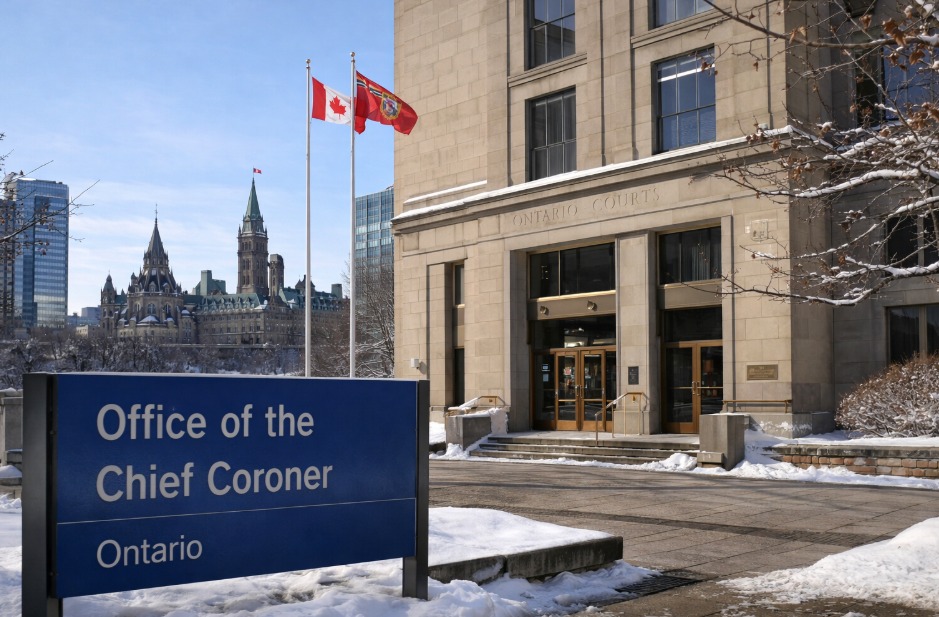
OTTAWA — Ontario’s Office of the Chief Coroner has scheduled a new date for the long-anticipated inquest into the death of Raymond Alliman, with proceedings set to begin March 23, 2026, nearly nine years after his death following an interaction with police.
Dr. Louise McNaughton-Filion, regional supervising coroner for the East Region in Ottawa, announced that the inquest will open at 9:30 a.m. and is expected to run for six days. The hearing will be conducted virtually, allowing members of the public to observe the proceedings online.
The inquest will examine the circumstances surrounding the death of Alliman, who was 31 when he died on June 3, 2017, following an interaction with officers from the Ottawa Police Service.
Under Ontario’s Coroners Act, inquests are mandatory in certain cases, including deaths involving police. These proceedings are designed to establish the facts surrounding a death, not to assign criminal responsibility. Instead, the process allows a jury to hear evidence and potentially make recommendations aimed at preventing similar deaths in the future.
Bonnie Goldberg has been appointed as the presiding officer for the inquest, while Robert Kozak will serve as inquest counsel, assisting in presenting evidence and examining witnesses.
According to the Ministry of the Solicitor General, approximately seven witnesses are expected to testify during the proceedings, which will focus on clarifying the events and decisions that led to Alliman’s death.
The case underscores the broader role of Ontario’s coroner system in reviewing deaths involving public institutions, particularly law enforcement. While inquests do not determine civil or criminal liability, their recommendations can influence policy, training and operational procedures across police services and other public agencies.
Virtual inquests have become more common in Ontario since the COVID-19 pandemic accelerated the adoption of remote proceedings. Officials say online hearings can improve public accessibility while maintaining transparency in the investigative process.
The Office of the Chief Coroner has stated that members of the public will be able to watch the inquest live via a video conference link. This approach reflects a continued effort to ensure openness while balancing logistical and resource considerations.
Inquests can play a significant role in shaping public policy and institutional practices, particularly when they involve deaths connected to law enforcement or custodial settings. Recommendations issued by coroner’s juries are not legally binding, but they are often reviewed closely by government agencies, police services and oversight bodies.
Ontario’s coroner system operates independently to investigate sudden and unexpected deaths across the province. Its findings contribute not only to determining how deaths occur but also to improving public safety and preventing future fatalities.
The scheduling of the Alliman inquest represents an important procedural step in a case that dates back nearly a decade. Once complete, the jury’s findings and any recommendations will be made public, potentially informing future policy discussions related to police interactions and community safety.
The Office of the Chief Coroner has not indicated why the inquest was scheduled for 2026 or whether previous dates had been postponed.
As the proceedings approach, the inquest is expected to draw attention from community members, legal observers and policymakers interested in the circumstances surrounding Alliman’s death and any resulting recommendations.
The outcome may contribute to ongoing conversations in Ontario and across Canada about police oversight, public accountability and measures aimed at preventing deaths in similar circumstances.