

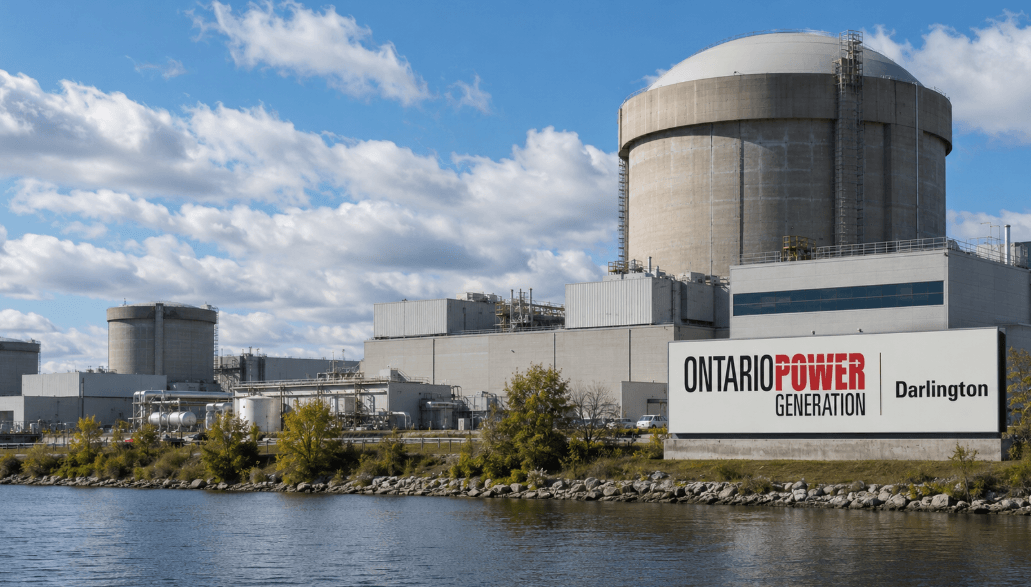
Williams Treaties First Nations to Invest $700 Million in Landmark Nuclear Development
CLARINGTON, Ont. — Ontario has reached a historic agreement with the Williams Treaties First Nations (WTFN), securing a $700 million investment in the Darlington New Nuclear Project (DNNP) and establishing the first Indigenous equity partnership in a nuclear energy project in Canadian history.
The investment marks a major milestone in the province’s efforts to expand clean electricity generation while advancing economic reconciliation with Indigenous communities. The partnership will see the Williams Treaties First Nations become full equity participants in the Darlington project, which is developing the G7’s first grid-scale small modular reactors (SMRs).
The announcement comes as Ontario continues to position itself as a global leader in nuclear energy development and seeks to meet growing electricity demand driven by industrial expansion, population growth and electrification initiatives.
“For the first time in Canadian history, First Nations are supporting and investing in made-in-Canada nuclear, as Ontario leads the Western World building the first SMR, a project that will create over 18,000 good-paying jobs, with 80 per cent of investment staying in Ontario,” said Stephen Lecce, Minister of Energy and Mines. “Ontario is entering a new era of how we build large energy projects in true partnership, with a plan to add $800 billion in economic value to our country’s economy and create 150,000 jobs as we generate reliable power our generations to come. This announcement sustains momentum behind Ontario as we build on-time and on-budget, the envy of the world.”
Project Expected to Generate Power for 1.2 Million Homes
The Darlington New Nuclear Project is a central component of Ontario’s Energy for Generations strategy, the province’s integrated long-term energy plan.
Construction is already underway on the first of four planned SMRs at the Darlington nuclear site. Once completed, the reactors will collectively generate 1,200 megawatts of electricity—enough to supply approximately 1.2 million homes with reliable, emissions-free power.
The province estimates the project will create up to 18,000 Canadian jobs during construction, while directing roughly 80 per cent of project spending to Ontario-based businesses and suppliers.
“This investment demonstrates the power of partnership to drive economic opportunity and long-term growth,” said Peter Bethlenfalvy, Minister of Finance. “By bringing together First Nations communities, governments and industry, we are helping to build the infrastructure and investment climate that will support Ontario’s prosperity for generations to come.”
Financing Structure Aims to Lower Costs for Ratepayers
The Williams Treaties First Nations investment will be supported through Ontario’s Indigenous Opportunities Financing Program, administered by the Building Ontario Fund, alongside a loan guarantee from the Canada Indigenous Loan Guarantee Corporation.
Under the arrangement, Ontario will share participation in the federal guarantee on a 50-50 basis.
Officials say the equity structure will reduce financing costs associated with the project, potentially saving Ontario electricity ratepayers up to $15 billion over the operating life of the facility.
“This is a historic partnership that demonstrates a critical feature of Ontario’s nuclear advantage: First Nation communities as true equity partners,” said Greg Rickford, Minister of Indigenous Affairs and First Nations Economic Reconciliation and Minister Responsible for Ring of Fire and Economic and Community Partnerships. “By working together in partnership, we are seizing the opportunity to strengthen economic reconciliation, support workforce development, and build a prosperous future for all.”
Under the agreement, the Williams Treaties First Nations will initially provide a loan to Darlington New Nuclear Project LP to support construction of the first reactor. That investment will convert into equity ownership after all four SMR units are completed.
Economic Reconciliation and Long-Term Ownership
Leaders from the Williams Treaties First Nations described the partnership as a transformational step toward meaningful participation in major infrastructure developments occurring within their traditional territories.
“Today, our Nations are taking an historic step forward. Through this investment, we are not only creating opportunities for our own communities – we are helping advance a project that will play an important role in meeting Ontario and Canada’s growing energy needs. This investment demonstrates what is possible when First Nations are able to participate meaningfully in projects taking place within their territories, not only as rights holders, but as investors, partners, and participants in the long-term success of the project,” said the Chiefs of the Williams Treaties First Nations.
The project is being developed through Darlington New Nuclear Project LP, an ownership structure that includes Ontario Power Generation, the Canada Growth Fund, the Building Ontario Fund and the Williams Treaties First Nations.
Ontario Strengthens Position in Global SMR Market
Ontario’s nuclear sector has become a key driver of economic activity, supporting approximately 80,000 jobs across the province. More than 100 Canadian companies are already involved in the emerging SMR supply chain, creating opportunities for domestic firms to compete in international nuclear markets.
The province recently expanded its international nuclear partnerships through agreements aimed at exporting critical SMR technologies and components abroad.
Over the lifespan of the Darlington project, the construction, operation and maintenance of the four reactors are expected to contribute approximately $38.5 billion to Canada’s gross domestic product while sustaining an estimated 3,800 highly skilled jobs annually over the next 65 years.
With nuclear energy currently providing roughly half of Ontario’s electricity supply, the Darlington SMR initiative is expected to play a central role in maintaining a reliable, affordable and low-carbon electricity grid while establishing a new model for Indigenous participation and ownership in major Canadian energy infrastructure projects.
Discover more from Wire Service Canada
Subscribe to get the latest posts sent to your email.