

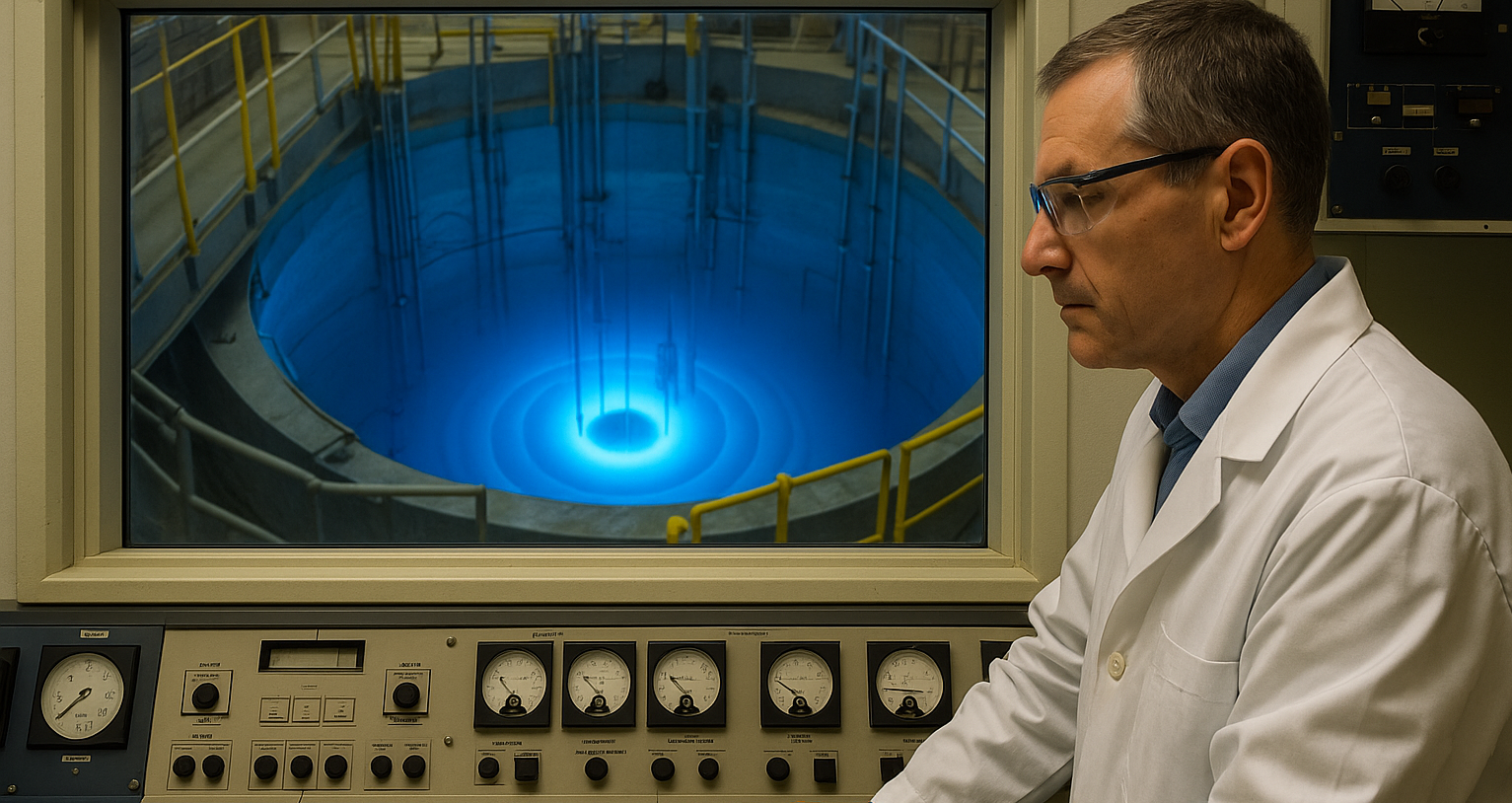
Hamilton, Ont. — The Ontario government is committing $18 million to expand medical isotope production at McMaster University’s nuclear reactor, a move officials say will strengthen the province’s role in cancer care, fuel innovation, and generate jobs in the Hamilton region.
The investment, announced September 15, will enable the McMaster Nuclear Reactor to operate around the clock, seven days a week. The expansion is expected to create 16 new jobs locally and generate enough custom isotopes for up to 84,000 cancer treatments annually.
“We all know someone who has been impacted by cancer, and that timely, cutting-edge treatment is critical to their recovery,” said Nolan Quinn, Minister of Colleges, Universities, Research Excellence and Security. “This investment will ensure that the McMaster Nuclear Reactor can operate at maximum capacity, producing more medical isotopes and bringing more life-saving cancer treatments to market, to our hospitals and to our loved ones.”
Meeting Rising Demand for Isotopes
McMaster’s reactor, Canada’s largest nuclear research facility, is already one of the world’s top suppliers of isotopes. Each year, it provides material for approximately 70,000 cancer patients worldwide.
But the demand for precision radiopharmaceuticals is growing. More than 247,000 Canadians are diagnosed with cancer each year, and two in five Canadians are expected to develop the disease during their lifetime.
To address these challenges, the province has launched the Nuclear Isotope Innovation Council of Ontario (NIICO), an expert advisory panel tasked with doubling Ontario’s isotope production within the next four years.
“Our government is protecting Ontario’s health-care system by advancing research and innovation to ensure timely access to life-saving medications and treatments across the province,” said Sylvia Jones, Deputy Premier and Minister of Health. “With this $18 million investment to increase the supply of medical isotopes at the McMaster Nuclear Reactor, we’re fueling Ontario-made breakthroughs in cancer care and bringing world-class treatment closer to home for more families.”
Expanding Research and Economic Growth
Beyond its role in health care, the funding will significantly expand the reactor’s research capacity — by as much as 300 per cent. That increase is expected to accelerate innovation in radiopharmaceuticals, nuclear safety, and materials science.
“Ontario is doubling down and doubling production of nuclear isotopes innovation because it saves lives, powers our economy, and secures a reliable energy future,” said Stephen Lecce, Minister of Energy and Mines. “This investment at McMaster will drive increased isotope production by running the reactor 24 hours every day, delivering more life-saving cancer treatments, research, and jobs for Ontario workers.”
The funding builds on commitments laid out in the 2025 Ontario Budget, which positioned isotope production as a pillar of the province’s broader life sciences and energy strategies.
McMaster University welcomed the announcement, calling it a boost to both patient care and academic research.
“We are grateful to the Province of Ontario for this vital funding, which will allow McMaster to expand its operations to 24 hours a day, seven days a week,” said Susan Tighe, President and Vice Chancellor of McMaster University. “This increased capacity will enhance our ability to serve cancer patients worldwide through the increased production of critical medical isotopes used in the treatment of prostate cancer.”
Industry and Community Response
The initiative has drawn wide support from across Ontario’s political, academic, and industry circles.
Vic Fedeli, Minister of Economic Development, Job Creation and Trade, highlighted the role of isotopes in the province’s life sciences strategy. “As one of the world’s top suppliers of medical isotopes, the McMaster Nuclear Reactor is a testament to Ontario’s ongoing leadership in the discovery and commercialization of life-saving innovations.”
Local representatives framed the move as a win for both Hamilton and Ontario’s global reputation. “This investment ensures that our community remains at the forefront of medical innovation. It’s support that translates directly into better health care, stronger communities, and new hope for thousands of cancer patients—here at home and around the world,” said Monica Ciriello, MPP for Hamilton Mountain.
Health researchers and industry associations also weighed in. Dr. Lincoln Stein of the Ontario Institute for Cancer Research called the expansion “a major step forward in saving lives,” while George Christidis, CEO of the Canadian Nuclear Association, said the move would “strengthen Canada’s leadership in nuclear technology, create good paying jobs, and help save lives.”
Quick Facts
-
McMaster’s reactor produces holmium-166, a key treatment for liver cancer, and iodine-125, widely used in therapies for prostate, eye, and brain cancers.
-
In July, Ontario launched NIICO to help double provincial isotope production by 2029.
-
Since 2018, the province has invested over $2 billion in research across sectors including life sciences, agriculture, auto manufacturing, and information technology.
