

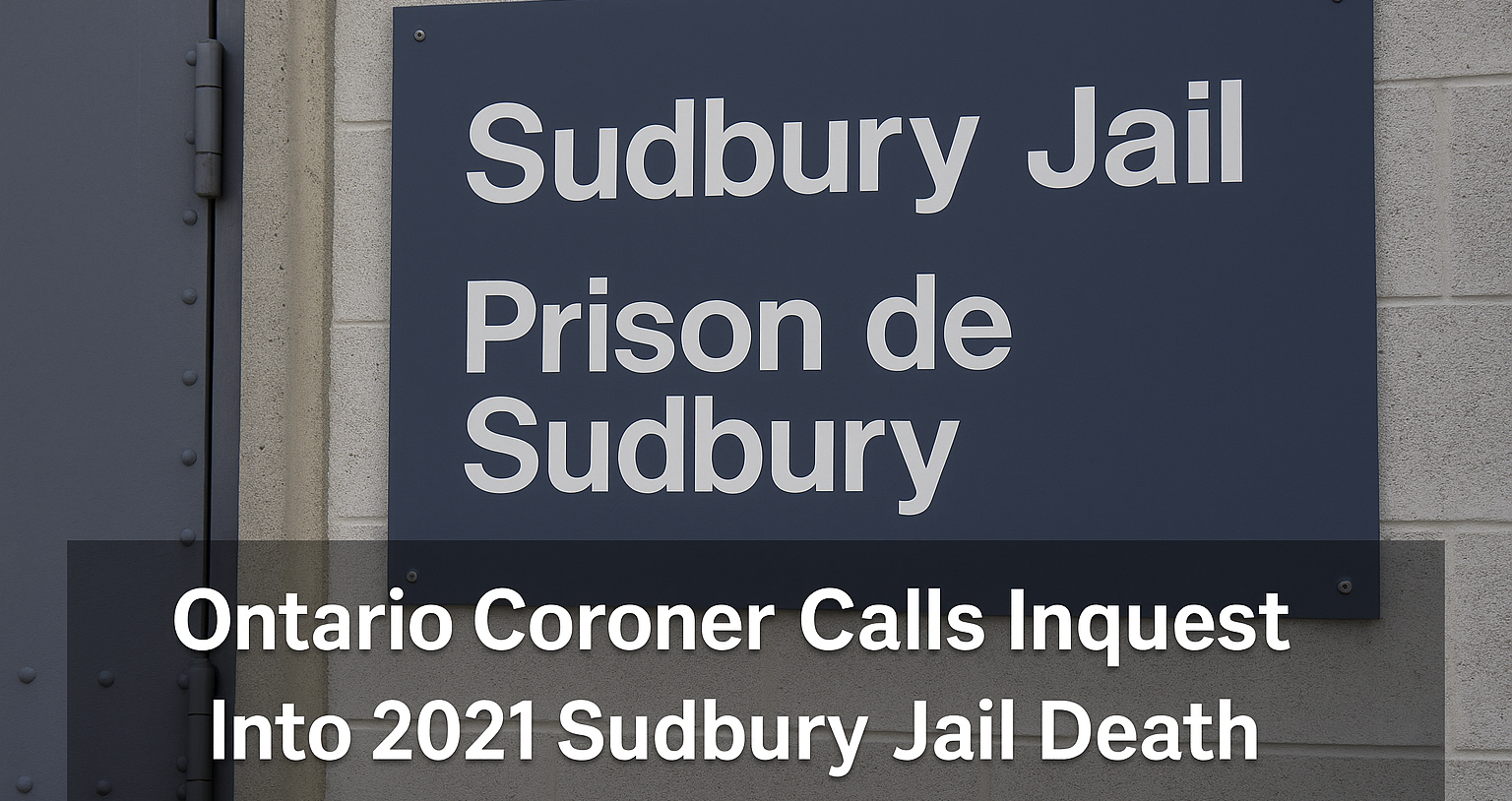
SUDBURY, Ont. — Ontario’s Office of the Chief Coroner has announced that a public inquest will be held into the death of Justin Alexander Trudeau, a 44-year-old man from Wiikwemkoong Unceded Territory who died while in custody at the Sudbury Jail in 2021.
The announcement was made Tuesday by Dr. Harry Voogjarv, Regional Supervising Coroner for the North Region, Sudbury office. The inquest will seek to examine the circumstances surrounding Trudeau’s death on February 13, 2021, and provide a platform for a jury to consider recommendations aimed at preventing similar fatalities in the future.
Purpose of the Inquest
Inquests in Ontario are not intended to assign blame or determine criminal or civil liability. Instead, they are a public process designed to uncover facts about a death, provide transparency around circumstances, and highlight systemic or procedural shortcomings that may have contributed to the outcome.
“The jury may make recommendations aimed at preventing further deaths,” Voogjarv said in the announcement. Those recommendations, while not legally binding, often serve as a catalyst for changes in policy, procedures or oversight at correctional facilities and related institutions.
Background of the Case
Trudeau’s death in custody more than four years ago is one of several cases in recent years to draw attention to health and safety conditions in Ontario’s correctional institutions. Advocates for Indigenous communities have consistently raised concerns about the disproportionate number of Indigenous peoples in custody and the systemic risks they face within the justice and correctional system.
While the press release provided limited details about the circumstances of Trudeau’s death, the forthcoming inquest is expected to provide a clearer public record. The process will include testimony from witnesses, expert input, and the presentation of evidence surrounding the case.
Broader Context
Ontario holds dozens of inquests each year, many of them related to deaths in custody, workplace incidents, or public safety events. The Ministry of the Solicitor General, which oversees provincial correctional facilities, typically reviews and responds to recommendations that emerge from these inquiries.
Inquests often result in calls for enhanced training, improved health-care access for inmates, or changes to monitoring practices within facilities. In some cases, they prompt broader debates about the adequacy of resources in correctional institutions and whether systemic reforms are needed.
Trudeau’s case will likely draw particular attention given his ties to Wiikwemkoong Unceded Territory and the ongoing discussions across Canada about reconciliation and the treatment of Indigenous peoples within the justice system. Indigenous leaders have long emphasized that inquests must not only address individual cases but also confront the systemic issues underlying them.
Next Steps
Details regarding the inquest — including its date, venue, and presiding coroner — will be announced at a later time. Once underway, proceedings will be open to the public, with opportunities for community members, legal representatives, and advocacy groups to follow developments closely.
Members of the public seeking additional information about inquests can visit the Ontario government’s official resource page at ontario.ca/page/coroners-inquests.
Significance for Policy and Oversight
For the provincial government and justice officials, the inquest represents an opportunity to assess existing practices within the Sudbury Jail and across Ontario’s correctional system. While outcomes vary, previous inquests have been instrumental in shaping reforms to inmate health services, staff training protocols, and accountability measures in provincial facilities.
In the case of Justin Alexander Trudeau, the findings may provide not only clarity for his family and community but also direction for policymakers tasked with ensuring safer and more equitable treatment for inmates.
