

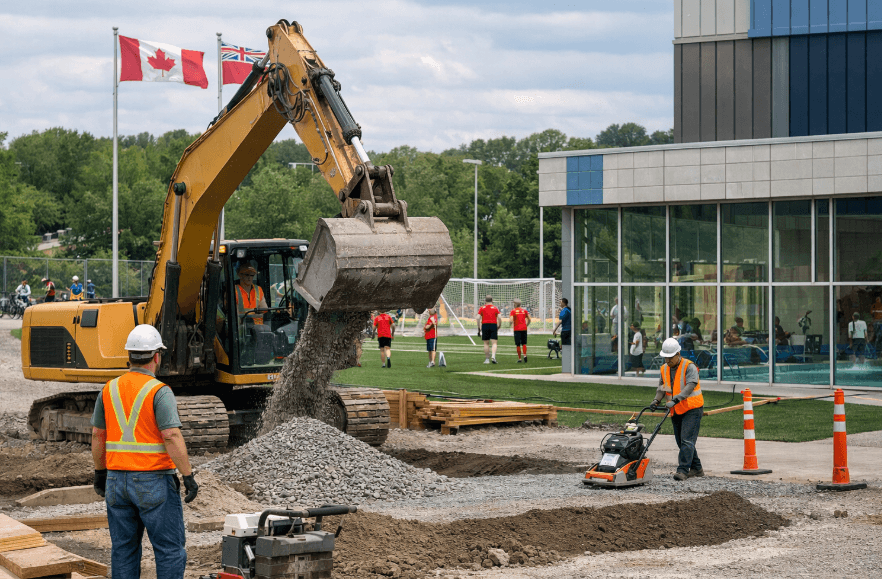
Funding Boost Brings Total Program Investment to $500 Million
KITCHENER, Ont. — The Ontario government is injecting an additional $300 million into community sport and recreation infrastructure, marking a significant expansion of a flagship program aimed at strengthening local economies, creating jobs and improving access to athletic facilities across the province.
The funding, announced as part of the 2026 provincial budget, brings the total allocation for the Community Sport and Recreation Infrastructure Fund (CSRIF) to $500 million. The program supports the construction of new facilities and the revitalization of existing ones in municipalities, Indigenous communities and non-profit organizations.
“Our government is delivering on our plan to protect Ontario by making historic local investments that strengthen our communities today and for the future,” said Neil Lumsden, Minister of Sport. “The additional $300 million in the Community Sport and Recreation Infrastructure Fund will support the construction of new facilities, allowing more families across Ontario to enjoy fun, healthy activities and ensure our local athletes have a place to compete close to home.”
Economic and Community Impact at the Core
The province says the expanded investment will help address growing demand for accessible recreation spaces while supporting employment and broader economic activity. According to government estimates, Ontario’s sport and recreation sector contributed $3.25 billion to the economy in 2023 and supported approximately 42,000 jobs.
Finance Minister Peter Bethlenfalvy emphasized the economic dimension of the funding.
“The investments announced today are about creating jobs and building stronger, healthier communities across Ontario,” Bethlenfalvy said. “By enhancing and expanding sport and recreation facilities, we are increasing access, encouraging participation and unlocking new economic opportunities for communities across the province.”
The CSRIF, first introduced in 2024 with an initial $200 million commitment, has already funded 94 projects. These include 17 newly constructed facilities and upgrades to 77 existing sites.
Supporting Growth, Accessibility and Participation
The program operates through two funding streams: one focused on repairing and rehabilitating aging infrastructure, and another dedicated to building new or replacement facilities. The government says further details on eligibility and application guidelines for the latest funding round will be released later this year.
Stakeholders across the sport and municipal sectors welcomed the announcement, citing both social and economic benefits.
“Investing in modern, accessible sport and recreation spaces helps communities thrive today and sets the foundation for a stronger future. By supporting the renewal of existing facilities and the construction of new ones, our expanded investments will contribute to healthier, more connected neighbourhoods and ensure people of all ages have opportunities to stay active for years to come,” said Natalie Pierre, Parliamentary Assistant to the Minister of Sport.
Municipal leaders also highlighted the role of infrastructure investment in supporting long-term growth.
“This investment is about more than building arenas and recreation spaces, it’s about strengthening our communities, supporting local sports, and creating good jobs across Ontario. By upgrading and expanding these facilities, we’re giving Ontario families more opportunities to stay active while putting more shovels in the ground to help our communities grow,” said Rob Flack.
Local Demand Driving Investment
In Kitchener and surrounding regions, rising demand for inclusive, modern recreation spaces has underscored the need for continued investment.
“Here in Kitchener and across Ontario, we’re seeing growing demand for safe, inclusive spaces where people can come together, stay active, and build strong community connections. This investment is about meeting that moment and supporting projects that reflect the unique needs of local communities while ensuring families, youth, and athletes have access to modern facilities close to home,” said Jess Dixon.
Kitchener Mayor Berry Vrbanovic pointed to the broader economic ripple effects of such projects.
“The impact of this provincial CSRIF funding will go far beyond building high quality recreation spaces in cities like ours. It’s a significant investment in Kitchener and Ontario’s up-and-coming athletes who will play, train and compete in cutting-edge facilities like Cowan, while empowering communities to showcase what they have to offer, attract major sporting events and tournaments, and generate meaningful economic activity that strengthens local businesses and supports long term economic resilience,” he said.
National Sport Organizations Applaud Move
National sport bodies also endorsed the funding expansion, linking infrastructure investment to athlete development and participation.
“Sport has the power to inspire and unite Canadians like nothing else. Investing in sport infrastructure goes beyond building facilities — it ensures athletes at all levels have access to modern, local spaces where they can participate, hone their skills, and reach their full potential,” said David Shoemaker, CEO and Secretary General of the Canadian Olympic Committee.
Similarly, Karen O’Neill of the Canadian Paralympic Committee said, “This significant investment in infrastructure will go a long way towards supporting a vibrant, thriving sport system across the province. Having access to quality, accessible, and nearby facilities is a critical factor in athletes being able to participate in sport and ultimately reach their goals.”
Addressing Long-Term Infrastructure Needs
Municipal and sector organizations noted that the funding will help address longstanding infrastructure gaps and rising demand.
“AMO welcomes this much-needed new provincial investment in municipal infrastructure. These funds help address pent-up demand for infrastructure funding and contribute to municipalities’ ambitious plans to invest more than $250 billion in the next 10 years on local infrastructure, including sports and recreation facilities,” said Robin Jones of the Association of Municipalities of Ontario.
As Ontario positions itself as a competitive destination for investment within the G7, the government says initiatives like CSRIF will play a key role in building resilient communities while supporting economic growth and public well-being.