

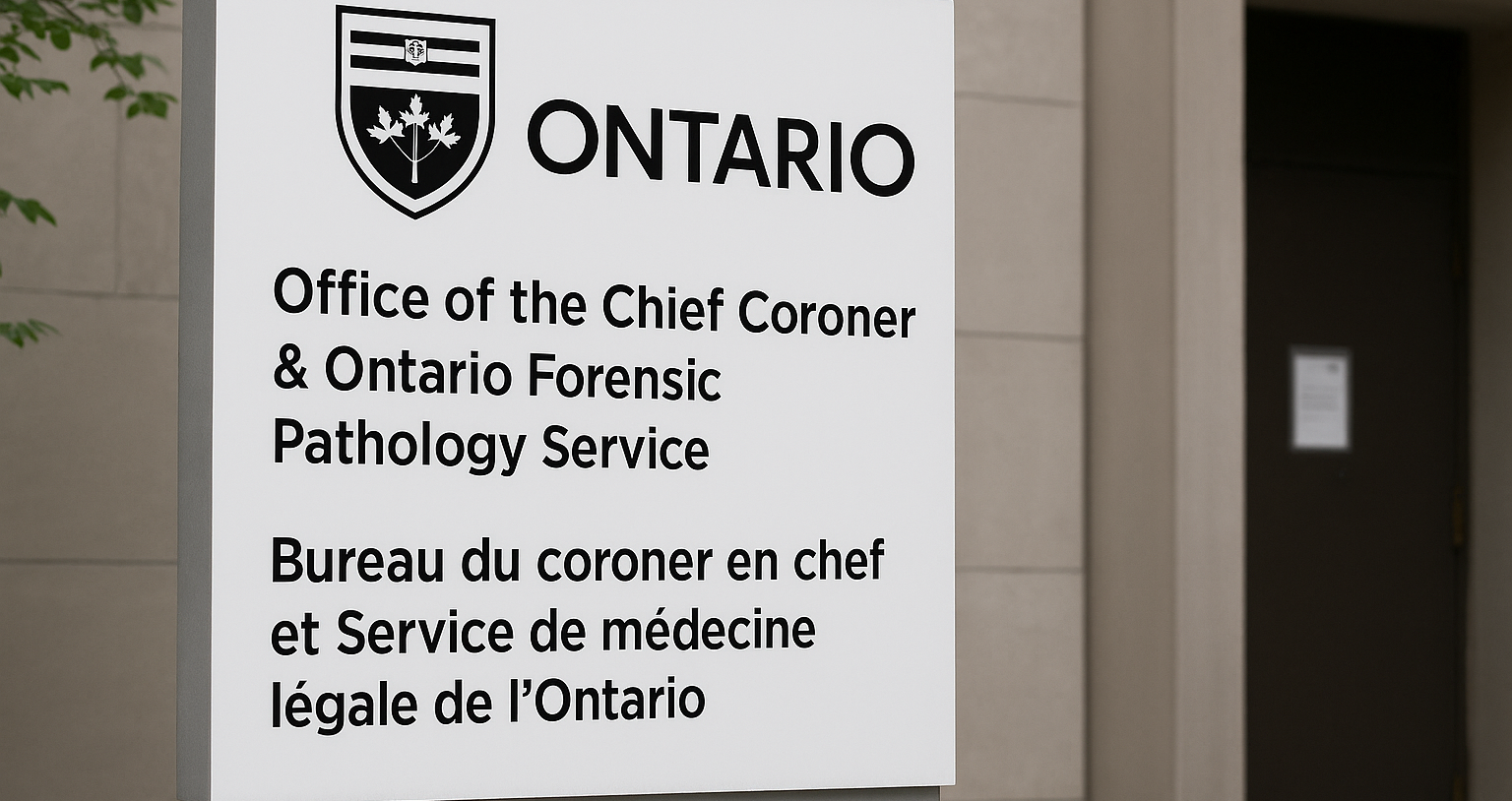
Ontario’s Ministry of the Solicitor General has announced a mandatory inquest into the death of Darren Keillor, a 39-year-old man who died in hospital in 2021. The inquest will be conducted under the authority of the Coroners Act, with proceedings aimed at examining the circumstances of his death and potentially offering recommendations to prevent similar cases in the future.
The announcement was made Monday by Dr. Jennifer M. Dmetrichuk, Regional Supervising Coroner for the Central Region, Toronto East Office. In a brief statement, Dmetrichuk confirmed that the case had met the criteria for an inquest under provincial law.
“Dr. Jennifer M. Dmetrichuk, Regional Supervising Coroner, Central Region, Toronto East Office, announced today that an inquest will be held into the death of Darren Keillor,” the release stated. “Mr. Keillor, 39 years old, died in hospital on May 8, 2021. An inquest into his death is mandatory under the Coroners Act.”
Purpose of the inquest
Inquests in Ontario serve as public inquiries, distinct from criminal or civil proceedings, that are focused on fact-finding rather than fault-finding. The Coroners Act requires inquests in specific circumstances, such as deaths that occur while an individual is in custody or while detained in certain institutional settings. The law is designed to promote accountability and transparency in the oversight of deaths where the state has a role in care or custody.
According to the announcement, the upcoming inquest into Keillor’s death will seek to uncover the events and conditions that led to his passing. “The inquest will examine the circumstances surrounding Mr. Keillor’s death. The jury may make recommendations aimed at preventing further deaths,” the ministry said.
Those recommendations, while not legally binding, often carry significant weight in shaping public policy, institutional practices and government responses. Past inquests have led to meaningful reforms in areas such as health care protocols, correctional practices, and the administration of justice.
Broader implications
The decision to hold the Keillor inquest underscores the province’s continued reliance on the inquest system as a mechanism to address concerns about public safety and systemic issues. While the Ministry did not specify the circumstances of Keillor’s hospital stay or the events immediately leading to his death, the proceedings are expected to provide more clarity.
Observers note that inquests can often shed light on gaps in existing procedures, reveal systemic failings, or highlight areas in need of greater investment. By convening a jury of community members, Ontario’s coroner system ensures that recommendations reflect both expert testimony and public perspectives.
Next steps
At this stage, details about the inquest’s schedule and location have not been confirmed. “Further details regarding the inquest, including the date and venue, will be provided at a later date,” the announcement said. Once set, the inquest will be open to the public and media, in keeping with the principle of transparency that underpins the Coroners Act.
Inquests typically involve hearing evidence from witnesses, including medical professionals, institutional staff, and expert analysts. The presiding coroner directs the proceedings, while a jury of five members listens to the testimony and ultimately delivers a verdict on the circumstances of death, along with any recommendations they deem appropriate.
Understanding the inquest process
For many Ontarians, inquests remain a little-understood aspect of the province’s justice and health systems. While they do not assign blame or liability, their influence is evident in the way governments and institutions respond to the recommendations that emerge.
The Ministry’s announcement included a link to additional resources for those seeking more information. “For more information about inquests, see: https://www.ontario.ca/page/coroners-inquests,” the statement noted.
By providing this information, the province appears to be encouraging the public to engage more fully with the process. Inquests not only clarify the events of an individual death but can also serve as catalysts for systemic change.
Conclusion
The inquest into Darren Keillor’s death represents another step in Ontario’s commitment to public accountability when deaths occur under circumstances that warrant further scrutiny. While the proceedings will not begin until a date and venue are confirmed, they will provide an opportunity for a deeper understanding of the factors that contributed to Keillor’s passing.
Ultimately, the jury’s recommendations may carry lasting implications for health care practices, institutional procedures and government policies aimed at preventing similar tragedies in the future.
