

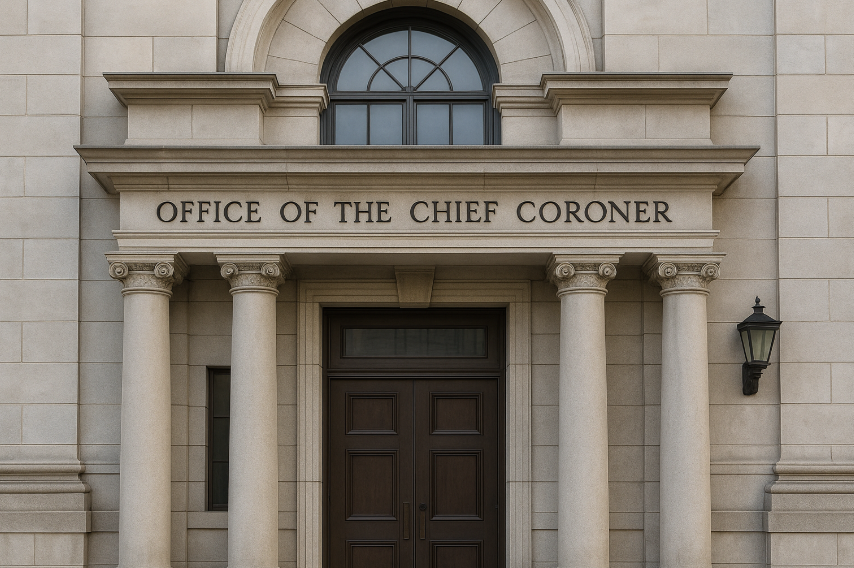
Ontario’s Office of the Chief Coroner will convene an inquest into the 2021 death of Percy Adam Henry, a 27-year-old man who died shortly after being transferred from the Kenora Jail to Lake of the Woods District Hospital. The announcement, released Wednesday by the Ministry of the Solicitor General, signals the next stage in a mandatory review process intended to examine the circumstances of deaths involving individuals in custody.
Dr. Kevin Miller, Regional Supervising Coroner for the North Region based in Thunder Bay, confirmed that the inquest will move forward, though a date and venue have not yet been set. The inquest aims to establish a clear public record of what happened prior to Henry’s death on February 8, 2021, and to consider whether systemic issues may have been factors.
Mr. Henry, a member of Wabaseemoong Independent Nations with familial ties to Naotkamegwanning First Nation, had been incarcerated at the Kenora Jail before being transferred to hospital, where he later died. Few details about his medical condition or the events leading to his hospitalization were included in Wednesday’s announcement.
Under Ontario law, inquests are mandatory when a person dies while in custody or detention, unless the coroner determines the cause of death is already known and an inquest would serve no public interest purpose. In most cases, however, inquests are used to examine broader issues such as health care access in custody, safety protocols and communication between institutions.
“The inquest will examine the circumstances surrounding Mr. Henry’s death,” the statement said. “The jury may make recommendations aimed at preventing further deaths.” While such recommendations are not legally binding, they often serve as guiding principles for police services, correctional institutions and health-care providers.
Indigenous communities in northwestern Ontario have long raised concerns about safety, health and oversight within correctional facilities serving the region. Henry’s death renewed discussions among advocates who have called for better access to medical care, mental-health supports and culturally informed services for Indigenous people in custody. Although the ministry’s release does not comment on these broader issues, the inquest process frequently provides a public forum for those conversations.
Once convened, a coroner’s inquest is typically presided over by a coroner and heard before a five-person jury. The proceedings are open to the public and may include evidence from medical personnel, correctional staff, police, community members and expert witnesses. The jury’s role is not to assign blame or legal responsibility but to determine the facts surrounding the death and propose recommendations.
Similar inquests in recent years have resulted in calls for enhanced correctional health services, improved emergency response protocols, and stronger communication between hospitals and correctional institutions. While implementation depends on government and institutional action, many organizations use inquest recommendations as a basis for policy updates.
The announcement comes at a time when Ontario’s correctional system faces heightened scrutiny over capacity pressures, staffing challenges and the over-representation of Indigenous people in custody. According to provincial data, Indigenous adults account for a disproportionately high share of admissions to correctional institutions, particularly in the North.
The Ministry of the Solicitor General has stated that further details — including the inquest schedule, location and list of parties with standing — will be provided at a later date. Inquests are often scheduled months in advance to allow for evidence preparation, witness arrangements and coordination with families and community representatives.
For families, the inquest process can offer both transparency and an opportunity to raise concerns about systemic gaps. It also serves as a mechanism to publicly record the final circumstances of a person’s life, which can be particularly important for communities seeking accountability and improved services.
The province encourages members of the public interested in learning more about inquests to consult the resource page provided in the announcement: https://www.ontario.ca/page/coroners-inquests.
