

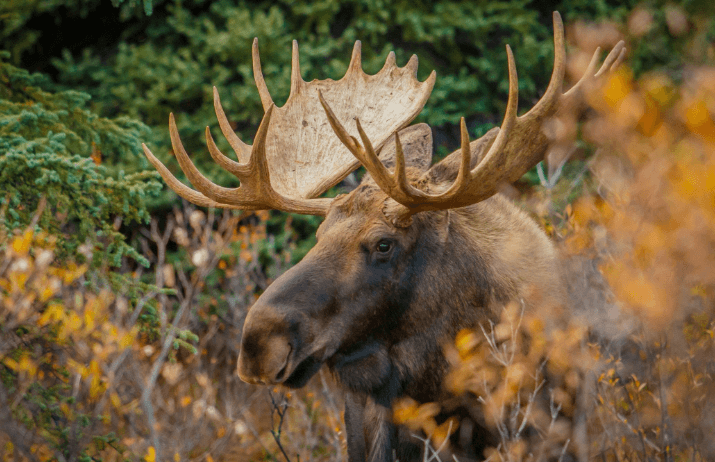
The Manitoba Wildlife Federation is renewing its call for the provincial government to impose a complete moratorium on moose harvesting in the Duck Mountain and Porcupine Forest regions, citing survey data showing populations remain substantially below levels that prompted conservation measures more than a decade ago.
The organization is also urging Manitoba to prohibit the harvesting of cow and calf moose by rights-based harvesters province-wide, arguing that additional restrictions could help vulnerable populations recover amid pressure from environmental changes, disease, development and hunting.
Moose Population Falls Below Previous Conservation Threshold
The Manitoba Wildlife Federation, or MWF, said its latest appeal is based on provincial moose population surveys covering Game Hunting Areas 18 and 18A-C in Duck Mountain and GHAs 13 and 13A in the Porcupine Forest.
According to figures cited by the organization, the combined moose population in the two regions was estimated at 1,578 animals in 2023. That compares with 2,471 moose recorded in 2010 — a decline of about 36%.
The federation said the current estimate is also well below the population level that led the Manitoba government to establish a conservation closure in 2011.
Duck Mountain and Porcupine Forest Show Different Trends
The decline has been particularly pronounced in the Porcupine Forest. Survey figures cited by MWF show the area’s population falling from 1,122 moose in 2010 to 409 in 2023, representing a decline of roughly 64%.
Duck Mountain recorded a smaller decrease, with the estimated population moving from 1,349 moose in 2010 to 1,169 in 2023.
MWF argues the combined numbers warrant renewed conservation measures covering both areas.
Federation Seeks Return to Complete Conservation Closure
Manitoba established a conservation closure in the Duck Mountain and Porcupine Forest areas in 2011 after declining moose numbers raised concerns about the sustainability of the population.
Under such a closure, according to MWF, harvesting is prohibited for both licensed and Indigenous hunters to provide populations with an opportunity to recover.
The federation said stakeholders supported the original restrictions because of concerns that continued population declines could eventually make recovery more difficult.
Successive provincial governments maintained the closure until 2022, when a limited Indigenous harvest by permit was allowed after surveys indicated the population was beginning to recover.
Following aerial surveys conducted in 2023, however, MWF said population estimates showed the number of moose in the Duck Mountain and Porcupine Forest regions had fallen to more than 36% below the level that initially triggered the closure.
The federation said it subsequently made a formal request to the provincial minister to restore a full closure covering all hunters.
Multiple Pressures Affect Manitoba Moose
MWF acknowledged that hunting is only one of several factors affecting the health and survival of Manitoba’s moose populations.
The organization identified climate change, changing landscapes, predation, disease, ticks, increased human development in remote regions and hunting among the pressures affecting the species.
It argues, however, that hunting regulations represent one area where the provincial government can directly intervene to reduce pressure on populations.
MWF maintains that continued harvesting in the Duck Mountain and Porcupine Forest regions could undermine efforts to rebuild moose numbers and says conservation-focused stakeholders would support stronger restrictions.
MWF Seeks Province-wide Cow and Calf Protection
The federation also welcomed Manitoba’s recent decision to restrict the licensed harvest of cow and calf moose in the remaining Game Hunting Areas where the practice had been permitted.
MWF is asking the province to extend that approach by prohibiting rights-based harvesting of cow and calf moose across Manitoba.
The organization says protecting reproductive females and young animals would provide another conservation measure intended to support population recovery.
The proposal touches on both wildlife conservation and Indigenous harvesting rights, making provincial management decisions particularly significant. MWF’s request specifically seeks restrictions applying to all harvesting groups within the proposed Duck Mountain and Porcupine Forest conservation closure.
With the combined population in those regions estimated at 1,578 moose in 2023 compared with 2,471 in 2010, the federation is pressing Manitoba to strengthen restrictions as part of a broader effort to stabilize and rebuild the province’s moose populations.