

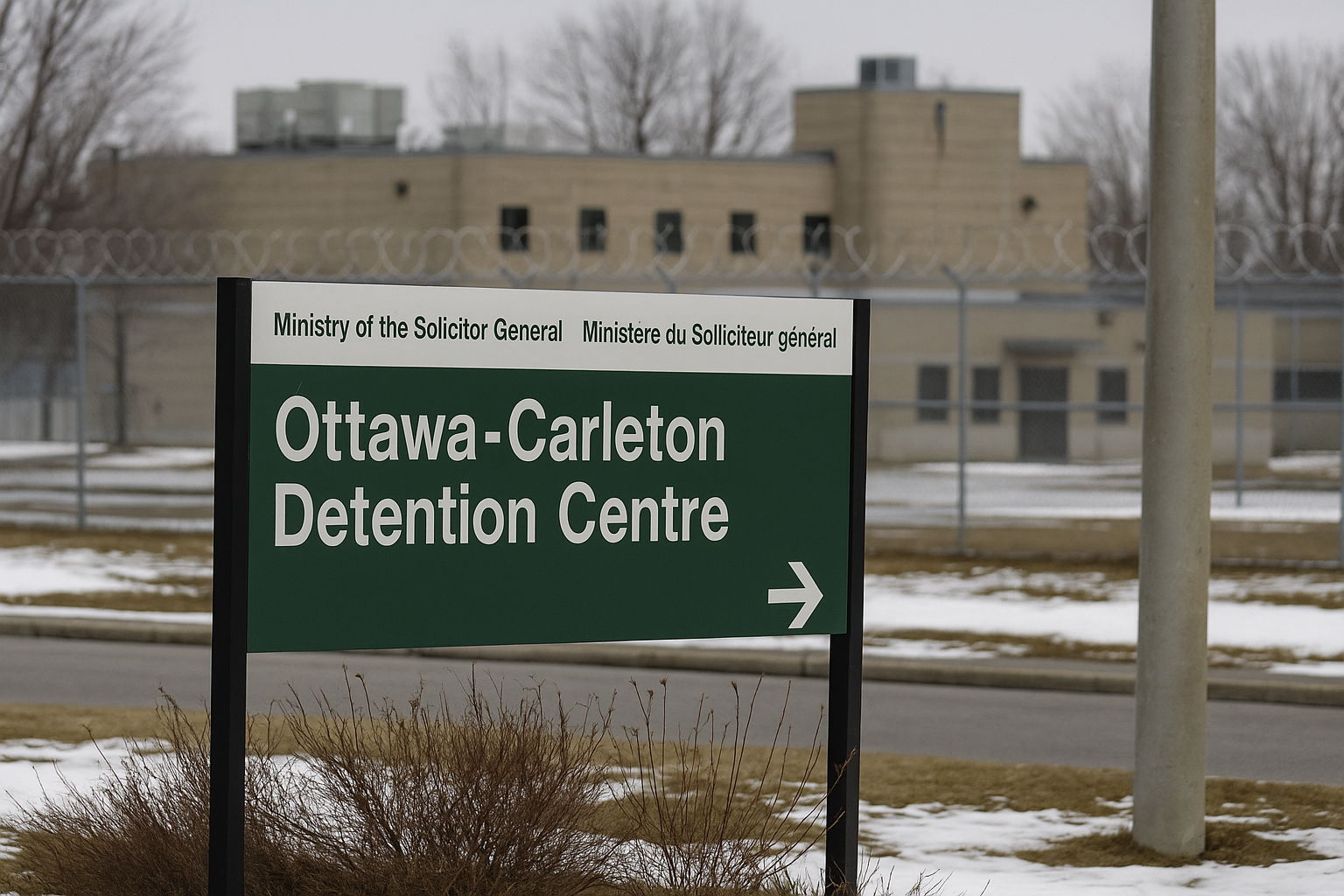
An inquest will be held into the 2020 death of an Ottawa man who died after sustaining injuries while in custody at the Ottawa-Carleton Detention Centre, the Ministry of the Solicitor General confirmed Friday.
Dr. Louise McNaughton-Filion, Regional Supervising Coroner for the East Region, Ottawa Office, announced the mandatory inquest into the death of 49-year-old William Renwick, who died at the Ottawa Hospital on November 8, 2020.
“An inquest will be held into the death of William Renwick,” McNaughton-Filion said in a statement.
Circumstances of the Case
Renwick, who had been incarcerated at the Ottawa-Carleton Detention Centre (OCDC), sustained injuries while in custody before being transported to hospital, where he later died. The release from the coroner’s office states that an inquest is required under Ontario’s Coroners Act for such cases, which involve deaths occurring in custody.
While the exact nature of the injuries and circumstances leading to Renwick’s hospitalization have not been publicly disclosed, the inquest process is expected to explore those details. The inquiry will examine the events leading up to his death, as well as systemic issues within the detention system that may have played a role.
Role of the Inquest
Under Ontario law, inquests serve as public hearings designed to uncover the facts surrounding a death without assigning criminal or civil liability. A five-person jury, overseen by a coroner, hears evidence from witnesses and experts before delivering recommendations aimed at preventing future deaths in similar circumstances.
According to the announcement, “The inquest will examine the circumstances surrounding Mr. Renwick’s death. The jury may make recommendations aimed at preventing further deaths.”
This framework is particularly significant in cases involving correctional institutions, where issues of inmate health, safety protocols, and institutional oversight often come under scrutiny.
Ottawa-Carleton Detention Centre in Focus
The Ottawa-Carleton Detention Centre, a provincial jail on Innes Road in Ottawa’s east end, has long faced criticism over conditions, overcrowding, and inmate safety. Advocacy groups, correctional staff, and family members of inmates have repeatedly raised concerns about systemic shortcomings, including access to medical care, mental health services, and the physical infrastructure of the aging facility.
Renwick’s death adds to a troubling history of fatalities linked to the institution. While each inquest is case-specific, juries often use the opportunity to highlight broader systemic reforms, making such proceedings an important driver of recommendations for Ontario’s correctional system.
Next Steps
Further details about the inquest, including its start date and location, will be announced at a later time. Inquests can take months to organize, as coroners must coordinate with counsel, witnesses, and jurors while ensuring transparency and accessibility for the public.
The outcome of the inquest could have implications beyond Renwick’s case. Recommendations frequently influence provincial policy and correctional practices, particularly when linked to patterns observed across multiple inquests involving custodial deaths.
Broader Context
Ontario has seen a number of inquests in recent years examining deaths in custody, many of which have spotlighted systemic issues such as inadequate mental health supports, use-of-force protocols, and gaps in inmate supervision. While coroners’ juries cannot compel governments to adopt their recommendations, they often serve as a catalyst for legislative review and institutional change.
Renwick’s case will now join that broader conversation. While the announcement is procedural, it underscores the ongoing challenges within Ontario’s correctional system and the importance of transparency in addressing deaths behind bars.
Official Statement
The Ministry emphasized that additional details would follow. “Further details regarding the inquest, including the date and location, will be provided at a later date,” McNaughton-Filion’s announcement stated.
For the family of William Renwick, as well as advocates monitoring correctional accountability in Ontario, the inquest represents a crucial opportunity to seek answers and push for improvements that may prevent similar tragedies in the future.
