

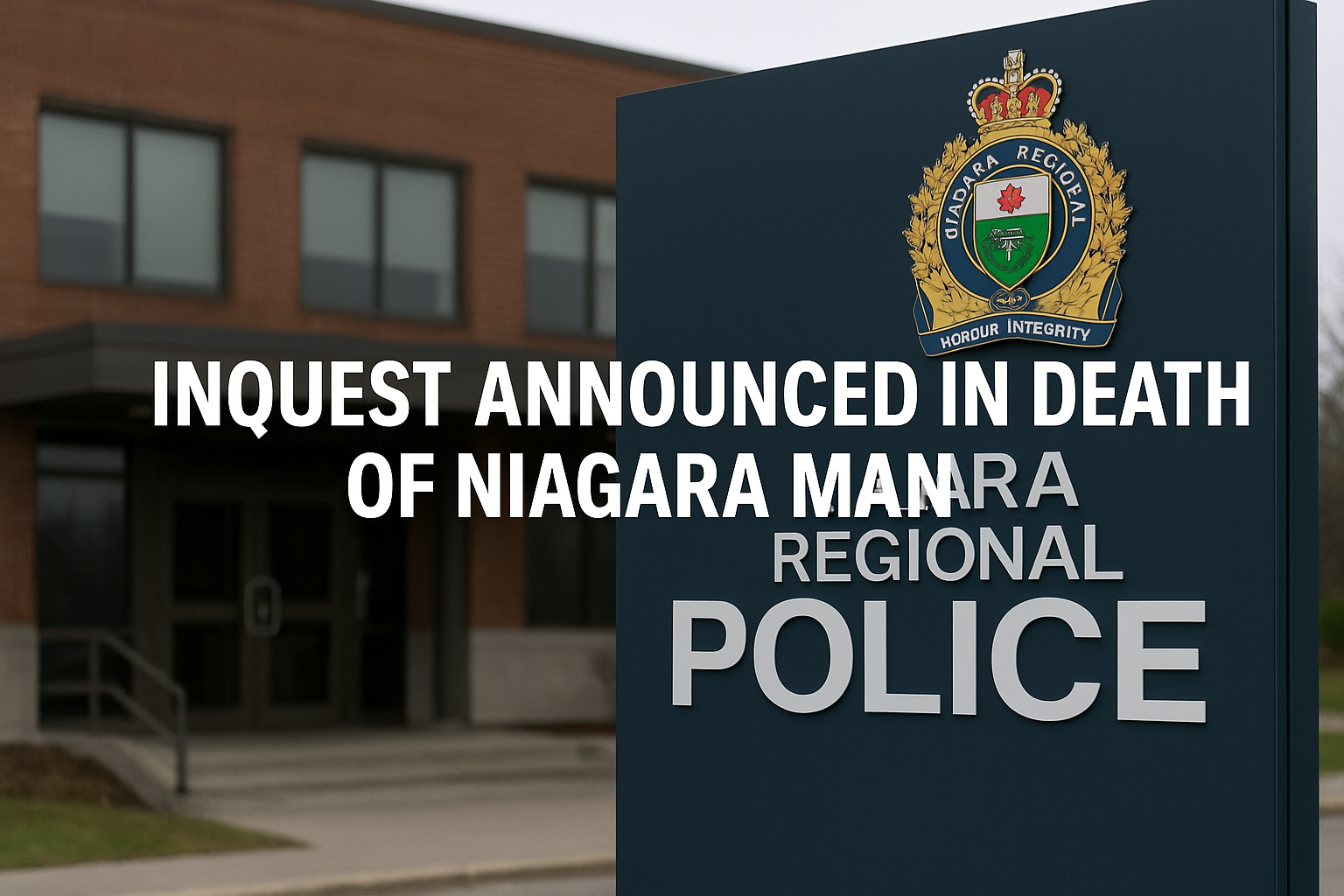
Ontario’s Ministry of the Solicitor General has confirmed that an inquest will be held into the death of Martin Gordyn, a 27-year-old man who died following an interaction with Niagara Regional Police Service officers in 2021. The announcement was made Friday by Dr. Karen Schiff, Regional Supervising Coroner for the West Region, Hamilton Office.
“Dr. Karen Schiff, Regional Supervising Coroner, West Region, Hamilton Office, has announced that an inquest will be held into the death of Martin Gordyn,” the ministry said in its official statement.
Mandatory Inquest Under Provincial Law
The Coroners Act requires an inquest when a death occurs in circumstances involving police custody or interaction. Gordyn died on January 5, 2021, after an encounter with Niagara police officers. Few details have been released publicly about the events leading to his death, but the coroner’s office emphasized that a jury will review the circumstances in detail.
The purpose of such inquests is not to assign blame but to examine systemic factors, including police practices, healthcare protocols, and emergency response procedures. At the conclusion, the jury may issue recommendations designed to prevent similar deaths in the future.
“The inquest will examine the circumstances surrounding Mr. Gordyn’s death. The jury may make recommendations aimed at preventing further deaths,” the ministry’s release stated.
Broader Context of Police-Related Inquests
Ontario coroners regularly convene inquests into deaths that occur during or after encounters with law enforcement. These inquiries often draw significant public interest, particularly when they touch on issues of mental health, police training, and use of force.
Legal observers note that inquests can shape provincial policy. Past cases have resulted in recommendations around crisis intervention training for police, the use of body-worn cameras, and improved communication between law enforcement and medical professionals. While recommendations are not legally binding, they frequently influence policy changes within police services, health agencies, and government ministries.
In recent years, inquests in Ontario have examined several high-profile deaths involving interactions with police, reflecting growing scrutiny over how law enforcement responds to people in crisis. Advocates argue that the inquest process provides transparency and an opportunity for systemic reform, though families of those who have died often describe the proceedings as emotionally difficult.
Next Steps in the Gordyn Inquest
The date and location of the Gordyn inquest have not yet been set. According to the ministry, further details, including venue, presiding coroner, and counsel, will be provided at a later stage. Typically, inquests are conducted in open court and allow for testimony from police officers, medical experts, and other witnesses. Family members are often represented by counsel, and the process can last days or weeks depending on the scope of evidence.
The announcement comes more than four years after Gordyn’s death, a gap that reflects the complexity and scheduling demands of Ontario’s coronial system. Inquests were also delayed during the COVID-19 pandemic, which disrupted court schedules across the province.
Community Reaction and Ongoing Scrutiny
While the ministry’s release did not include comment from Gordyn’s family, community advocates in the Niagara region have previously raised concerns about the transparency of police oversight. Calls for inquests or public reviews often emerge in cases where questions remain about how officers handled encounters with vulnerable individuals.
The Gordyn case is expected to draw attention from civil liberties groups, mental health advocates, and policing organizations. Observers say the outcome could add to a growing body of recommendations aimed at shaping how police respond to emergencies.
Significance for Public Policy
Experts suggest that beyond its immediate findings, the inquest may contribute to a broader provincial conversation on accountability in policing. Ontario has undertaken a series of reforms to its police oversight bodies, including the Special Investigations Unit (SIU), but inquests remain a separate and complementary process focused on prevention.
By mandating public hearings, the Coroners Act ensures that deaths like Gordyn’s are subject to independent scrutiny. Whether or not the jury’s eventual recommendations are implemented, the process itself provides a rare forum for examining in detail how frontline police work intersects with public safety, health, and justice.
For now, the province has made clear that the inquest is moving forward. “Further details regarding the inquest, including the date and venue, will be provided at a later date,” the ministry confirmed.
As the case advances, it is likely to remain under close watch by both the Niagara community and provincial policymakers, with potential implications extending far beyond the circumstances of one man’s death.
